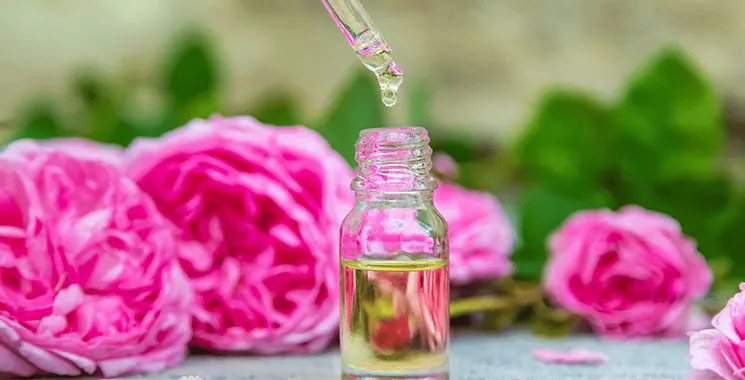
Researchers at Morocco's National Institute of Agricultural Research (INRA) have conducted a study on the composition of essential oil extracted from the Rose de Damas, a plant cultivated in the Kelaat M'Gouna region. The study focused on 14 naturally occurring substances in the oil. This research aims to explore the properties and potential applications of these compounds. The Rose de Damas is known for its fragrant oil, which is used in perfumery and traditional medicine.
The study identified several key compounds in the Rose de Damas oil, including farnesol, germacrene D, nonadecane, and eicosane. Additionally, the oil contains volatile compounds such as citronellol, geraniol, and phenyl ethyl alcohol. The plant also contains flavonoids, polyphenolic compounds, condensed and hydrolysable tannins, and various organic acids. These constituents are being researched for their potential health benefits and applications.
Researchers have investigated the potential properties of the Rose de Damas, including its antimicrobial, antioxidant, and anti-inflammatory activities. Experiments have been conducted to evaluate the effectiveness of different extracts from the plant's petals against various bacteria. This study is part of a broader effort to understand the properties and potential uses of the Rose de Damas.
The INRA researchers used computer simulations to model the behavior of the compounds in the Rose de Damas oil. However, their findings have yet to be confirmed through laboratory experiments. Further research is needed to validate the results and explore the potential applications of these compounds.
The Rose de Damas is a valuable crop in Morocco, particularly in the Kelaat M'Gouna region where it is widely cultivated. The plant's essential oil is highly prized for its fragrance and potential health benefits. This study contributes to a better understanding of the plant's composition and potential uses.
The study's findings have implications for the development of new products and applications from the Rose de Damas. The plant's compounds may have potential uses in the pharmaceutical, cosmetic, and food industries. Further research is needed to fully explore the potential of these compounds.
The INRA researchers' work on the Rose de Damas is part of a broader effort to promote the sustainable development of Morocco's agricultural sector. By exploring the properties and potential applications of the plant's compounds, the researchers aim to contribute to the growth of new industries and job opportunities in the region.
Key points
- Researchers identified 14 key substances in Rose de Damas oil
- The study explored the potential antimicrobial, antioxidant, and anti-inflammatory properties of the plant
- Further research is needed to validate the findings and explore potential applications