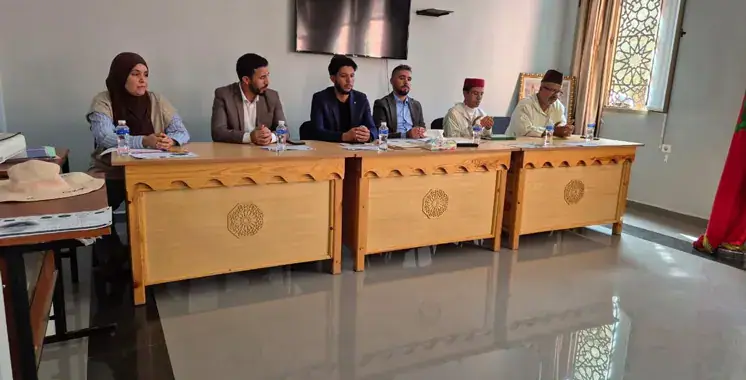
On October 29, 2026, an intellectual gathering was held at the Espace de la mémoire historique de la résistance et de la libération de Demnate to commemorate Morocco's Unity Day. The event was organized in coordination with various institutions, including the local council of oulémas and the Moroccan Association of Islamic Education Teachers. The meeting began with the recitation of Quranic verses and the Moroccan national anthem, setting a patriotic tone for the discussions.
The opening session featured speeches by notable figures, including Dr. Mohammed Alaoui, head of the Espace de la mémoire historique de la résistance et de la libération de Demnate, and Ismail Marji, secretary of the Azilal provincial section of the Moroccan Association of Islamic Education Teachers. The program included three presentations that explored the historical, religious, educational, and identity-related aspects of Unity Day.
Dr. Mohammed Hassnaoui, coordinator of activities for religious advisors at the Azilal local council of oulémas, presented a paper on the contributions of Moroccan oulémas, zaouïas, and traditional schools in consolidating religious and national unity. He highlighted the role of religious and educational institutions in preserving spiritual values and national identity.
Dr. Habiba Tarkawi, a cadre at the Espace de la mémoire historique de la résistance et de la libération de Demnate, discussed the historical significance of Unity Day and its place in Morocco's national narrative. Her presentation allowed participants to reflect on the celebration's importance and its role in shaping the country's history.
Abdelghani Bakken, a professor of Islamic education at the Aït Mohamed high school, presented a paper on the role of Islamic education in promoting national constants and reinforcing unity. He emphasized the contribution of education to transmitting national values and fostering a sense of belonging.
The event brought together a diverse audience of teachers, researchers, history and culture enthusiasts, and students. The discussions underscored the importance of revisiting and understanding the historical context and significance of Unity Day. The collaboration between various institutions and stakeholders was seen as a positive step towards promoting national unity and cultural heritage.
The commemoration of Unity Day in Demnate highlighted the efforts of Moroccan institutions to promote a deeper understanding of the country's history and cultural identity. By engaging researchers, educators, and the broader public, the event contributed to a richer appreciation of the values and principles that underpin Moroccan society.
Key points
- Moroccan scholars and educators gathered in Demnate to discuss the historical significance and cultural context of Unity Day.
- The event featured presentations on the role of Islamic education, oulémas, and traditional institutions in promoting national unity.
- The commemoration underscored the importance of understanding and preserving Morocco's cultural heritage and national identity.