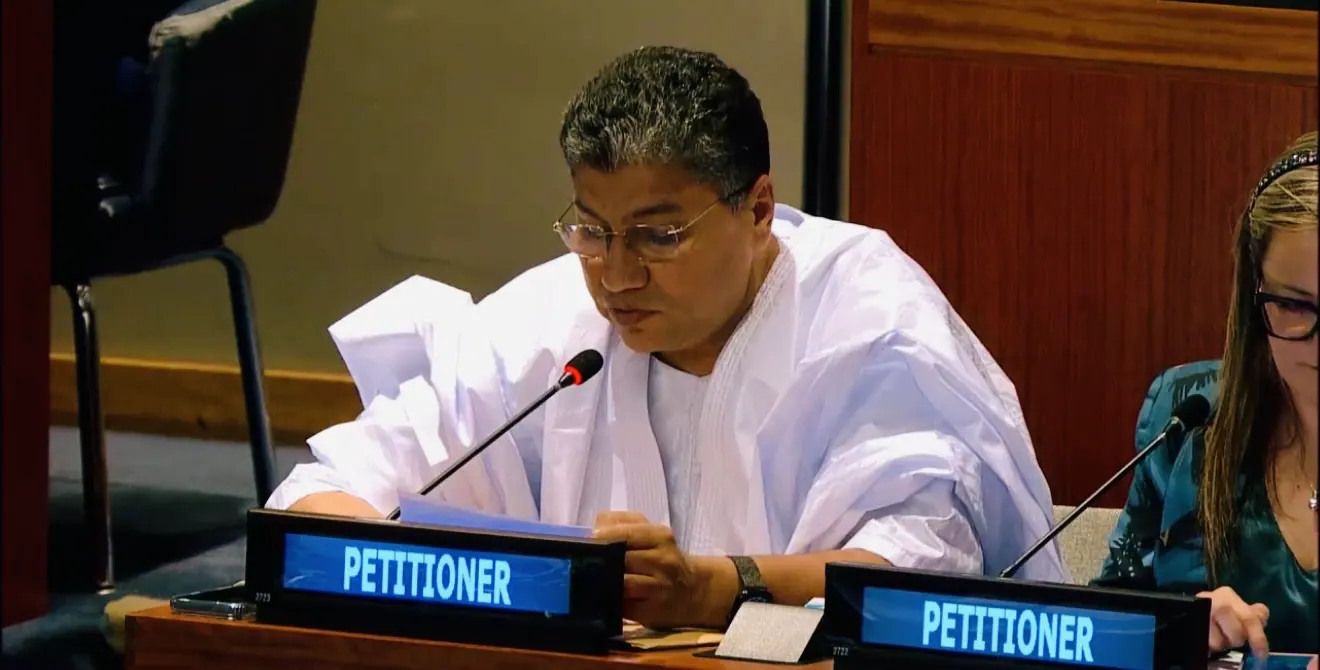
During a meeting of the UN's Fourth Committee in New York, Sidiati Bennamaoud, president of the Dakhla council, emphasized that the legitimacy of Western Sahara's elected officials comes from democratic elections. He stated that their legitimacy stems from the free choice of citizens through ballot boxes, contrasting with the Polisario Front's approach. Bennamaoud's comments underscored the democratic process in Western Sahara, where citizens elect representatives through a multi-party system.
Bennamaoud highlighted the differences between Western Sahara's democratic process and the situation in Tindouf refugee camps in Algeria. He noted that while Western Sahara's elected officials derive their authority from citizens' votes, the Polisario Front imposes its leadership without genuine representation. The Moroccan official pointed out that over 80% of Western Sahara's population participated in recent elections, which were monitored by international observers.
In contrast, Bennamaoud described the Polisario Front as an organization that operates under a Marxist-Leninist logic, with a centralized leadership that suppresses dissent. He argued that this approach denies the people of Tindouf camps their rights and freedoms, keeping them as hostages to an outdated separatist project. Bennamaoud's comments reflect Morocco's stance on the Western Sahara issue.
The Fourth Committee meeting provides a platform for various stakeholders to discuss Western Sahara's situation. Morocco's representatives have been vocal about the need for a negotiated solution. Bennamaoud's intervention highlighted the importance of democratic legitimacy in resolving the conflict. His comments also underscored the differences between Morocco's approach and that of the Polisario Front.
Bennamaoud emphasized that Western Sahara's democratic process is multi-tiered, starting from local councils and extending to national parliamentary representation. He noted that elected officials are accountable to their constituents and can be renewed or replaced through regular elections. This process, he argued, ensures that citizens' voices are heard and represented.
The situation in Tindouf camps has been a subject of concern for human rights organizations. Bennamaoud's comments drew attention to the humanitarian aspects of the conflict. He implied that the Algerian government's support for the Polisario Front exacerbates the situation, denying the people of Tindouf camps their basic rights and freedoms.
The Western Sahara conflict has been ongoing for decades, with Morocco and the Polisario Front having competing claims. The UN has been involved in efforts to find a peaceful solution. Bennamaoud's intervention at the Fourth Committee reflects Morocco's commitment to a negotiated settlement based on democratic principles and respect for human rights.
Key points
- Moroccan official emphasizes democratic legitimacy of Western Sahara's elected representatives.