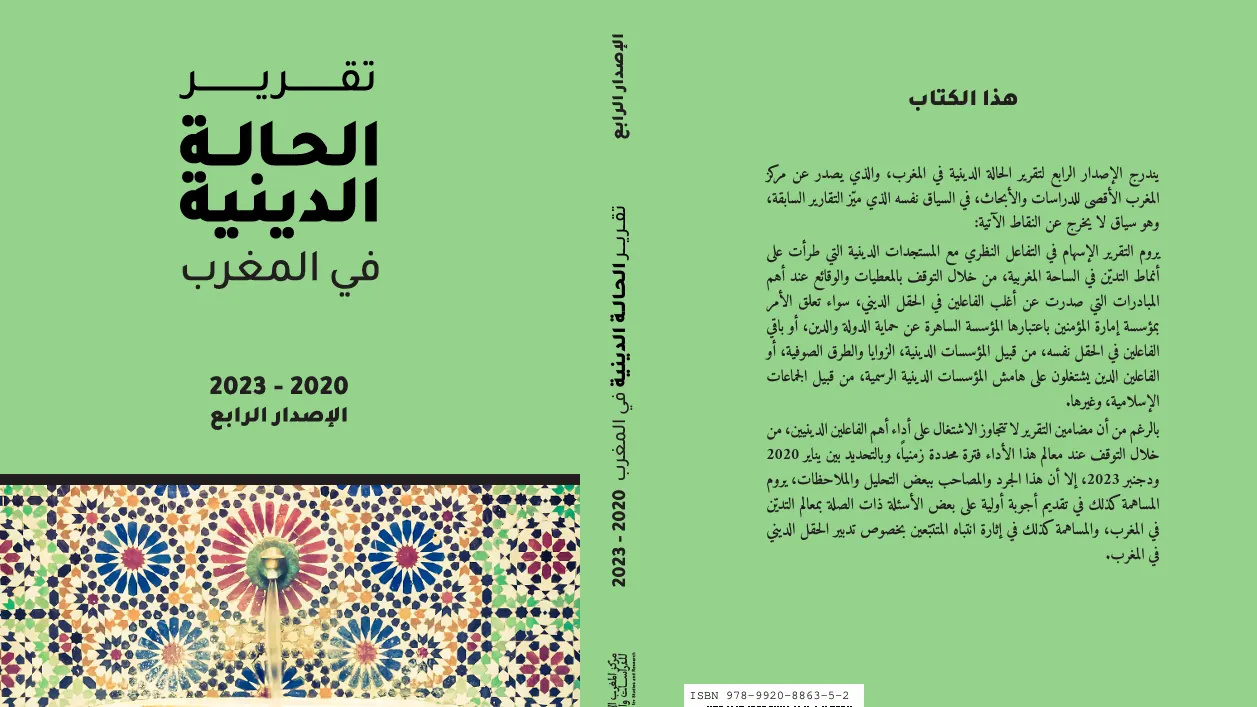
The Moroccan religious report for 2023, released by the Center for Moroccan Studies and Research, sheds light on the country's national and regional efforts to combat terrorism and extremism. The report, spanning over 400 pages, covers the period from 2020 to 2023 and includes 11 studies that monitor the performance of major institutions and actors in Morocco's religious field. The report aims to document the transformations in Morocco's religious landscape and track the performance of influential actors.
The report focuses on the security approach adopted by Morocco between 2003 and 2023, including proactive measures, drying up funding sources, and strengthening international security cooperation. It also examines extremism from a legal and human rights perspective, as well as Morocco's national, regional, and international efforts to combat terrorism between 2020 and 2023. These efforts include intelligence coordination, dismantling cells, rehabilitating and monitoring detainees, and promoting tolerant and moderate Islam.
The report is part of a documentary project that aims to track the transformations in Morocco's religious landscape and monitor the performance of influential actors. It does not provide a public survey to measure the religiosity of Moroccans or their positions on religion. Instead, it relies on monitoring activities, events, documents, and statements issued by official institutions, zawiyas, Sufi orders, Islamic movements, and other actors.
The report addresses several key questions, including the current state of religiosity in Moroccan society, changes in Moroccans' relationship with religion, and the impact of globalization, media, and social networks on religiosity. It also explores the challenges facing the religious field, including ideological and intellectual transformations, and the role of religion in state policies and the performance of institutions responsible for managing it.
The report highlights the role of the institution of the Commander of the Faithful, which plays a pivotal role in shaping Morocco's religious landscape. A study included in the report tracks the activities of this institution between 2021 and 2023, including its efforts to promote tolerant and moderate Islam, care for minorities, and extend its influence to several African countries.
The report also examines the performance of other institutions and initiatives that have been established to manage the religious field, including the Higher Council of Ulema, the Mohammedan League of Scholars, and the Mohammed VI Institute for the Training of Imams and Guides. These institutions have made significant efforts during the reporting period, but still face challenges related to the completion of the religious field's structure, qualification of human resources, and logistical and communication capabilities.
The report also monitors the performance of zawiyas and Sufi orders between 2020 and 2023, highlighting their impact on promoting tolerance, peace, and social development. Additionally, it tracks the religious affairs of the Moroccan community abroad, including issues related to mosques, religious guidance, identity, and integration.
Key points
- The report emphasizes the importance of collective action to protect societies from the scourge of hate speech and extremism.
- The report highlights Morocco's efforts to promote tolerant and moderate Islam and combat terrorism and extremism.
- The report provides a comprehensive overview of the transformations in Morocco's religious landscape and the performance of institutions responsible for managing it.