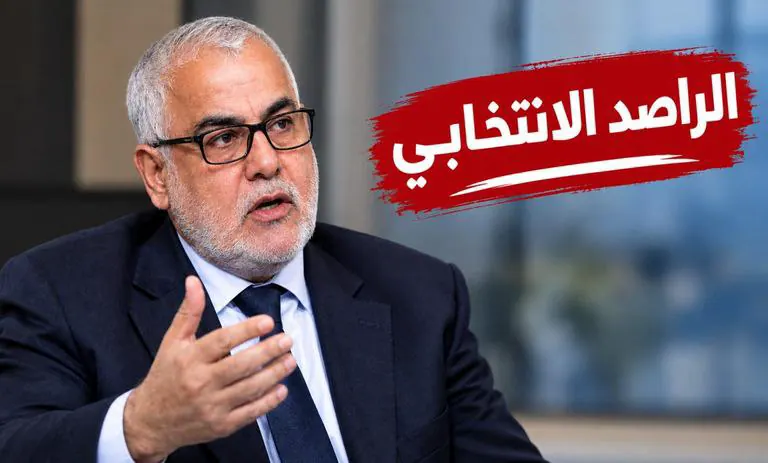
In a recent statement, Abdellah Benkirane, the general secretary of Morocco's Justice and Development Party, has sparked controversy by suggesting that Israel, Iran, and France have no influence over the appointment of the country's prime minister. Benkirane, a former prime minister himself, made the comments amidst the ongoing electoral campaign in Morocco. His remarks have been met with surprise, as they appear to conflate unrelated issues and draw unfounded connections between Morocco's internal politics and external actors.
Benkirane's comments come at a time when Morocco is preparing for legislative elections. As a former prime minister, he is well aware of the constitutional procedures surrounding the appointment of the head of government. According to the Moroccan constitution, the king has the authority to appoint the prime minister, a decision that is based on the outcome of the parliamentary elections. The appointed prime minister must be the leader of the party or coalition with the most seats in parliament.
Benkirane's experience with being appointed prime minister in 2011 and 2016 underlines his familiarity with the constitutional process. In both instances, his party, the Justice and Development Party, had emerged as the largest party in the elections, and he was subsequently appointed by the king. His comments, however, suggest that he now views the process as being subject to external influences, a claim that has raised eyebrows among observers.
Critics argue that Benkirane's remarks are at odds with Morocco's history of maintaining its sovereignty in the face of external pressures. The country's monarch, King Mohammed VI, has consistently upheld the constitution and respected the country's independence, even during times of significant international scrutiny. Benkirane's own experience with being appointed prime minister in 2011, despite international pressures, underscores the king's commitment to Morocco's sovereignty.
Observers note that Benkirane's comments may be seen as an attempt to garner support from certain quarters, but they risk undermining the country's constitutional processes. By suggesting that external actors have a say in Morocco's internal affairs, Benkirane may be seen as questioning the legitimacy of the country's institutions and its long-standing tradition of sovereignty.
The Moroccan constitution, adopted in 2011, enshrines the principles of democracy and the separation of powers. The document outlines the roles and responsibilities of the king, the parliament, and the government, providing a framework for the country's governance. Benkirane's comments have sparked concerns that some politicians may be seeking to blur the lines between the country's internal politics and external influences.
The controversy surrounding Benkirane's remarks highlights the complexities of Moroccan politics and the ongoing electoral campaign. As the country prepares to head to the polls, politicians and parties are seeking to position themselves for the upcoming elections. The debate over the appointment of the prime minister and the role of external actors in Morocco's internal affairs is likely to continue, with Benkirane's comments adding fuel to the fire.
Key points
- Moroccan politician Abdellah Benkirane says appointment of prime minister is a royal decision
- Benkirane's comments spark controversy amidst ongoing electoral campaign
- Critics argue that Benkirane's remarks undermine Morocco's sovereignty and constitutional processes