During the 2026 Moroccan election campaign, various political parties utilized music as a means of communication and mobilization. The Justice and Development Party, for instance, employed songs as an effective tool for outreach and engagement. They published these songs on their official YouTube channels and social media pages, and even broadcast them through loudspeakers installed on campaign vehicles.
The songs used by the Justice and Development Party, such as "إن شاء الله" (God willing) and "الشعب يريد إصلاح البلاد" (The people want to reform the country), were written in simple and understandable Moroccan dialect. These songs incorporated a religious vocabulary, including phrases like "يا رب خلق يا رحمن تقوي عبادك بالإيمان" (O Lord, creator, O Merciful, strengthen your servants with faith). The party also used social and political terms commonly used in everyday Moroccan life.
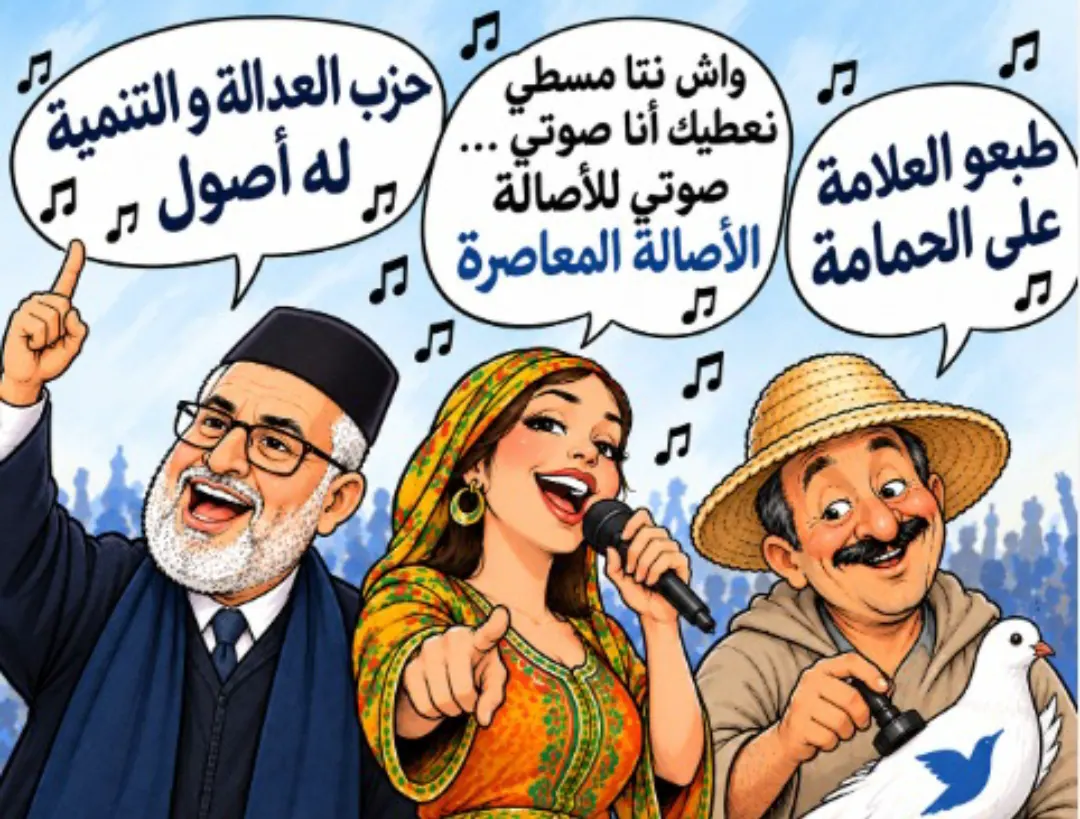
In contrast, the Authenticity and Modernity Party used a chant, "واش نتا مسطي نعطيك أنا صوتي" (What's your problem, I'll give you my vote), which was perceived as informal and humorous. This chant became a trend on TikTok and was even reproduced in neighboring countries. On the other hand, the National Rally of Independents used a chant, "طبعو العلامة على الحمامة" (They printed the sign on the dove), which was sung by women during campaign events.
The use of music in Moroccan election campaigns has transformed these events into lively and festive occasions, blending politics with popular music and entertainment. This approach has enabled parties to connect with voters in a more indirect way, using music to convey their message and values. The songs and chants used by parties have been widely shared on social media platforms.
A comparison of the music used by different parties reveals significant differences in production quality, marketing, and political messaging. The Justice and Development Party's songs are notable for their high production value, effective marketing, and impactful political message. In contrast, the chants used by other parties, such as the Authenticity and Modernity Party and the National Rally of Independents, have a more folkloric and humorous tone.
The use of music in Moroccan politics highlights the importance of adapting political discourse to resonate with a broader audience. When complex political issues are difficult to simplify, music and chants can provide a more accessible and engaging way to convey a party's message and values. This approach can be an effective means of influencing public opinion and shaping voters' perceptions.
Overall, the use of music in Moroccan election campaigns has become a key aspect of party strategies, reflecting the evolving nature of politics and communication in the country. By leveraging music and popular culture, parties can connect with voters and promote their agendas in innovative and engaging ways.
Key points
- Moroccan political parties are using music as a tool to attract voters and convey their message during the 2026 election campaign.
- The use of music in Moroccan politics has transformed election campaigns into lively and festive occasions, blending politics with popular music and entertainment.
- The production quality and messaging of the music used by different parties vary significantly, reflecting their unique approaches to communication and outreach.