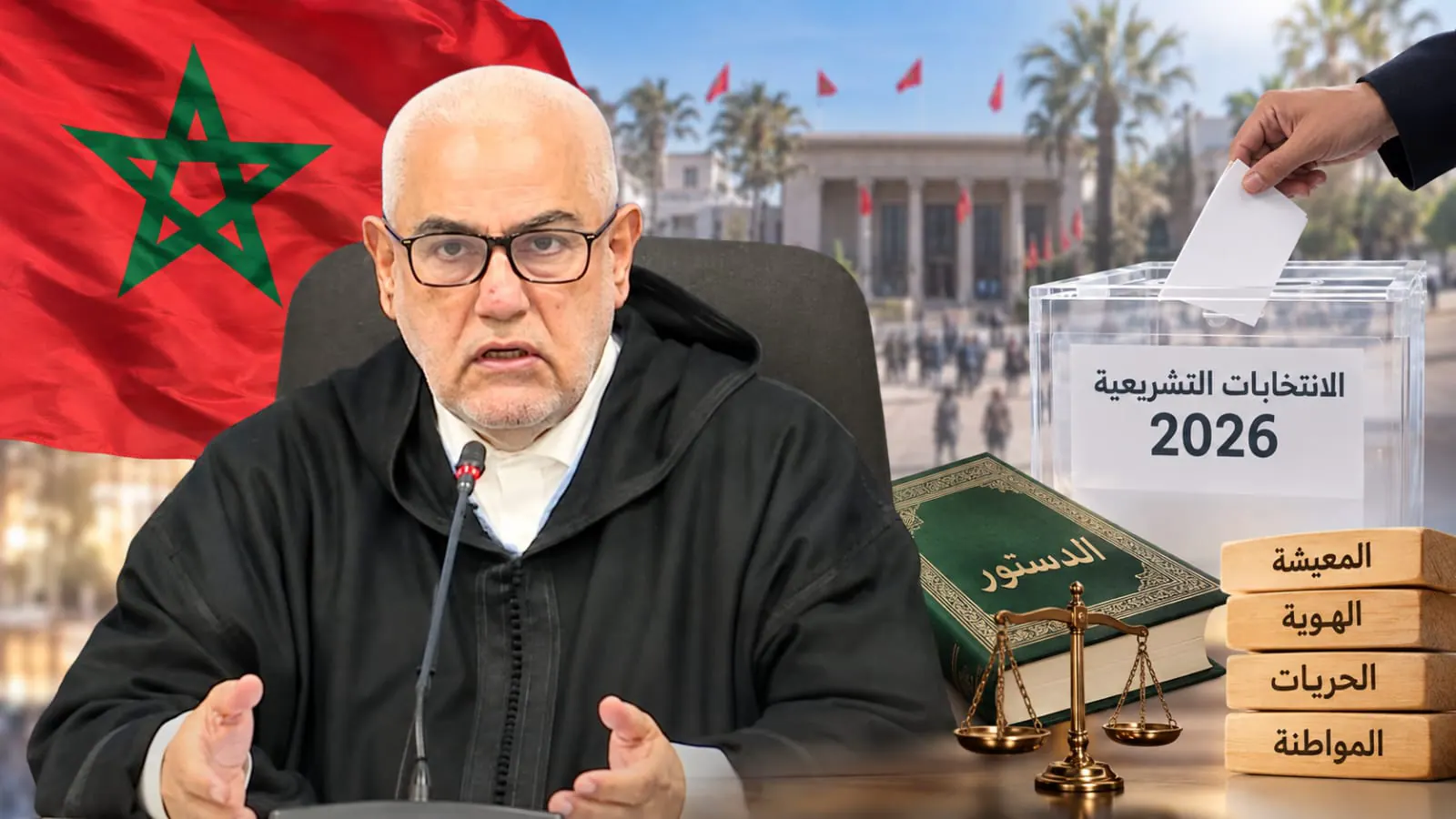
The recent statements of Moroccan politician Abdelilah Benkirane have reignited debates on the role of faith and identity in the country's political discourse. During a recent electoral campaign, Benkirane emphasized that Moroccans prioritize their faith and creed over everyday concerns such as high meat prices. This assertion sparked discussions on how political parties address various segments of society and the place of social, economic, and religious issues in their discourse.
Morocco is a country where Islam plays a significant role in its history, culture, and collective consciousness. As such, it is reasonable for political parties to define themselves based on their ideological references and defend their vision for society and the state. However, Moroccan society comprises diverse perspectives on the relationship between faith and politics, as well as the role of the state and individual freedoms.
The Justice and Development Party, led by Benkirane, presents a platform that combines its Islamic reference with social and economic issues affecting many Moroccans. These issues include social justice, dignity, anti-corruption efforts, and defending marginalized groups. Such concerns are not exclusive to religious individuals but are relevant to all citizens seeking a more equitable society.
A crucial question arises regarding citizens who agree with a party on certain issues but disagree on its stance on faith and politics. What about citizens who advocate for a civil state, viewing it as a framework that can unite Moroccans across different convictions without taking a stance on faith or targeting the religious? A civil state, as understood in modern political experiences, does not imply a position on faith or exclude it from society.
Instead, it is a state where the law and citizenship form the basis of relationships among all citizens. The civil state protects the rights of religious individuals to practice their faith while also safeguarding the rights of those with different convictions. Citizens who support a civil state can be strong advocates for the freedom of others, including Benkirane, to practice their faith without restriction.
The discussion sparked by Benkirane's statements extends beyond his person and party to a broader question about the nature of political discourse that can address citizens in all their dimensions. Social and economic issues should not be pitted against identity and faith; citizens should not be forced to choose between their basic needs and their convictions.
Moroccan citizens are concerned about their livelihoods, including the cost of living, as well as their identity and deeply held convictions. These are not conflicting issues but different aspects of a citizen's life. The political discourse should acknowledge this reality and strive to address the complexities of citizens' lives in a comprehensive manner.
Key points
- The concept of a civil state can provide a framework for coexistence among Moroccans with diverse convictions.
- Moroccan political parties must navigate the complex interplay between faith, identity, and social and economic issues.
- The country's political discourse should prioritize inclusivity, respecting the diversity of citizens' convictions and needs.