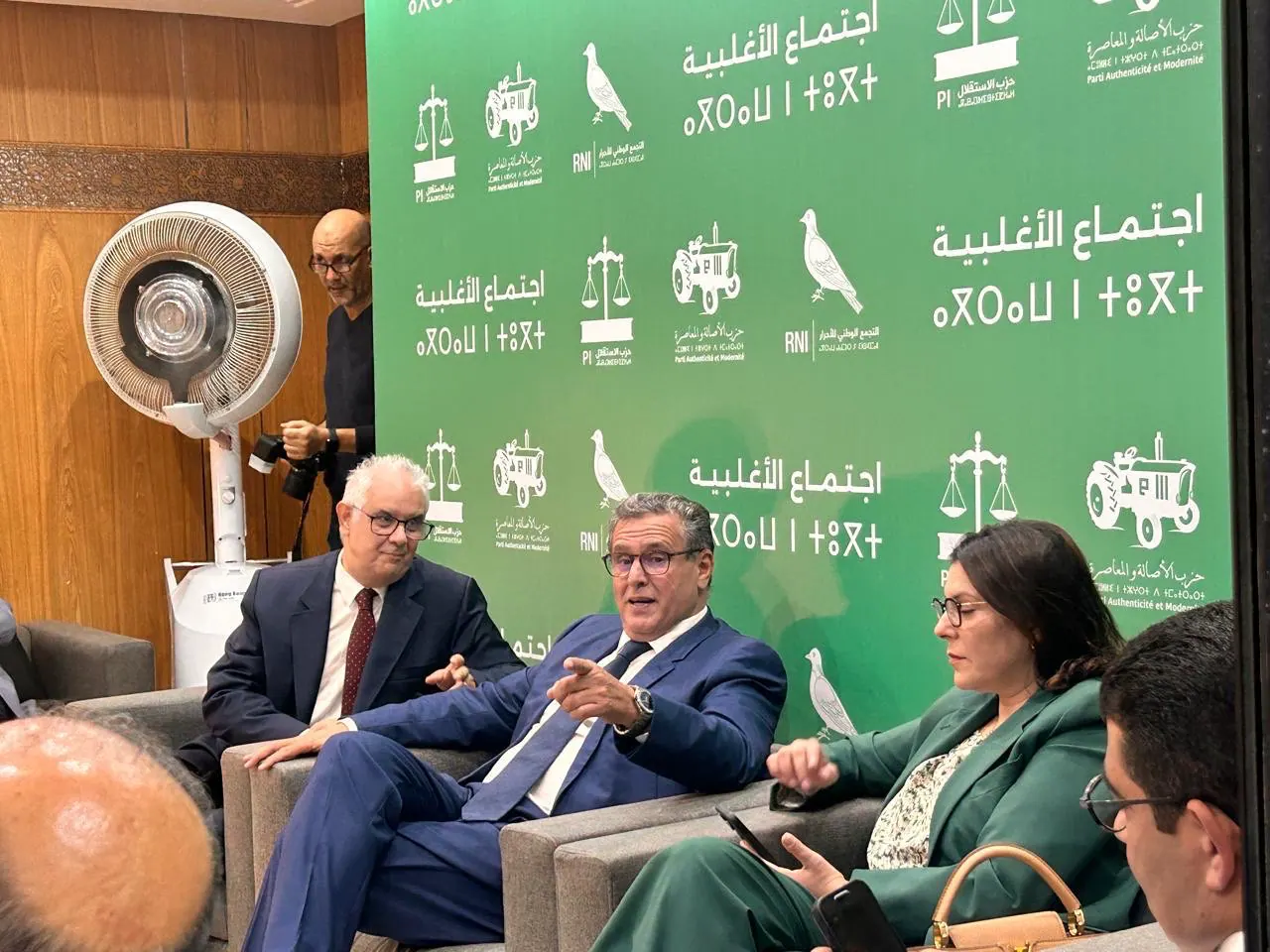
Moroccan political analyst Muhammad Faqihi believes the September 23, 2026, legislative election results have opened the door to multiple scenarios for forming the next government. With the Authenticity and Modernity Party (PAM) leading the elections, and a decline in the National Rally of Independents (RNI) and Istiqlal Party, alongside the notable return of the Justice and Development Party (PJD), Faqihi foresees various possibilities. He made these remarks in an interview with "Koud."
Faqihi notes that the PAM and RNI share significant commonalities in their orientations, programs, and political behavior. However, he attributes the differences between them primarily to the nature of their constituent elites. According to Faqihi, the RNI has a significant number of businessmen, while the PAM is more associated with notables from rural areas, traders, and large farmers. These differences are reflected in their perspectives on political action.
The possibility of forming a government majority that includes both the PAM and RNI depends on the positions and political and economic interests of these parties. Faqihi suggests that interests may ultimately prevail over disagreements and stated positions during the electoral period. He also references statements by influential PJD leaders before the elections, which did not categorically rule out forming a government team with the PAM.
Faqihi argues that the PJD's statements leave its role in government formation talks contingent on the evolving positions of various parties. If the RNI and PAM adhere to their stated positions, particularly those related to past political disagreements, it may be challenging to form a unified majority, potentially giving the PJD significant influence in government formation.
Faqihi also comments on the Istiqlal Party, suggesting it has become a recurring element in government formation without necessarily having a commensurate impact on political positions. He discusses the Progressive and Socialist Party, noting it has lost some of its historical and political distinctiveness by seeking to increase its seats and participate in government without clear influence on the political trajectory.
Regarding the Socialist Union of Popular Forces (USFP), Faqihi believes the party has lost some of its political credibility by attempting to maintain its interests and relationships with major parties. This choice, he argues, has affected its position within the political landscape. Faqihi concludes that the contours of the next government majority will be determined by party positions and interests.
Ultimately, Faqihi emphasizes that the election results, despite the changes they bring to the political landscape, do not solely determine the nature of alliances that will lead the next government. The interactions and negotiations among parties will play a crucial role in shaping the future government.
Key points
- The outcome of Moroccan government formation will depend on party positions and interests.
- Multiple scenarios are possible for the formation of the next Moroccan government.
- The Justice and Development Party may play a significant role in the next government.