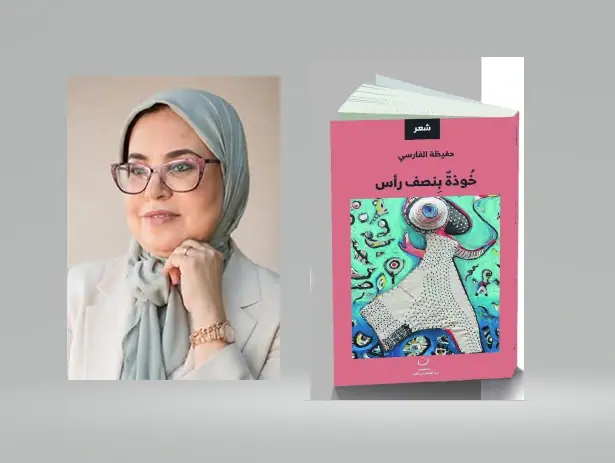
Moroccan poet Hafiza Farasi has published her debut poetry collection "خوذة بنصف رأس", a thought-provoking exploration of war, identity, and the human condition. The collection has been praised for its unique blend of powerful language and evocative imagery. Farasi's work delves into the complexities of human experience, revealing the depths of human emotion and the resilience of the human spirit. Her poetry navigates the complexities of war, identity, and the search for meaning in a chaotic world.
The title of the collection, "خوذة بنصف رأس", is a powerful metaphor that sets the tone for the rest of the book. The image of a helmet, typically a symbol of protection, is subverted to reveal a sense of vulnerability and incompleteness. This theme is woven throughout the collection, as Farasi explores the ways in which war and conflict can leave deep scars and challenge our understanding of the world. Through her poetry, Farasi invites readers to reflect on the human cost of conflict and the importance of empathy and understanding.
Farasi's poetry is characterized by its vivid imagery and powerful language. Her use of metaphor and symbolism adds depth and complexity to her work, drawing readers into a world of rich emotional texture. The collection is divided into several sections, each of which explores a different aspect of the human experience. From the horrors of war to the beauty of nature, Farasi's poetry is a testament to the power of language to capture the complexity of human emotion.
One of the key themes of the collection is the relationship between time and memory. Farasi explores the ways in which our experiences shape us and how our perceptions of time can be influenced by our emotions and experiences. Her poetry is a journey through time, as she reflects on the past, present, and future. Through her work, Farasi invites readers to consider the ways in which time shapes our understanding of ourselves and the world around us.
Farasi's collection has been praised for its innovative use of language and form. Her poetry is a fusion of traditional and modern styles, reflecting her own unique voice and perspective. The collection is a significant contribution to contemporary Moroccan literature, offering a fresh and exciting perspective on the human experience. Farasi's work is a testament to the power of poetry to challenge our assumptions and broaden our understanding of the world.
The collection "خوذة بنصف رأس" has been widely praised by critics and readers alike. Farasi's poetry has been described as powerful, evocative, and thought-provoking. Her work has been compared to that of other notable poets, and she has been hailed as a rising star in the literary world. The collection has also been recognized for its cultural significance, offering a unique perspective on the experiences of women in Morocco and the wider Arab world.
Farasi's debut collection is a significant achievement, and it is clear that she is a talented and innovative poet. Her work is a testament to the power of poetry to capture the complexity of human emotion and to challenge our assumptions about the world. As a writer, Farasi is committed to exploring the human condition, and her poetry is a reflection of her passion for social justice and her commitment to giving voice to the voiceless.
Key points
- The collection "خوذة بنصف رأس" is a powerful exploration of war, identity, and the human condition.
- Farasi's poetry is characterized by its vivid imagery and powerful language.
- The collection is a significant contribution to contemporary Moroccan literature, offering a fresh and exciting perspective on the human experience.
Reporting sources
- .. إنه نقصٌ أريد به باطن.. ! شعرية الزمن وبلاغة الاستعارة في ديوان «خوذة بنصف رأس» للشاعرة حفيظة الفارسي · Al Ittihad Al Ichtiraki