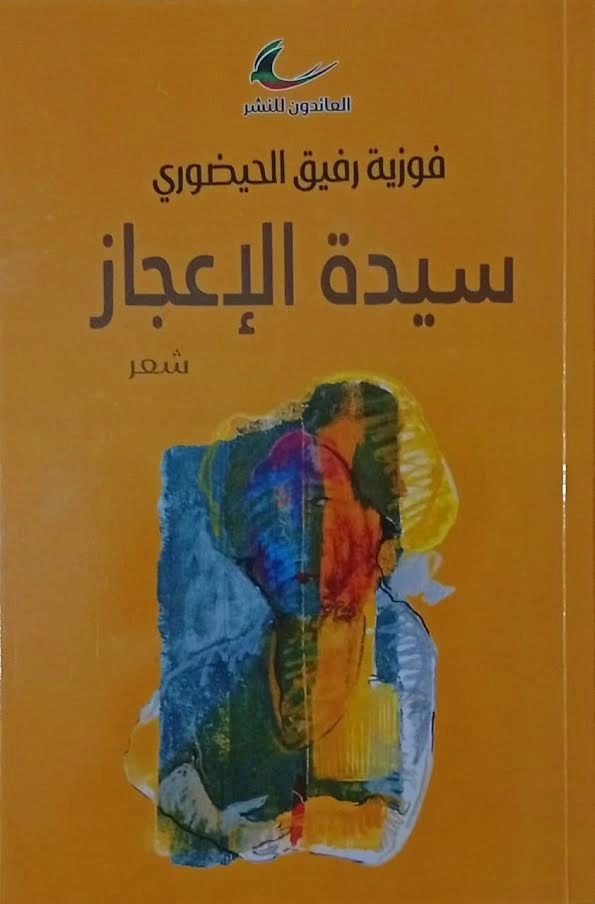
Moroccan poet Fawzia Rafik's latest collection, "Sidet Al-I'jaj," is a thought-provoking exploration of identity, self-discovery, and the human experience. The collection, which comprises 18 poems, is a testament to Rafik's skillful weaving of poetic language and her ability to tap into the complexities of human emotions. Through her poetry, Rafik invites readers to embark on a journey of self-discovery, one that is marked by themes of alienation, memory, and the search for meaning.
Rafik's collection is characterized by its non-linear narrative structure, which mirrors the fragmented nature of human experience. Her poems are not simply a reflection of her own life experiences but rather an attempt to distill the essence of human existence. By drawing on her own experiences as a woman, a poet, and an educator, Rafik creates a rich tapestry of emotions, thoughts, and reflections that resonate deeply with readers.
One of the key concerns of Rafik's poetry is the notion of identity and how it is shaped by our experiences, memories, and relationships. Her poems are a nuanced exploration of the self, one that acknowledges the complexities and contradictions of human existence. Through her use of imagery, metaphor, and symbolism, Rafik skillfully conveys the fluidity and multiplicity of identity, revealing the ways in which it is constantly evolving and shifting.
Rafik's collection has been praised for its innovative style, which blends elements of poetry, philosophy, and pedagogy. Her use of language is characterized by its lyricism, precision, and musicality, making her poems a joy to read and interpret. By pushing the boundaries of traditional poetry, Rafik creates a new kind of poetic language, one that is both personal and universal, and that speaks to readers on multiple levels.
Throughout her collection, Rafik engages with a range of themes and ideas, from the nature of knowledge and reality to the role of memory and imagination in shaping our understanding of the world. Her poems are a testament to the power of poetry to illuminate the human condition, to challenge our assumptions, and to inspire us to think differently about the world and our place within it.
Rafik's collection is also notable for its exploration of the relationship between the individual and society. Her poems reflect on the tensions between tradition and modernity, culture and identity, and the ways in which these tensions shape our experiences and perceptions. By giving voice to the complexities and contradictions of human existence, Rafik's poetry offers a nuanced and thought-provoking commentary on the world we live in.
Ultimately, Rafik's collection is a celebration of the human spirit, with all its complexities, contradictions, and paradoxes. Her poetry is a testament to the power of language to express the depths of human emotion, to explore the complexities of human existence, and to inspire us to think differently about the world and our place within it. By engaging with Rafik's poetry, readers are invited to embark on a journey of self-discovery, one that is marked by themes of identity, memory, and the search for meaning.
Key points
- Rafik's collection explores themes of identity, self-discovery, and the human experience through a non-linear narrative structure.
- The collection blends elements of poetry, philosophy, and pedagogy, creating a new kind of poetic language.
- Rafik's poetry offers a nuanced and thought-provoking commentary on the world we live in, reflecting on the tensions between tradition and modernity, culture and identity.