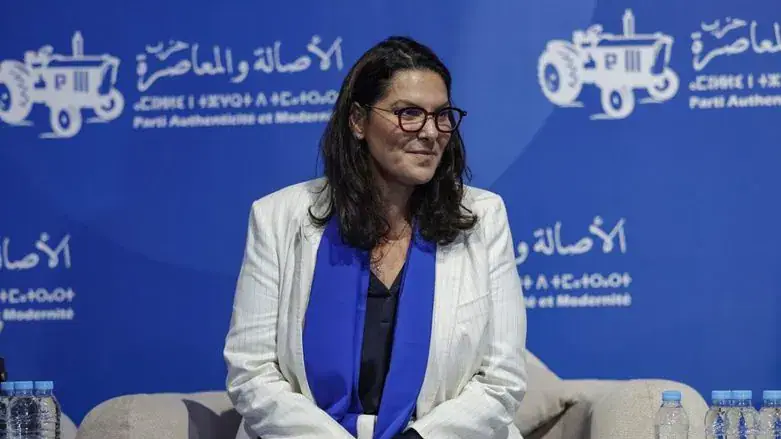
The Moroccan party PAM, led by Fatima Zahra El Mansouri, has emerged victorious in the recent elections. According to reports, the party has expressed its willingness to form alliances with other parties. El Mansouri stated that there are no red lines for the party when it comes to forming alliances. This development has sparked interest among political analysts and citizens alike, who are eager to see how the party will navigate the country's complex political landscape.
The PAM party's win is significant, as it sets the stage for the country's future political trajectory. With no clear lines drawn for potential alliances, the party is free to negotiate with other parties to form a government. This could lead to a range of possible outcomes, from a coalition government to a minority government. The PAM party's leadership has yet to reveal its strategy for forming alliances, but it is clear that they are open to exploring all options.
The recent elections in Morocco saw the PAM party emerge as the leading force, followed closely by the RNI and Istiqlal parties. The elections were marked by a high level of participation, with many citizens turning out to cast their votes. The PAM party's victory is seen as a significant development in Moroccan politics, and its approach to forming alliances will be closely watched by citizens and analysts alike.
Fatima Zahra El Mansouri, the leader of the PAM party, has expressed her commitment to working with other parties to form a government. Her statement that there are no red lines for alliances has been seen as a positive development, as it suggests that the party is willing to work with others to achieve its goals. This approach could lead to a more collaborative and inclusive government, which could help to address some of the country's pressing challenges.
The PAM party's win has also sparked reactions from other parties, with some expressing their congratulations and others criticizing the outcome. The Istiqlal party, which came third in the elections, has congratulated the PAM party on its win and expressed its commitment to working with other parties to form a government. Meanwhile, other parties have criticized the outcome, citing concerns about the electoral process and the results.
The formation of a new government in Morocco is expected to be a complex and challenging process. With the PAM party open to all possibilities for alliances, it is unclear what the final outcome will be. However, one thing is certain: the country's future trajectory will be shaped by the decisions made in the coming days and weeks. Citizens and analysts alike will be watching closely to see how the PAM party navigates the complex world of Moroccan politics.
The PAM party's approach to forming alliances will have significant implications for Morocco's future. If the party is able to form a stable and effective government, it could help to address some of the country's pressing challenges, such as economic growth and social inequality. However, if the party is unable to form a government, it could lead to instability and uncertainty. As the country waits with bated breath to see what the future holds, one thing is certain: the PAM party's win has set the stage for a fascinating and unpredictable period in Moroccan politics.
Key points
- The PAM party, led by Fatima Zahra El Mansouri, has won the recent elections in Morocco and is open to all possibilities for future alliances.