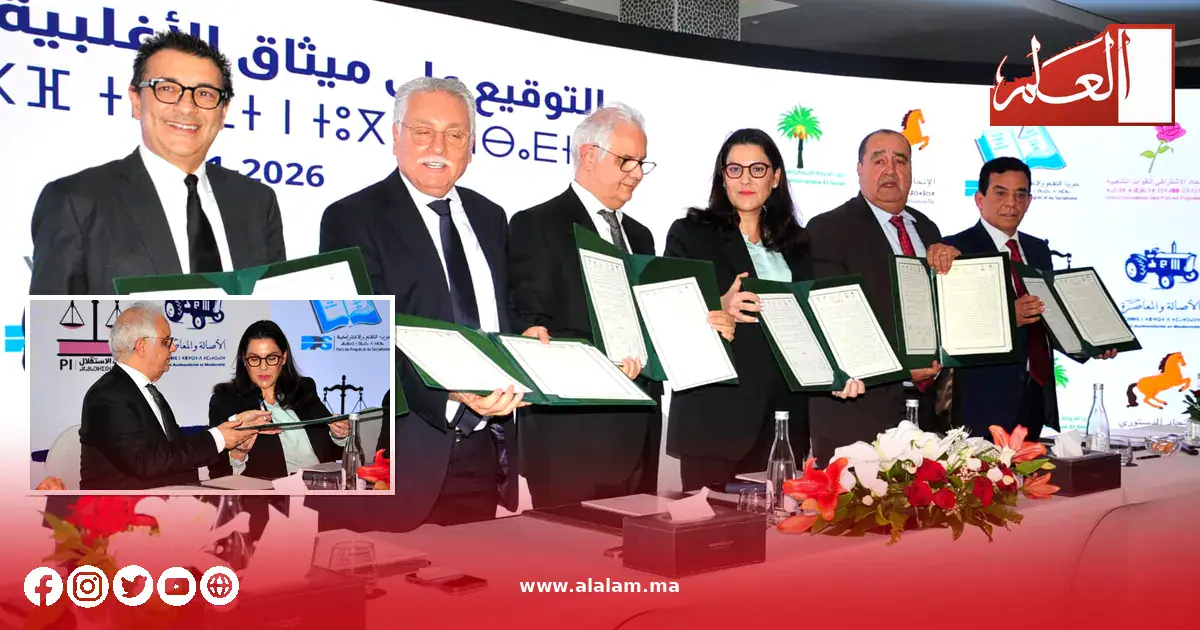
On November 24, 2026, Moroccan parties forming the government majority signed a charter aimed at coordinating their efforts between the government and parliament. The charter, signed by leaders of the parties including the Authenticity and Modernity Party, Independence Party, and others, outlines principles for collaborative work and mechanisms for achieving consensus. The charter emphasizes the importance of trust, solidarity, commitment, and loyalty among the parties.
The charter establishes four bodies to oversee the coordination of government and parliament activities. These bodies will be responsible for tracking the government's program and discussing major issues. The charter also stresses the need for the government's work to have a tangible impact on citizens' daily lives. By signing this charter, the parties aim to strengthen democracy, increase trust in elected institutions, and promote good governance.
The charter is based on Morocco's constitution and core values, including Islam, national unity, and democratic choice. It seeks to build a state based on law, institutions, participation, and pluralism. The charter also emphasizes the importance of promoting social justice, equality, and human rights. Furthermore, it highlights the need to accelerate infrastructure projects, launch new strategies in key sectors, and address issues related to youth, social affairs, and regional disparities.
The parties have committed to working together to achieve the goals outlined in the charter. They aim to enhance the effectiveness of government and parliamentary work, promote a positive and rights-based climate, and encourage dialogue with opposition parties. The charter also emphasizes the importance of accountability, transparency, and good governance in public life.
One of the key objectives of the charter is to restore citizens' trust in the political space and public affairs. To achieve this, the parties have pledged to prioritize the interests of the country, defend its sovereignty and independence, and work towards a just and equitable society. The charter also highlights the need to address the issue of Western Sahara and promote a peaceful resolution to the conflict.
The charter outlines several key commitments, including the promotion of social justice, equality, and human rights. The parties have also pledged to enhance the role of parliament, promote decentralization, and combat corruption. Furthermore, they aim to strengthen the country's international influence, promote economic growth, and improve the living standards of citizens.
The signing of the charter marks an important step towards enhancing cooperation between the government and parliament in Morocco. The parties have demonstrated their commitment to working together to address the country's challenges and promote democracy and good governance. The charter's success will depend on the parties' ability to implement its provisions and ensure that their actions have a tangible impact on citizens' lives.
Key points
- The charter aims to enhance democracy and governance in Morocco by promoting coordination between the government and parliament.
- The parties have committed to prioritizing the interests of the country, defending its sovereignty and independence, and working towards a just and equitable society.
- The charter establishes four bodies to oversee the coordination of government and parliament activities, aiming to track the government's program and discuss major issues.