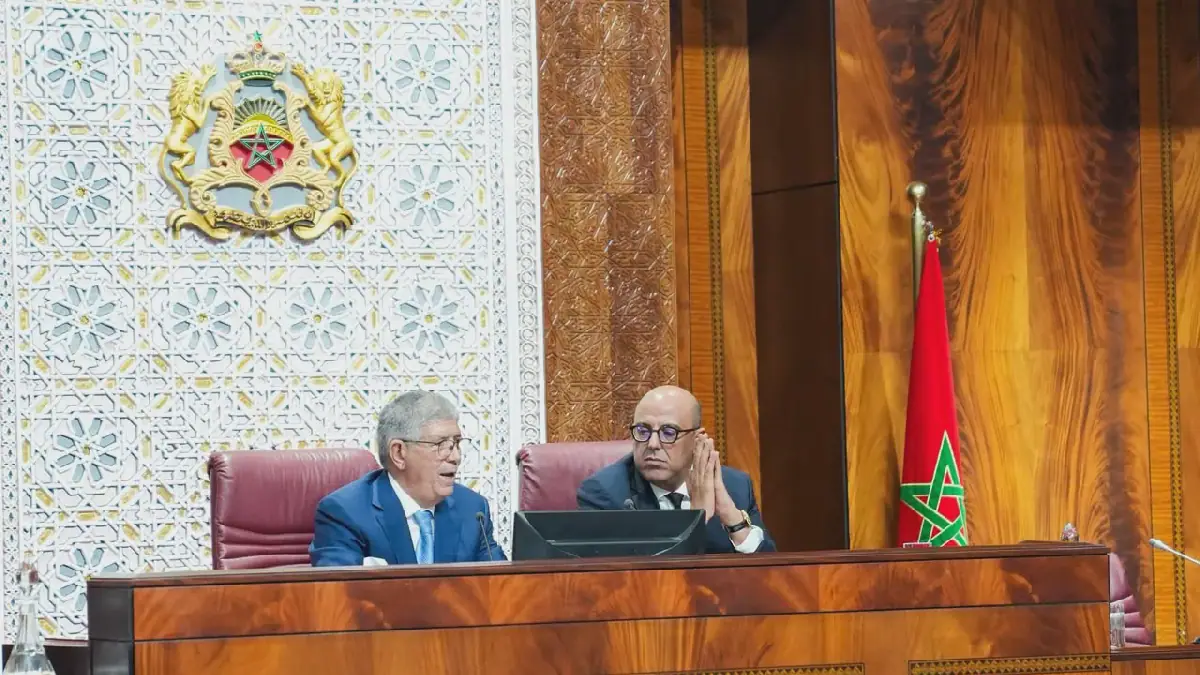
The Moroccan parliament held an extraordinary joint session on Monday, November 2, 2026, to discuss the latest developments in the Western Sahara issue. The session was convened in response to the UN Security Council's resolution 2797 of 2025, which has introduced a new dynamic to the long-standing dispute. During the session, Ahmed Atwizi, Speaker of the House of Representatives, emphasized that the Western Sahara issue is not just a border dispute but a matter of national existence and consensus.
Atwizi stressed that the Moroccan people have consistently demonstrated their commitment to national unity, with the Western Sahara issue being a top priority. He added that the national mobilization to defend territorial integrity will continue, with all institutions, political forces, and components of the nation playing a role. The Speaker of the House of Representatives also highlighted the significance of the recent UN Security Council resolution, which acknowledged the autonomy initiative under Moroccan sovereignty as a foundation for a political solution to the conflict.
The recent developments in the Western Sahara issue have been welcomed by various Moroccan political parties, unions, and civil society organizations. These groups have praised the government's efforts to defend national sovereignty and territorial integrity. In separate statements, they expressed their support for King Mohammed VI's leadership on the issue and reaffirmed their commitment to standing behind the monarch.
The UN Security Council's decision not to extend the mandate of the UN Mission for the Referendum in Western Sahara (MINURSO) has been seen as a significant development. This decision marks a new phase in the handling of the Western Sahara issue, with Morocco's sovereignty over the territory being increasingly recognized. According to Atwizi, this change requires a re-evaluation of the situation and a focus on consolidating national sovereignty.
Mohamed Ould Al-Rashid, Speaker of the House of Councillors, also emphasized the importance of the King's leadership in guiding Morocco's position on the Western Sahara issue. He noted that the current phase represents a critical juncture in the history of the national cause. Ould Al-Rashid added that the wise leadership of King Mohammed VI has been instrumental in achieving the political and diplomatic gains that Morocco has accumulated.
The Moroccan parliament's commitment to defending national sovereignty over Western Sahara has been reiterated in the face of recent international developments. The issue remains a top priority for the Moroccan government, with all parties and institutions expected to play a role in promoting national unity and territorial integrity. The UN Security Council's resolution has introduced a new dynamic to the dispute, with Morocco's sovereignty over Western Sahara being increasingly recognized.
The situation in Western Sahara remains a complex and sensitive issue, with Morocco's sovereignty over the territory being a key point of contention. The international community continues to play a role in efforts to resolve the dispute, with the UN Security Council's resolution providing a framework for future negotiations. Morocco's commitment to defending its national sovereignty and territorial integrity remains unwavering, with all parties and institutions expected to support this effort.
Key points
- Moroccan lawmakers reaffirm their commitment to defending national sovereignty over Western Sahara.
- The UN Security Council's resolution 2797 of 2025 has introduced a new dynamic to the Western Sahara dispute.
- Morocco's sovereignty over Western Sahara is increasingly recognized by the international community.