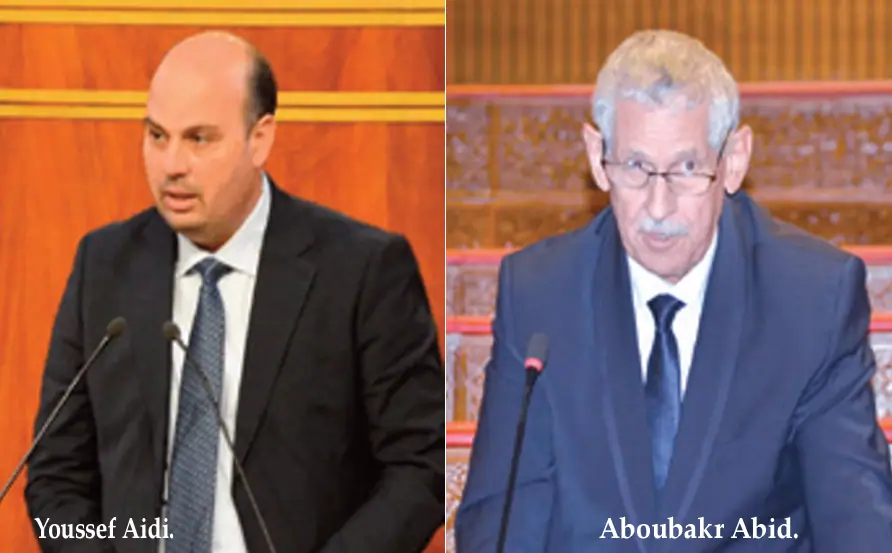
The Socialist Group in Morocco's House of Councillors has brought attention to two critical issues: the recovery of debts in courts and the role of scientific research in territorial development. During a recent plenary session, the group's president, Youssef Aidi, raised concerns about the working conditions of recovery agents in courts, citing the need for better protection and revised compensation. Aidi highlighted the challenges faced by these agents, including the use of state vehicles for recovery operations and the lack of resources.
Aidi specifically mentioned the case of a recovery agent who was attacked in Azrou while performing his duties, emphasizing the need for enhanced protection measures. He also called for a revision of the decree governing compensation for recovery agents, which has not been updated since 2011. The current system has led to a decrease in benefits, with agents receiving a fixed annual indemnity of 3,600 dirhams, regardless of the amount recovered. Aidi argued that this system lacks proportionality between responsibility, effort, and remuneration.
The Socialist Group's concerns about judicial recovery were echoed by other parliamentarians, who emphasized the importance of addressing the challenges faced by recovery agents. The group's interventions highlighted the need for improved working conditions, enhanced protection, and revised compensation to ensure the effective recovery of debts. The issue has sparked a debate about the management of judicial recovery and the role of recovery agents in Morocco's justice system.
In a separate intervention, Aboubakr Abid, a member of the Socialist Group, focused on the role of scientific research and innovation in territorial development. He emphasized that research should be linked to economic and social needs, and that it should be placed at the heart of public policies aimed at promoting territorial equity and equal opportunities. Abid highlighted the importance of adapting university and scientific infrastructure to the specific needs and potential of different regions.
Abid specifically mentioned the region of Laâyoune-Sakia El Hamra, which is experiencing sustained development. He called for the development of university structures, research infrastructure, and new programs tailored to the region's economic and social needs. The goal is to train skilled professionals who can contribute to major development projects and drive regional growth. Abid emphasized that universities should not only provide education and training but also become key players in territorial development.
The debate about scientific research and innovation highlighted the need for a more integrated approach to territorial development. Abid argued that universities should be part of an ecosystem that combines education, research, innovation, and engagement with the socio-economic environment. This can be achieved through the creation of research structures, specialized laboratories, and partnerships with economic stakeholders. The aim is to make universities drivers of development and sources of skilled professionals.
The interventions by the Socialist Group in Morocco's House of Councillors reflect the ongoing efforts to address critical issues in the country's justice system and territorial development. The concerns raised about judicial recovery and scientific research highlight the need for policy reforms and improved management of public services. The debate is expected to continue, with parliamentarians working to find solutions that promote more effective and equitable development.
Key points
- Moroccan parliamentarians call for improved working conditions and revised compensation for recovery agents in courts.
- The Socialist Group emphasizes the need for scientific research and innovation to be linked to economic and social needs in territorial development.
- Parliamentarians highlight the importance of adapting university and scientific infrastructure to the specific needs and potential of different regions.