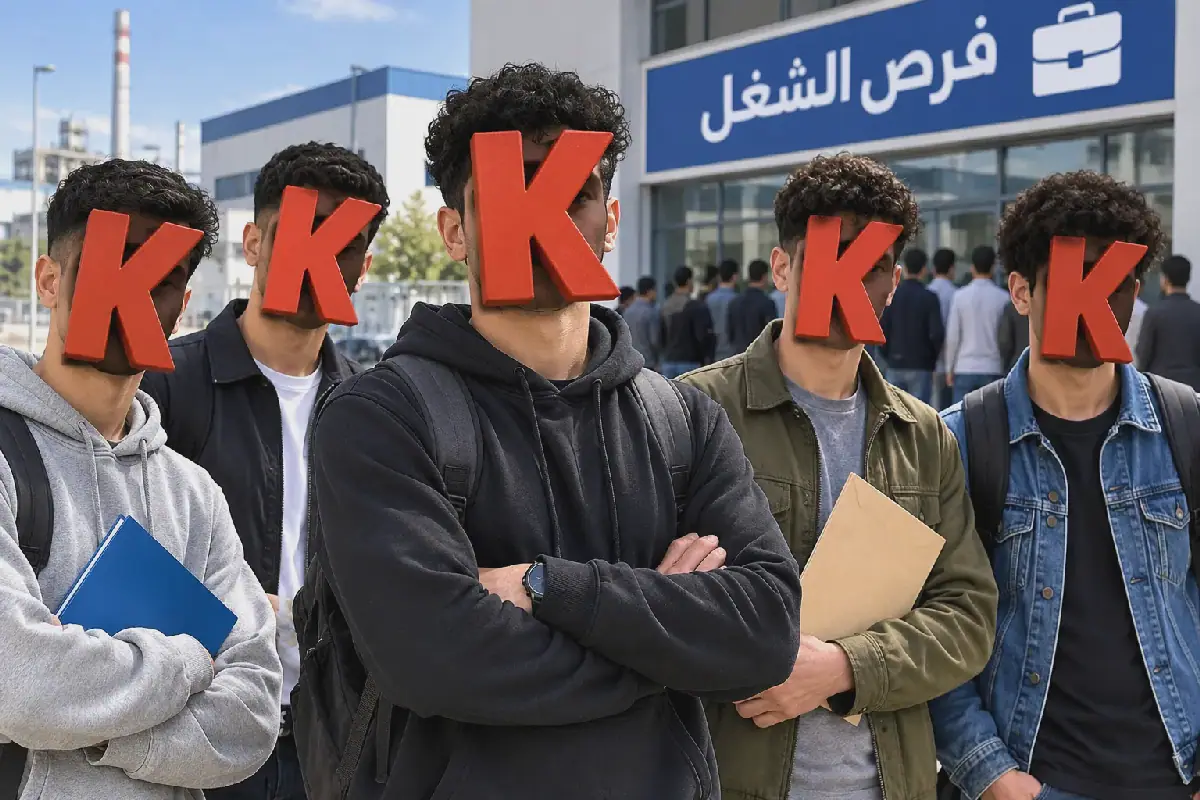
Moroccan parliamentarian Abd al-Wahid Boulaiche has brought attention to a potential issue of discrimination against young people from Tangier in accessing the job market. Through a written question addressed to the Minister of Economic Integration, Small Enterprises, Employment, and Skills, Boulaiche highlighted the challenges faced by Tangier's youth during the initial stages of job application selection. The issue centers around the letter "K" on the national ID card, which is specific to Tangier.
The city of Tangier has become one of Morocco's prominent industrial and economic hubs, attracting significant national and international investments. It hosts industrial zones and production units in various sectors such as automotive, textiles, and logistics. Despite this economic dynamism, Boulaiche noted that some young people from Tangier continue to face difficulties in accessing job opportunities. He expressed concerns that certain practices in the initial selection process may raise questions about the respect for equal opportunities among applicants.
According to Boulaiche, the problem does not only concern competition for available positions but also extends to the stage of evaluating application files. In some cases, an applicant's geographical origin, as indicated by their national ID card, may influence the acceptance or rejection of their application. The parliamentarian cited instances where young people from Tangier may be rejected solely based on their ID card, without their files being thoroughly evaluated for qualifications and professional experience.
The letter "K" on the national ID card has become a focal point in this discussion, as Boulaiche suggested that it may lead to potential rejection of applicants due to their administrative affiliation with Tangier. This issue raises questions about the criteria used in the initial selection process by some companies and their relevance to the required qualifications for advertised positions. Boulaiche emphasized that the National Agency for Employment and Skills Promotion has made declarations that he relied on to raise this issue.
Boulaiche referenced Article 9 of the Labor Code, which prohibits discrimination based on national or social origin that could affect equal opportunities or treatment in employment and profession. He also cited Decree No. 2.11.621 related to organizing public employment competitions, which emphasizes the principles of merit, equal opportunities, and equal chances among applicants. The parliamentarian sought clarification on practices related to accessing job opportunities.
Boulaiche requested that the Minister of Economic Integration, Small Enterprises, Employment, and Skills disclose the government's measures to ensure that young people from Tangier benefit from job opportunities created by national and international investments in the city. This request comes as Tangier continues to experience economic growth and development, driven by its strategic location and investment inflows.
The issue raised by Boulaiche highlights the need for fair and transparent recruitment practices in Morocco. The government's response to this question is expected to provide insight into its strategies for promoting equal opportunities and addressing potential discrimination in the job market. The case also underscores the importance of ensuring that employment practices comply with existing laws and regulations, such as the Labor Code and relevant decrees.
Key points
- The parliamentarian's concerns center around the potential for discrimination against young people from Tangier due to the city's unique identifier on national ID cards.
- The issue has sparked a discussion about the criteria used in the initial selection process for job applications and the need for fair and transparent recruitment practices.
- Boulaiche has requested that the government disclose its measures to ensure equal access to job opportunities for young people from Tangier.
Reporting sources
- إقصاء شباب طنجة من فرص العمل بسبب الحرف K !! · tanja7.com