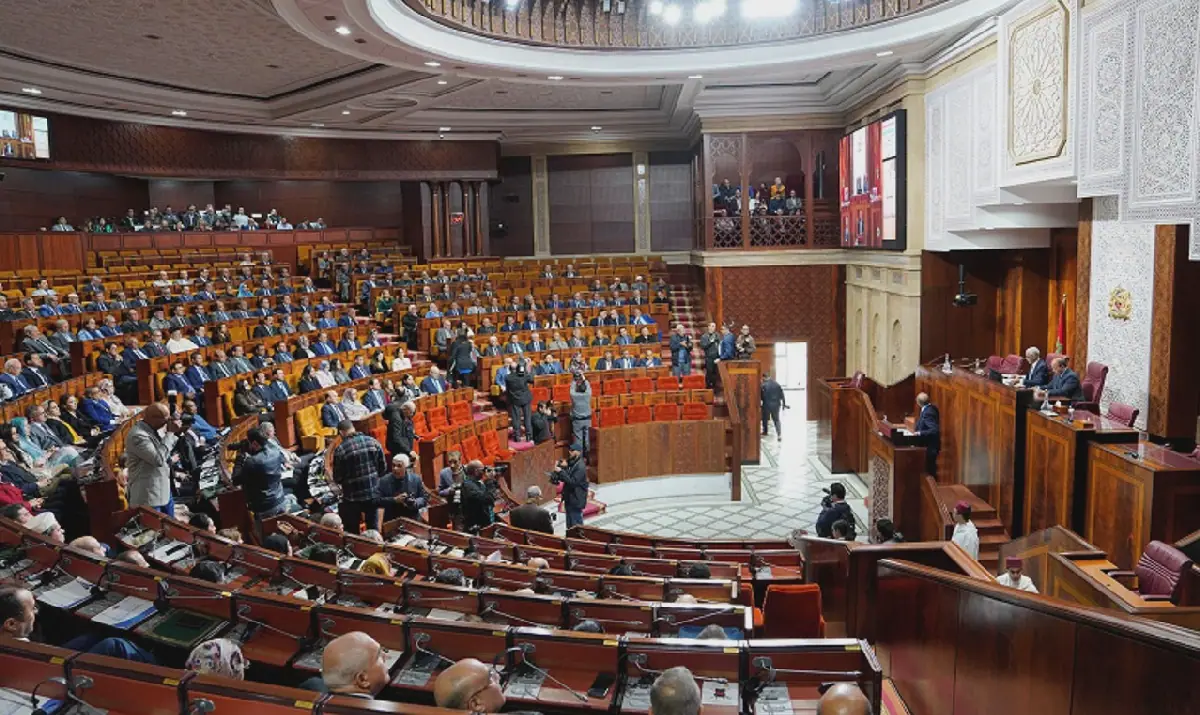
Morocco's parliament convened on November 2, with members from all parties expressing their support for the government's stance on Western Sahara. This comes after the United Nations Security Council failed to renew the mandate of the UN Mission for the Referendum in Western Sahara (MINURSO) due to a Russian veto on October 30. The Moroccan government had chosen not to pursue the renewal of MINURSO's mandate, instead opting to take a more assertive approach to the issue.
For 35 years, Morocco had been engaged in a defensive exercise at the UN, seeking to renew MINURSO's mandate and carefully monitoring the language used in related resolutions. However, with the recent veto, Morocco has shifted its approach, with the government now taking a more proactive role in managing the dispute. The Moroccan Cabinet had issued a statement on October 30, expressing satisfaction with the outcome and announcing that the presence of MINURSO in the southern provinces would come to an end.
The Russian veto on the UN resolution extending MINURSO's mandate marked a significant development, as it was the first time a permanent member of the Security Council had used its veto power on this issue. The veto also reflected a change in Russia's position, as Moscow had previously abstained on the issue. The move has been seen as a significant shift in the international landscape on Western Sahara.
In response to the changed circumstances, the Moroccan government has announced that it will no longer seek to have the UN verify its sovereignty over Western Sahara on an annual basis. Instead, Morocco will focus on bilateral and regional diplomacy, building on the progress made in recent discussions with Algeria, Mauritania, and the Polisario Front. The government has also emphasized its commitment to the autonomy plan under Moroccan sovereignty as the basis for negotiations.
The Moroccan parliament's unanimous endorsement of the government's stance reflects a broad consensus on the issue. The parliament's speaker, Ahmed Touizi, described the development as a "historic turning point" and called for a more political approach to the dispute. The president of the Chamber of Councillors, Mohamed Ould Errachid, outlined three key areas of focus: more effective parliamentary diplomacy, legislative preparedness, and sustained national mobilization.
The various political groups in the parliament expressed their support for the government's stance, with some highlighting the importance of maintaining Moroccan sovereignty over Western Sahara. The president of the Socialist Group in the Chamber of Representatives, El Hassan Lachguar, stated that the Moroccan identity of the southern provinces was a historical, geographical, and human truth. Other parties, such as the Istiqlal and the PAM, also welcomed the government's approach.
Despite the sense of optimism and unity in the Moroccan parliament, there are still challenges ahead. The military situation in Western Sahara remains a concern, and the withdrawal of MINURSO may create a power vacuum. Additionally, the international community's response to Morocco's new approach remains to be seen. Nevertheless, the Moroccan government's decision to take a more assertive role on Western Sahara marks a significant shift in its approach to the long-standing dispute.
Key points
- The Moroccan parliament has unanimously endorsed the government's stance on Western Sahara, marking a significant shift in approach to the long-standing dispute.
- The Russian veto on the UN resolution extending MINURSO's mandate has created a new situation, with Morocco choosing not to pursue the renewal of the mission's mandate.
- The Moroccan government will focus on bilateral and regional diplomacy, building on recent discussions with Algeria, Mauritania, and the Polisario Front.