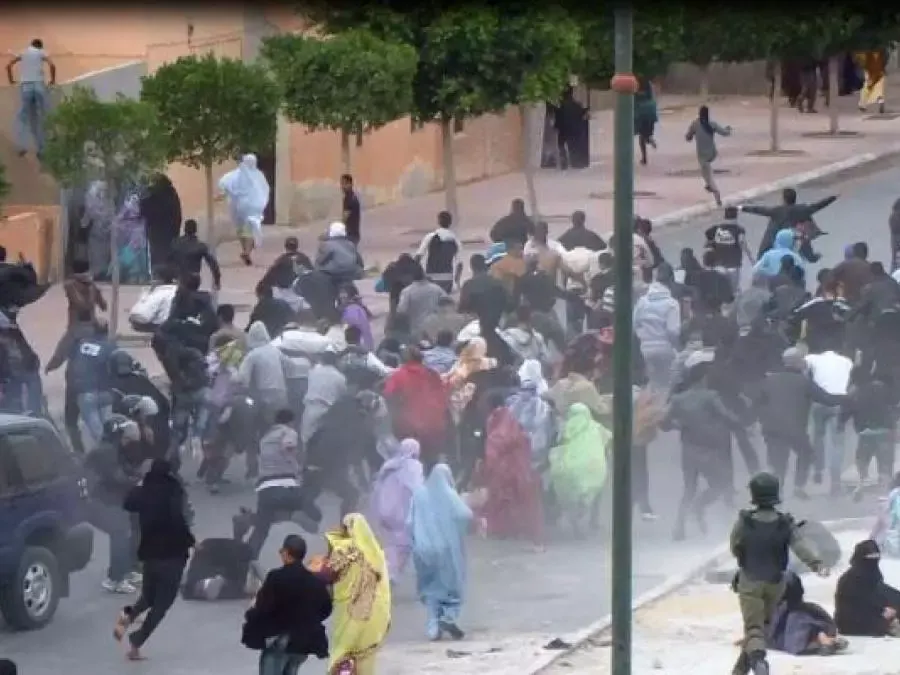
The occupied Western Sahara regions are experiencing an unprecedented escalation of systematic repression by Moroccan forces, coinciding with the country's legislative elections. The Sahrawi Anti-Occupation Mechanism (Eisakom) condemned the ongoing repression and retaliation against Sahrawi activists and citizens, who are demanding their right to self-determination and independence. According to Eisakom, the Moroccan occupation forces are using force to silence Sahrawis, including women, who are peacefully expressing their opposition to the "illegitimate" elections.
The repression has taken various forms, including raids on homes, arrests, and intimidation. Eisakom reported that Moroccan forces raided the homes of Sahrawi women in the occupied city of Boujdour, arresting them for peacefully expressing their opposition to the elections. The organization described these actions as a "new crime" adding to Morocco's record of systematic human rights abuses, which are punishable under international law. The actions are considered a blatant violation of the Universal Declaration of Human Rights and the International Covenant on Civil and Political Rights.
The National Mechanism for Coordinating Human Rights Work warned of the dangers of continued repression and systematic harassment by Moroccan occupation authorities in Western Sahara. The organization noted a significant increase in human rights abuses as the Sahrawi people prepare to commemorate their National Unity Day on October 12. The targeting of citizens and activists for their peaceful positions is seen as a futile attempt to deter them from demanding their right to self-determination and independence.
The Sahrawi Association for Victims of Gross Human Rights Violations, committed by the Moroccan State, documented the arrest of 17-year-old Sahrawi youth, Omar Moulay Himdaha, in the occupied city of Smara. He was detained by Moroccan security forces and subjected to various forms of abuse and lengthy interrogation, which lasted 10 hours. The association considered this treatment a blatant violation of human rights and guarantees of a fair trial.
The Sahrawi Association also expressed concern for the safety of Omar Moulay Himdaha and his family, holding the Moroccan occupation authorities responsible for ensuring their well-being. The organization will continue to monitor this incident as part of its efforts to document human rights abuses committed against Sahrawi civilians in the occupied cities of Western Sahara. Human rights organizations are calling for independent and transparent investigations to hold those responsible for serious abuses accountable.
The continued repression and retaliation against Sahrawi activists and citizens have sparked international concern. The international community is urged to take a closer look at the human rights situation in Western Sahara and to pressure the Moroccan government to respect the rights of the Sahrawi people. The Sahrawi people's right to self-determination and independence remains a pressing issue, with many calling for a peaceful resolution to the conflict.
As the situation in Western Sahara continues to deteriorate, human rights organizations are working to expose the abuses and push for accountability. The legislative elections in Morocco have highlighted the need for greater scrutiny of the country's human rights record, particularly in the occupied territories. The international community must take a stronger stance in support of the Sahrawi people's rights and push for a peaceful resolution to the conflict.
Key points
- Moroccan forces are escalating repression in Western Sahara, targeting Sahrawi activists and citizens.
- The repression is a blatant violation of human rights and international law.
- The international community is urged to take a closer look at the human rights situation in Western Sahara.