The African Atlantic Gas Pipeline (AAGP) project, connecting Morocco and Nigeria, has progressed to the stage of securing private and multilateral funding. The project's estimated cost stands at $25 billion. Morocco and its partners aim to make a final investment decision in the fourth quarter of 2026. The project was discussed during a high-level meeting on "Financing the Future" organized by Morocco and the United Nations Development Programme in New York on September 23.
The Moroccan government is seeking to mobilize private funding and multilateral development financing for the project. Moroccan Foreign Minister Nasser Bourita highlighted the pipeline as one of the projects supported by the Kingdom to connect African economies and markets. He emphasized that Africa's infrastructure financing needs range from $181 billion to $221 billion annually from 2023 to 2030. Bourita called on multilateral development banks to reduce risks and improve project bankability to attract long-term private capital.
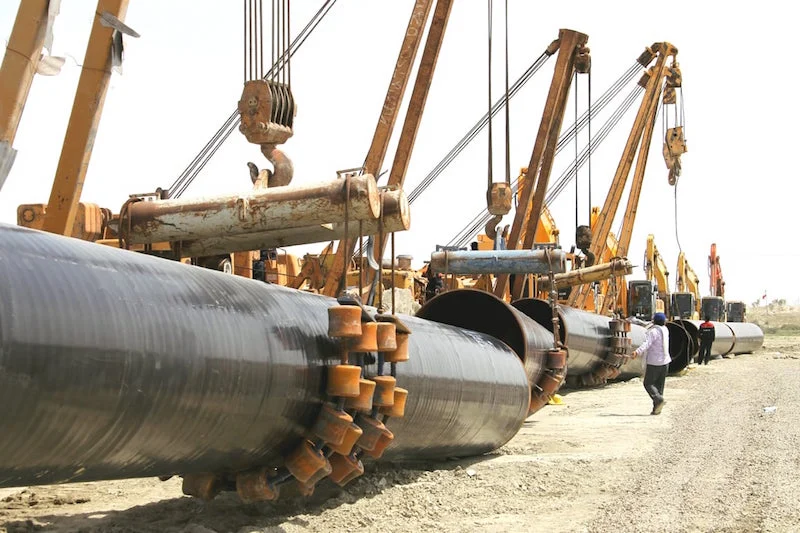
Despite the progress, the project faces significant challenges, including securing funding and navigating complexities related to the multiple countries it will traverse. The pipeline will stretch approximately 6,800 to 6,900 kilometers across 13 countries along the Atlantic coast, from Nigeria to Morocco. There are also questions about the possibility of extending it to Europe, given the continent's push to reduce dependence on fossil fuels.
The pipeline is expected to transport up to 30 billion cubic meters of gas annually, with around 15 billion cubic meters destined for Morocco and Europe. It will connect to the Maghreb-Europe gas pipeline in Morocco. In May 2024, Morocco's National Office for Hydrocarbons and Mines Director-General, Amina Benkhadra, announced that a major European gas consumer had secured a gas supply deal for the quantities to be exported through the Maghreb-Europe pipeline once connected to the AAGP.
The project's timeline is ambitious, with a target to reach a final investment decision in the fourth quarter of 2026. According to a Bloomberg report in July, construction could begin in 2028, with gas flows starting in 2031, provided the necessary funding is secured. The project is designed to be developed in sections that can be operated independently, allowing parts of it to come online before the entire Nigeria-Morocco route is completed.
The AAGP has made institutional progress, with the Economic Community of West African States (ECOWAS) signing an international agreement on the project in Freetown on July 19. Morocco and Mauritania, not part of ECOWAS, are expected to sign the regional agreement separately. Nigeria and Morocco aim to sign a bilateral government agreement in the fourth quarter of 2026, prior to establishing a project company based in Casablanca and a high authority for the pipeline in Abuja.
The AAGP faces competition from the Trans-Saharan Gas Pipeline (TSGP) project, which connects Nigeria to Algeria. It also encounters challenges related to securing Nigerian gas supplies and export-oriented deliveries. The second phase of the initial engineering studies cost $90.1 million, with contributions from Morocco, Nigeria, and the Islamic Development Bank, along with a $14.3 million loan from the OPEC Fund for International Development.
Key points
- The project's estimated cost is $25 billion.
- The pipeline is expected to transport up to 30 billion cubic meters of gas annually.
- A final investment decision is targeted for the fourth quarter of 2026.