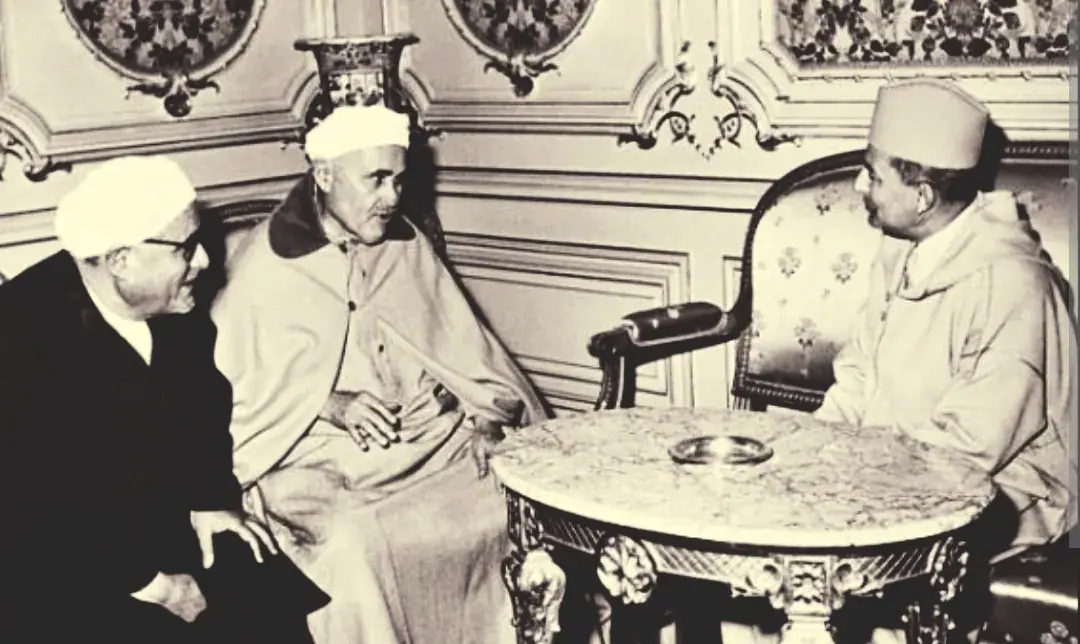
Mohammed bin Abdul Karim Khattabi was born in 1882 in the small village of Ajdir, Morocco. He came from a family of scholars and leaders, and his early life was marked by academic excellence. Khattabi studied at the University of Al-Qarawiyyin in Fez and later worked as a teacher, journalist, and translator in the Spanish-occupied city of Melilla. His experiences during this period shaped his views on colonialism and resistance.
Khattabi's involvement in politics led to his arrest in 1915 on charges of working with the Germans. He spent 11 months in prison, an experience that had a profound impact on his life. After his release, he returned to Ajdir and worked with his father to unite the tribes of the Rif region. Following his father's death, Khattabi became a leader in the region and convened a conference of Rifian leaders in 1921.
The conference led to Khattabi's appointment as the leader of the Rifian resistance, and he launched a series of attacks against Spanish colonial forces. The war, which lasted for five years, saw Khattabi's forces achieve significant victories, including the Battle of Anual in 1921. In this battle, Khattabi's forces defeated a much larger and better-equipped Spanish army, resulting in heavy casualties for the Spanish.
The Rifian resistance was not limited to military action. Khattabi also established a system of government and administration in the region, which was recognized by many as a symbol of resistance against colonial powers. His movement inspired other anti-colonial movements around the world, including those in China, Vietnam, and Latin America.
Despite his successes, Khattabi was eventually forced to surrender to French forces in 1926. He was exiled to the island of Réunion in the Indian Ocean, where he spent 21 years. During this period, he engaged in various business activities and continued to advocate for Moroccan independence.
In 1947, Khattabi was allowed to travel to France, and he eventually made his way to Egypt, where he lived in exile for 16 years. During this period, he became a symbol of the Moroccan nationalist movement and continued to advocate for independence. He also established a committee to promote Arab liberation and met with Moroccan King Mohammed V in 1960.
Khattabi died in 1963 at the age of 80, but his legacy continues to inspire people around the world. He is remembered as a hero and a symbol of resistance against colonialism, and his ideas about guerrilla warfare and resistance continue to influence movements for independence and self-determination.
Key points
- Mohammed bin Abdul Karim Khattabi's leadership of the Rifian resistance against Spanish and French colonial powers inspired other anti-colonial movements around the world.
- Khattabi's military strategies, including the use of guerrilla warfare and trench systems, were studied and emulated by other leaders, including Mao Zedong and Che Guevara.
- Khattabi's legacy continues to be celebrated in Morocco, and he is remembered as a national hero and a symbol of resistance against colonialism.