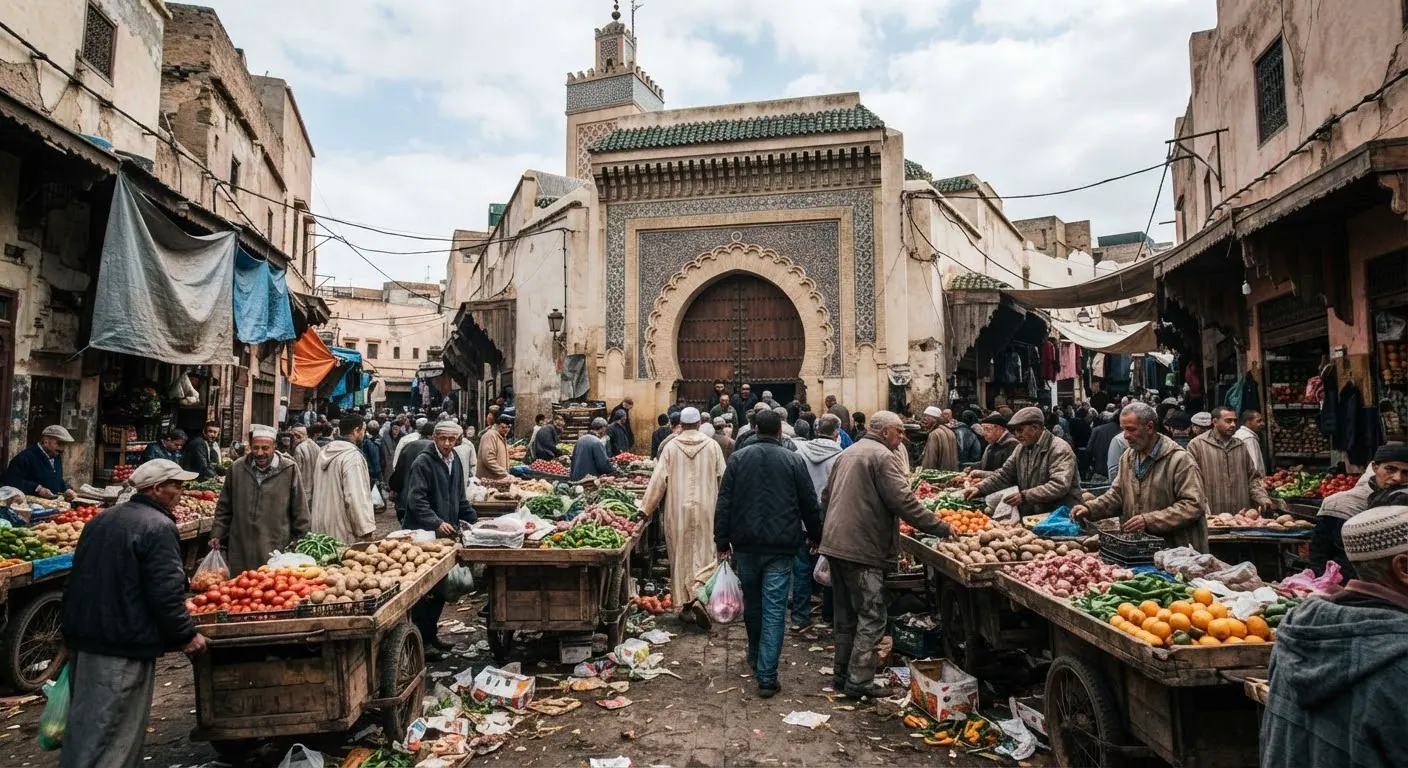
In Morocco, living near a mosque can be a source of frustration for some residents. According to personal accounts, the vicinity of mosques has become a hub for informal markets and gatherings of young people, often causing disruptions and noise pollution. These markets, usually set up by groups of young men, offer a variety of goods, including food, drinks, and other items.
The issue seems to be widespread, with many mosques across Morocco affected. Residents claim that these informal markets, often referred to as "souiqat," have transformed the surroundings of mosques into chaotic and noisy areas. The situation is particularly challenging during peak hours, such as between Maghreb and Isha prayers, when the streets and mosque entrances are congested with people and vendors.
The noise pollution and disruptions caused by these informal markets have become a significant concern for residents, particularly those living in close proximity to the mosques. Many have expressed frustration that the mosque's purpose as a place of worship and spirituality is being undermined by these unauthorized markets and gatherings.
Some residents have also raised concerns about the presence of individuals who seem to be exploiting the mosque's surroundings for personal gain. These individuals, often referred to as "sahab al-kararis," are accused of engaging in questionable activities, including extortion and harassment of passersby.
The situation has sparked a debate about the need for authorities to intervene and regulate the use of mosque surroundings. Many believe that a clear and strict policy is required to prevent these informal markets and gatherings from disrupting the peaceful atmosphere of mosques.
In response to these concerns, some have suggested that the authorities consider implementing measures to unify the call to prayer across the country, using a standardized recording to be broadcast in each region. This move aims to promote a sense of unity and respect for the mosque's purpose.
The issue has also sparked a wider discussion about the role of mosques in Moroccan society and the need to balance the needs of worshippers with those of local residents. Key points include the need for authorities to regulate informal markets, the importance of maintaining a peaceful atmosphere in mosques, and the requirement for a unified approach to addressing these issues.
Key points
- The Moroccan government is urged to take action to address the issue of informal markets and noise pollution near mosques.
- Residents and worshippers call for a more peaceful and respectful environment in and around mosques.
- A unified approach to regulating mosque surroundings and promoting a sense of community is proposed.