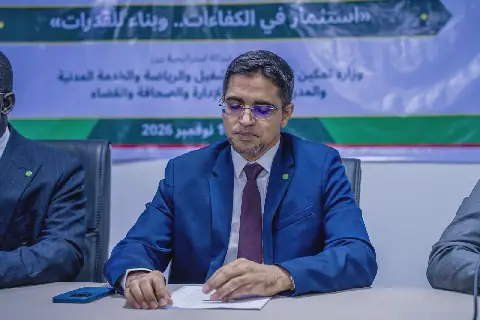
Moroccan Minister of Economy and Finance, Fouzi Lekjaa, has firmly rejected proposals to tax FIFA for the 2030 World Cup, emphasizing that the organization is not a commercial company that can be subject to taxation. During a discussion of the 2027 finance bill in the House of Representatives, Lekjaa defended the exceptional system reserved for FIFA, highlighting its status as an association comprising national football unions with its headquarters in Zurich, Switzerland.
Lekjaa explained that FIFA's nature and activities do not allow it to be treated as a commercial company operating in Morocco. He pointed out that the organization brings in around 5,000 people temporarily to work during the tournament, who will leave after the event, and that their income is exempt from tax. Additionally, Lekjaa refused to subject the equipment and facilities used for the tournament to customs duties, as they will be returned to FIFA's headquarters in Switzerland without being sold or generating local added value.
The minister revealed that 106 Moroccan companies, including small and medium-sized enterprises, are involved in activities related to the organization of the tournament, covering sectors such as services, restaurants, and accompanying activities. However, the provided data did not include details on the financial value of the contracts obtained by these companies or the benefits for small and medium-sized enterprises.
Lekjaa did not provide a final figure for the tax cost of the exemptions granted, stating that this will depend on the actual operations carried out and the number of companies and participants involved. He emphasized that the government is willing to make the economic and social study of the World Cup available to Parliament.
The exemptions granted to FIFA extend beyond the organization itself to include its bodies, related companies, the Royal Moroccan Football Federation, and the contractors involved in the organization. Some customs privileges will be in effect from January 1, 2027, to December 31, 2032, well beyond the end of the tournament.
The Left Federation's parliamentary group had proposed seven amendments aimed at monitoring the beneficiaries of the exemptions, disclosing their cost, and ensuring that Moroccan companies, particularly small and medium-sized ones, benefit from the contracts related to the World Cup. Lekjaa rejected the idea of subjecting this file to traditional taxation logic, stressing that the investments linked to the World Cup are part of a broader development project.
Lekjaa argued that Morocco needed to develop its infrastructure, including railways, airports, and hospitals, regardless of the World Cup, due to the growing number of tourists and the country's increasing needs. The government's position has sparked debate, with some arguing that the exemptions will benefit mainly international companies, while others see it as a necessary step to attract foreign investment.
Key points
- Morocco will host the 2030 World Cup in partnership with Spain and Portugal.
- 106 Moroccan companies are involved in activities related to the tournament organization.
- The cost of tax exemptions for FIFA and related entities remains undisclosed.
Reporting sources
- لقجع: «فيفا» ليس شركة لنفرض عليها الضرائب · Alakhbar