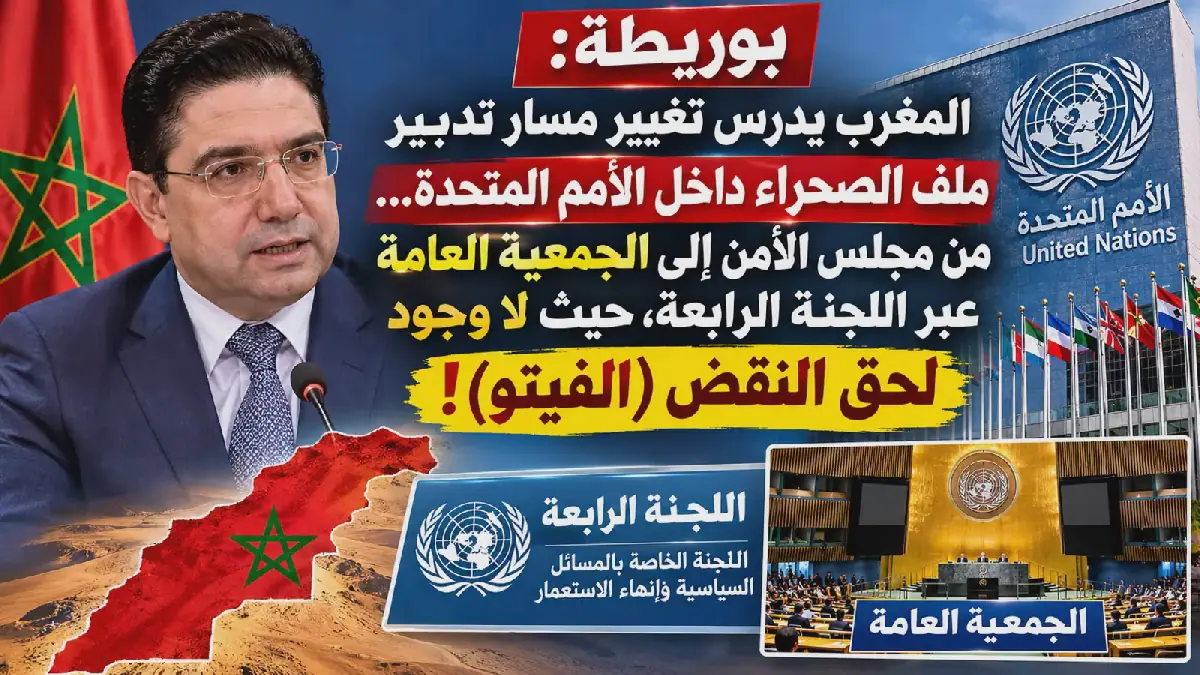
Moroccan Foreign Minister Nasser Bourita has reopened the discussion on the future of the United Nations Mission for the Referendum in Western Sahara (MINURSO), questioning its continued relevance and effectiveness. In a recent interview, Bourita stated that the mission's primary function - monitoring a ceasefire - had become obsolete after the Polisario Front's withdrawal from the agreement in 2020.
The withdrawal followed incidents at El Guerguerat, which led to a shift in the dynamics of the conflict. Bourita expressed concerns about the continued presence of MINURSO, given that one of the parties to the agreement no longer adheres to it. He described the current situation as "absurd," with the mission limited to monitoring the situation without sufficient capabilities to address evolving developments on the ground.
The minister's comments come as the UN Security Council failed to adopt competing resolutions on MINURSO's future, leading to the expiration of its mandate on October 31, 2026. Morocco has called for a new approach to managing the Western Sahara issue, one that aligns with recent political and diplomatic developments. This approach may involve a re-evaluation of the mechanisms for monitoring the ceasefire and managing the situation on the ground.
The situation in Western Sahara has been a longstanding concern for the international community, with MINURSO deployed since 1991 to oversee a ceasefire agreement between Morocco and the Polisario Front. However, with the changing landscape, there are questions about the mission's continued relevance and its ability to effectively manage the situation.
Morocco's stance on MINURSO reflects its broader concerns about the management of the Western Sahara issue. The country has sought to regain control over the territory, which it considers an integral part of its kingdom. The Polisario Front, backed by Algeria, has claimed sovereignty over the region, leading to a protracted conflict.
The US and other international partners have expressed support for a peaceful resolution to the conflict, with some advocating for a negotiated settlement between Morocco and the Polisario Front. As the situation continues to evolve, there are growing calls for a more effective and sustainable approach to managing the conflict and ensuring stability in the region.
The future of MINURSO and the management of the Western Sahara issue remain uncertain, with various stakeholders engaged in diplomatic efforts to find a solution. Morocco's position on MINURSO's effectiveness has added a new layer of complexity to the situation, highlighting the need for a re-evaluation of the current approach and the exploration of new options for addressing the conflict.
Key points
- Morocco's Foreign Minister Nasser Bourita questions the effectiveness of MINURSO.
- The UN Security Council failed to adopt competing resolutions on MINURSO's future.
- Morocco seeks a new approach to managing the Western Sahara issue.