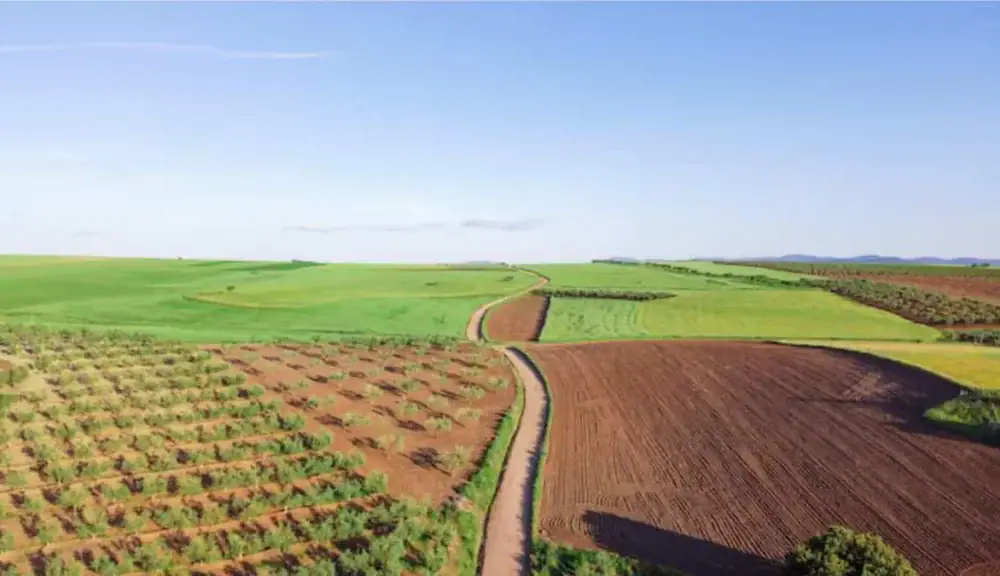
Moroccan Agriculture Minister Khalid Hatimy has announced a series of measures to support the 2026-2027 agricultural campaign, focusing on subsidies for seeds and fertilizers, as well as efforts to rebuild the national livestock. The measures aim to enhance agricultural production and mitigate the effects of previous seasons' challenges. Hatimy presented the plans at the House of Representatives, addressing concerns from farmers and lawmakers. The minister emphasized the government's commitment to ensuring a successful campaign.
The government will provide over 1.3 million quintals of selected seeds at subsidized prices, 20-30% lower than last year's rates, available at 300 sales points. Additionally, nearly 500,000 tons of phosphate fertilizers will be made available without price increases. The ministry also plans to distribute around 200 direct sowing machines to cooperatives, targeting 500,000 hectares of cultivated land under direct sowing. These initiatives aim to boost agricultural productivity and support farmers.
The agricultural campaign follows a successful previous season, with a cereal production of over 90 million quintals and agricultural water reserves reaching 9 billion cubic meters, a 65% filling rate, up from 29% the previous year. Rainfall has increased by 25% compared to the previous year, reaching 67 millimeters. These favorable conditions provide a solid foundation for the upcoming campaign. The ministry has also rescheduled debts related to irrigation water, exempting late penalties and recovery fees.
To address concerns about tomato prices, Hatimy stressed the need to prioritize national market supply and coordinate with conditioning stations to direct production towards the local market when supply decreases. He recommended weekly monitoring of vegetable prices at wholesale and retail markets to detect unjustified profit margins. The minister also suggested reforming marketing circuits to reduce intermediaries and promote more efficient distribution.
The area dedicated to tomato cultivation is approximately 4,000 hectares, mainly in the Souss-Massa region, which accounts for around 95% of early tomato production. However, yields have decreased due to factors such as virus propagation, with round tomato yields dropping to 150-170 tons per hectare. Hatimy suggested using 10 kg crates for transportation and marketing to reduce losses and preserve product quality.
In the medium term, the minister emphasized the need to allocate an additional 1,500 hectares to greenhouse tomato cultivation to ensure a sustainable national market supply. He also encouraged scientific research to develop resistant national seeds and innovative solutions for labor shortages in the sector. Furthermore, Hatimy announced plans to introduce new support for acquiring dairy cows to boost national livestock and milk production.
The ministry has also taken steps to manage stocks of other essential vegetables, with potato reserves around 200,000 tons and onion stocks approximately 280,000 tons, sufficient to meet monthly consumption demands until new supplies arrive. Effective management of these stocks will be crucial in maintaining market stability. The measures outlined by Hatimy demonstrate the government's commitment to supporting the agricultural sector and ensuring food security in Morocco.
Key points
- The Moroccan government will provide subsidized seeds and fertilizers to support farmers during the 2026-2027 agricultural campaign.
- The ministry aims to rebuild the national livestock and boost milk and meat production.
- The government plans to allocate additional land for greenhouse tomato cultivation to ensure a sustainable national market supply.