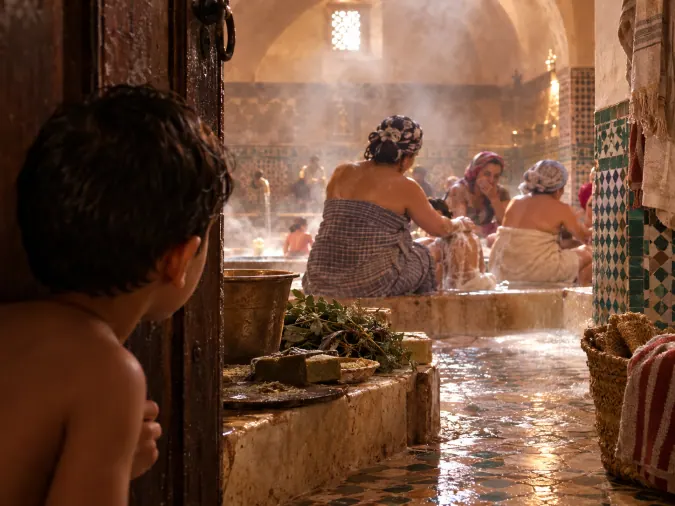
For Moroccans, the traditional bathhouse, or "hamam al-ayalat," holds a special place in their collective memory. When asked about their earliest visual and emotional recollections, many Moroccan men will cite the bathhouse as a cherished experience from their childhood. This space, used for bathing and socializing, becomes a magical realm where young boys between the ages of two and six record memories like a cinematic film, complete with sensory details that are difficult to forget.
The experience begins when the bathhouse door opens, revealing a scene that can be both surprising and overwhelming for young boys. The sight of women in a natural, unguarded state is a first for these children, leaving a lasting impression. As the scent of traditional soap, herbs, and rosewater wafts through the air, mixed with the sounds of laughter, conversation, and playful teasing, a unique sonic experience is etched in the boy's auditory memory.
Within this surreal atmosphere, the ritual of bathing commences, accompanied by a mix of emotions, including fear, excitement, and anxiety. As the boy is gently scrubbed and washed, the sensation of warm water and soap on his skin can be both pleasurable and uncomfortable. This blend of sensations triggers a strong adrenaline response, which, according to science, can leave a lasting impact on memory, particularly when associated with intense emotions.
Beyond its sensory significance, the bathhouse also serves as a social hub where community and family ties are strengthened. The bathhouse is a space where people from different walks of life come together, sharing stories, laughter, and conversation. For young boys, it is a place where they are pampered and doted upon by the women, who take turns showering them with affection and playful teasing.
The cultural importance of traditional bathhouses extends beyond their functional role, representing a cherished aspect of Moroccan heritage. These spaces have been an integral part of Moroccan life for centuries, providing a space for socialization, relaxation, and rejuvenation. As modernization and urbanization continue to transform the country's landscape, the traditional bathhouse remains a nostalgic reminder of a bygone era.
In Moroccan society, the bathhouse is also a space where social hierarchies and divisions are temporarily suspended. People from different backgrounds and socioeconomic statuses come together, sharing in the experience of bathing and socializing. This egalitarian aspect of the bathhouse is an essential part of its cultural significance, fostering a sense of community and social bonding.
As Morocco continues to evolve and modernize, the traditional bathhouse remains an essential part of its cultural identity. While its role may be diminishing in the face of modernization, its impact on the collective memory of Moroccans remains profound. For many, the bathhouse represents a cherished aspect of their childhood, a sensory experience that continues to evoke nostalgia and a deep connection to their cultural heritage.
Key points
- The traditional Moroccan bathhouse holds significant cultural and social importance, representing a cherished aspect of Moroccan heritage and identity.