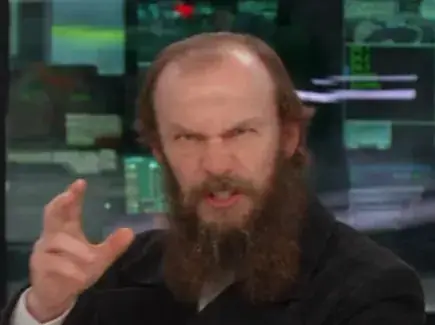
The Russian state-owned TV channel "Russia Today" has revived the 19th-century Russian author Fyodor Dostoyevsky on screen using artificial intelligence. Although Dostoyevsky passed away in 1881, his digital persona has been created to provide commentary on current international events. Since October 22, the channel has been airing daily interventions by this digital persona, which mirrors the author's likeness and style. The AI-generated Dostoyevsky has been used to promote views that align with the Kremlin's stance on various issues.
The digital version of Dostoyevsky has been advocating for Russian President Vladimir Putin's positions, criticizing European support for Ukraine. It has also targeted Russians who have left the country since the onset of the war, suggesting that their emigration is not driven by a quest for freedom but rather by the influence of foreign ideas. This portrayal of Dostoyevsky is not coincidental, given his historical reputation for defending Russian imperialism and traditional values, which intersect with Putin's political narrative.
The selection of Dostoyevsky for this role underscores the channel's strategy to leverage cultural and historical figures to promote its agenda. Russia Today has been banned from broadcasting in the European Union since March 2022, due to accusations of spreading Russian propaganda. The channel's use of AI-generated content is seen as a way to circumvent these restrictions and reach a broader audience.
The AI-generated Dostoyevsky's comments have been widely reported in the media, particularly in France. The digital persona's statements have been criticized for promoting a pro-Kremlin viewpoint, which is at odds with the European stance on Ukraine. This development highlights the ongoing information war between Russia and the West, with both sides seeking to influence public opinion through various media channels.
The use of AI-generated content by Russia Today raises questions about the role of artificial intelligence in modern propaganda. The channel's decision to create a digital persona based on Dostoyevsky's image and writing style is seen as a clever tactic to make its message more palatable to a wider audience. However, it also underscores the challenges of regulating digital content and preventing the spread of disinformation.
The controversy surrounding Russia Today's use of AI-generated Dostoyevsky has sparked a heated debate about the intersection of technology, media, and politics. While some see this development as a form of creative storytelling, others view it as a cynical attempt to manipulate public opinion. As the use of AI-generated content becomes more prevalent, it is likely that we will see more instances of this type of propaganda.
In conclusion, Russia Today's use of AI-generated Dostoyevsky to promote Kremlin views is a significant development in the ongoing information war between Russia and the West. The channel's strategy highlights the evolving nature of propaganda and the role of artificial intelligence in shaping public opinion. As the media landscape continues to evolve, it is essential to be aware of these developments and their potential impact on our understanding of the world.
Key points
- Russia Today uses AI-generated Dostoyevsky to defend Putin's stance on Ukraine.