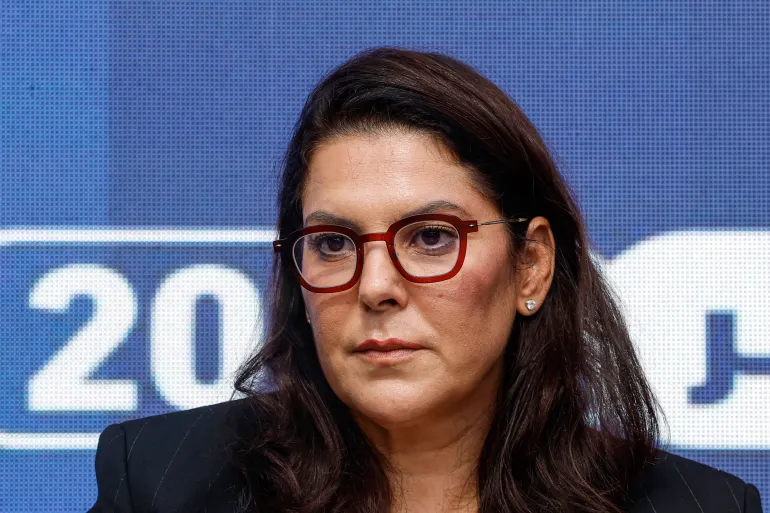
A leftist coalition in Morocco announced that a meeting with Prime Minister Fatima Zahra Mansouri, who was tasked with forming a new government, has been postponed. The coalition, comprising two parties, had initially agreed to meet with Mansouri but later insisted on holding the meeting at the parliament, citing its desire to operate from a position of opposition. This move is seen as a way for the coalition to assert its responsibility to oversee and scrutinize government actions.
According to a statement released by the coalition, Mansouri had contacted the general secretaries of the two parties, Abdel Salam Aziz and Jamal Al-Asri, to arrange a meeting as part of consultations on forming a new government. However, the coalition emphasized its preference for the meeting to take place at a location independent of the parties' headquarters, in order to maintain the institutional character of the discussions.
The coalition's insistence on meeting at the parliament reflects its commitment to operating as an opposition force, with the aim of holding the government accountable and promoting the interests of citizens. This approach is seen as a way for the coalition to differentiate itself from the government's plans and to push for greater transparency and accountability.
Mansouri, who was appointed to form a new government, has been conducting consultations with various parties and stakeholders. However, the coalition's decision to postpone the meeting has created uncertainty about the prospects for forming a government. The delay may also reflect broader challenges facing Morocco's political landscape, including ongoing debates about the role of opposition parties and the balance of power between different political forces.
The leftist coalition has reiterated its commitment to promoting a more just and equitable society, with a focus on issues such as freedom, dignity, and social justice. The coalition's leaders have emphasized that their decision to operate as an opposition force is not simply a tactical move, but rather a reflection of their core values and principles.
The postponement of the meeting between the coalition and Mansouri has raised questions about the prospects for forming a stable government in Morocco. The country has faced significant challenges in recent years, including economic uncertainty and social unrest. The ability of Mansouri to build a coalition and form a government will be closely watched by observers, both domestically and internationally.
The coalition's decision to prioritize its role as an opposition force reflects a broader debate about the nature of politics in Morocco. The country's political landscape is characterized by a complex interplay between different parties and interest groups, with ongoing debates about issues such as democracy, accountability, and social justice.
Key points
- The meeting between the leftist coalition and Prime Minister Fatima Zahra Mansouri was postponed due to disagreements over the location of the meeting.
- The coalition insisted on meeting at the parliament, citing its desire to operate from a position of opposition.
- The postponement of the meeting has raised questions about the prospects for forming a stable government in Morocco.