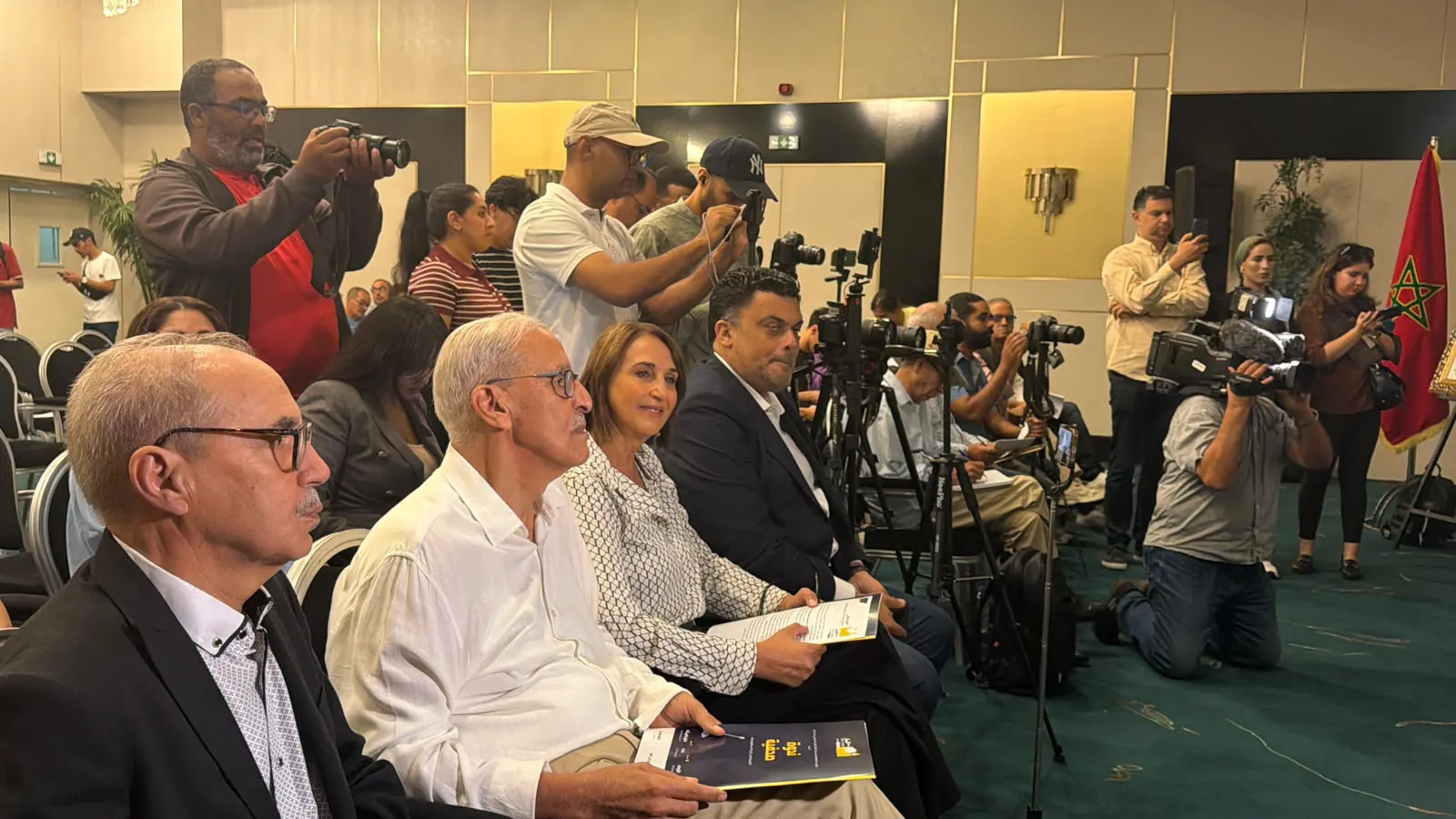
The leftist coalition in Morocco has expressed concerns over the formation of a new government, following the September 23 parliamentary elections. Jamila Essri, Secretary General of the Unified Socialist Party, stated that the appointment of Fatima Zahra Mansouri, a member of the Authenticity and Modernity Party (PAM), as Prime Minister does not change the nature of the political project. The coalition views PAM as a party created by the authorities to reshape the political landscape.
Essri added that PAM's emergence was not a result of social or activist dynamics, but rather a creation of the authorities to contain the democratic opposition. The coalition believes that this process aimed to dilute the political work and limit the pluralism of the political scene. Essri linked this development to the 2011 February 20 movement, where democratic forces and young activists protested against this type of political management.
The leftist coalition also criticized the electoral process, citing irregularities and the influence of money. They argue that PAM's return to lead the government confirms that the transition of power is not a normal democratic process, but rather a continuation of a previously criticized political path. Essri emphasized that the coalition will continue to oppose the government's policies, which they believe will favor neoliberalism and burden the popular classes.
The coalition presented its results as a confirmation of its position as a strong democratic and social opposition force. Essri stated that the coalition's deputies in parliament will prioritize defending public services, social justice, and individual freedoms. They vowed to be a vocal opposition, focusing on issues such as education, healthcare, and economic policies.
The leftist coalition's stance reflects broader concerns about the state of democracy in Morocco. The country's political landscape has been shaped by the rise of PAM, which has been seen as a key player in the government's agenda. The coalition's criticism highlights the ongoing debate about the role of parties and the impact of electoral processes on democratic governance.
As the new government takes office, the leftist coalition is poised to play a significant role in shaping the country's political discourse. Their criticism of PAM and the government formation process underscores the complexities of Morocco's democratic development and the ongoing challenges facing the country's political forces.
The implications of the coalition's stance will be closely watched, as Morocco navigates its democratic trajectory. The country's ability to address concerns about democratic governance, electoral processes, and the role of parties will be crucial in determining the future of its democratic institutions.
Key points
- The leftist coalition in Morocco criticizes the formation of a new government led by the Authenticity and Modernity Party (PAM), citing concerns over democracy and the party's role in the country's politics.