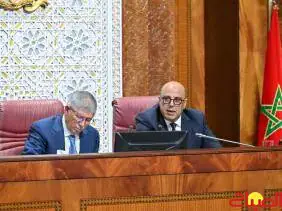
Moroccan Council of Advisors head Mohamed Ould Errachid has called for enhanced bilateral and multilateral parliamentary diplomacy to accompany recent developments in the Western Sahara issue. He emphasized that the latest developments open a new horizon towards the final resolution of the issue. Ould Errachid made these remarks during a joint session of the Moroccan parliament dedicated to the latest developments in the Western Sahara issue.
Ould Errachid highlighted the political and diplomatic gains achieved by Morocco, reflecting the results of the diplomacy led by King Mohammed VI. He noted the supportive positions of the European Union and other countries from various regions of the world. The Moroccan parliament session aimed to discuss the recent developments and their implications for the Western Sahara issue.
The recent developments refer to the support of 11 members of the UN Security Council for a draft resolution that seeks to reconsider the mandate of the UN mission in Western Sahara. The draft resolution also aims to make Morocco's autonomy initiative under Moroccan sovereignty the basis for negotiations and a final solution. Although the draft resolution was not adopted due to the voting nature within the Council, Ould Errachid considered this support as a significant political indication.
Ould Errachid interpreted this support as a global trend towards realism and the credibility of Moroccan initiatives. He urged other parties to review their positions and interact responsibly with the autonomy proposal, moving away from procrastination and prolonging the conflict. The Moroccan position is based on historical legitimacy and democratic legitimacy, according to Ould Errachid.
Ould Errachid cited the bonds of allegiance and loyalty that have linked the Sahrawi tribes to the Moroccan sultans and kings, as well as the participation of the southern regions' sons in the constitutional institutions and the management of public affairs. He pointed to the legislative elections held on September 23, which saw the highest participation rates in the southern regions.
The Moroccan council leader emphasized that Morocco continues its path based on national consensus and the unity of Moroccans around the nation's constants. He stressed the importance of maintaining national sovereignty, territorial integrity, and citizens' security. Ould Errachid called for sustained national mobilization and strengthening the internal front.
Ould Errachid expressed hope that the recent developments would lead to an end to the suffering of those detained in the Tindouf camps. He called for opening the way for their return to their homeland and participation in the development of the southern regions. Ould Errachid concluded his speech by recalling the sacrifices of the martyrs of national unity and the Royal Armed Forces.
Key points
- Moroccan Council of Advisors head Mohamed Ould Errachid sees recent developments as a step towards resolving the Western Sahara issue.
- Ould Errachid calls for enhanced parliamentary diplomacy and national mobilization to accompany recent developments.
- The Moroccan position on Western Sahara is based on historical and democratic legitimacy.