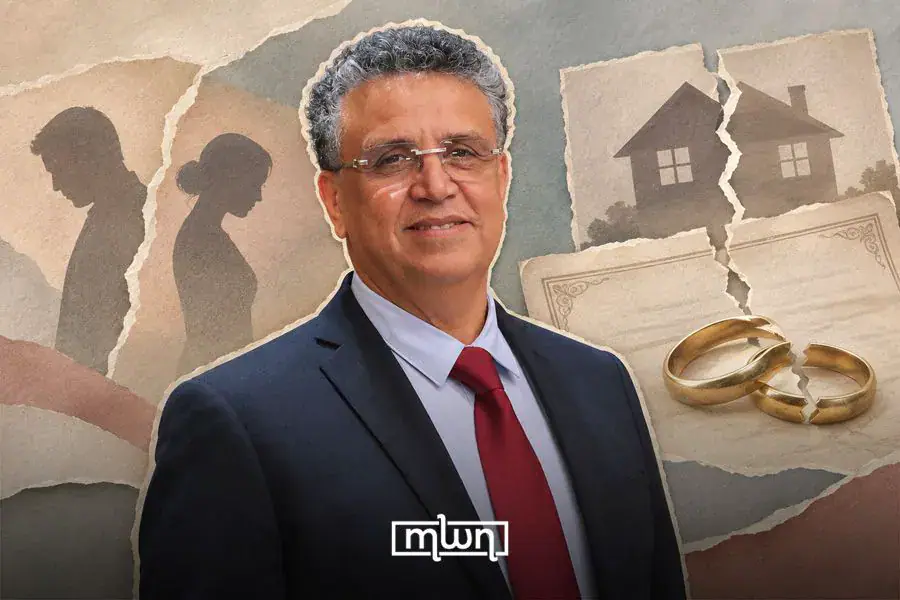
Morocco's Justice Minister Abdellatif Ouahbi recently clarified that the country's 154,000 annual divorce requests do not necessarily translate to finalized separations. During an oral questions session in the House of Representatives, Ouahbi explained that many couples reconcile before proceedings are completed, often with the help of relatives. He emphasized the need for clearer statistical standards between the Justice Ministry, judicial authorities, and the High Commission for Planning.
According to the Supreme Council of the Judicial Power's 2025 annual report, Morocco recorded 154,377 divorce and judicial dissolution cases, a 4.38% increase from 2024. Of these cases, 112,911 involved judicial dissolution, primarily due to marital discord. The report also noted that 41,466 cases concerned divorce proceedings, with 40,211 involving mutual consent. Ouahbi highlighted that these numbers should not be misinterpreted as a straightforward indicator of rising divorce rates.
Ouahbi challenged the common tendency to blame women for rising divorce figures, questioning why divorced women are often portrayed as incapable or morally suspect. He argued that responsibility for marital breakdown cannot be automatically assigned to women. Instead, the minister emphasized that divorce is a complex issue that requires a nuanced understanding of various factors. He also called for a reevaluation of societal attitudes toward divorce and women's rights.
The Justice Ministry has been working to transfer mediation responsibilities to specialized institutions, rather than relying solely on judges. Ouahbi mentioned plans involving local religious councils, independent mediation offices, and potential participation from religious institutions in family reconciliation. This move aims to alleviate the burden on judges and provide more effective support for couples seeking mediation.
Ouahbi strongly defended women's right to seek divorce, citing their growing economic independence as a significant factor in changing attitudes toward divorce. He recalled that some Moroccan women previously faced considerable difficulties in ending their marriages, including financial struggles and separation from their children. The minister emphasized that women should not be forced to remain married against their wishes, as this would undermine their legal rights.
Recent findings from Morocco's 2025 National Family Survey provide further context on divorce trends. The survey reported a divorce incidence of 26.8 per thousand during the first two years of marriage, with 58% of divorced women surveyed stating they had initiated the separation. Domestic disagreements accounted for 30.9% of reported reasons, followed by economic difficulties and disputes with in-laws.
Ouahbi also touched on the ongoing revision of the 2004 Family Code, which governs family law in Morocco. He expressed hope that the revised code would reach Parliament within the next month or two, paving the way for potential reforms. The minister acknowledged that divorce can bring serious personal and financial hardship, particularly for women, and emphasized the need for a comprehensive approach to addressing these challenges.
Key points
- Moroccan Justice Minister Abdellatif Ouahbi clarifies that 154,000 annual divorce requests do not necessarily translate to finalized separations.
- Ouahbi defends women's right to seek divorce, citing their growing economic independence as a significant factor in changing attitudes toward divorce.
- The Justice Ministry plans to transfer mediation responsibilities to specialized institutions to alleviate the burden on judges and provide more effective support for couples seeking mediation.