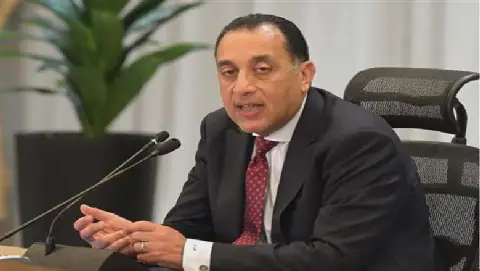
The head of the National Front for the Salvation of the Moroccan Petroleum Refinery, Hussein Al-Yamani, has renewed criticism of Morocco's decision to liberalize fuel prices, citing negative impacts on purchasing power and economic competitiveness. Al-Yamani argued that the decision was not well-studied and has led to increased pressure on daily living costs. His comments come amid ongoing debate over fuel prices in Morocco.
Al-Yamani cited reports on the performance of the distribution market, which he said showed a lack of real competition. He referenced a November 2023 decision by the Competition Council, which imposed a 1.8 billion dirham fine on nine fuel distribution companies for colluding on prices and profit margins. The fine was the result of a complaint filed by the Democratic Confederation of Labor in 2016.
The government is considering raising the tax on companies involved in importing and distributing fuel to 40%, citing a monopolistic or near-monopolistic market situation. Al-Yamani noted that 11 companies are now involved, up from nine previously. He based his arguments on official and unofficial reports indicating that the profits of fuel distributors have risen significantly since price liberalization.
According to Al-Yamani, reports show that profits of fuel distributors have jumped from around 600 dirhams per ton before price liberalization to over 2,000 dirhams after the decision. These numbers, he argued, support the need to review the choices made in managing the sector and acknowledge the impact of price liberalization on consumers.
Al-Yamani held successive governments responsible for the ongoing situation, arguing that the previous government, led by Abdelilah Benkirane, opened the door to price liberalization without implementing controls to ensure competition and protect purchasing power. He called on the current government, led by Fatima Zahra El Mansouri, to address the issue and take steps to mitigate the impact of fuel prices on social conditions.
Al-Yamani proposed canceling the fuel price liberalization decision and reorganizing the method of determining public sale prices based on international prices, transportation costs, and clear profit margins for sector players. He suggested setting an upper price limit that aligns with Moroccan income levels and creating a solidarity fund between consumers.
Al-Yamani emphasized the need to review the legal framework governing the energy sector to enhance Morocco's energy sovereignty, ensure fuel supply at suitable prices and quantities, reduce energy dependence, and accelerate the transition to reliable energy sources. His comments were published in the Assabah newspaper.
Key points
- Critics argue that Morocco's fuel price liberalization has harmed purchasing power and economic competitiveness.
- The government is considering a tax increase on fuel import and distribution companies.
- Proposed solutions include setting an upper price limit and creating a solidarity fund between consumers.