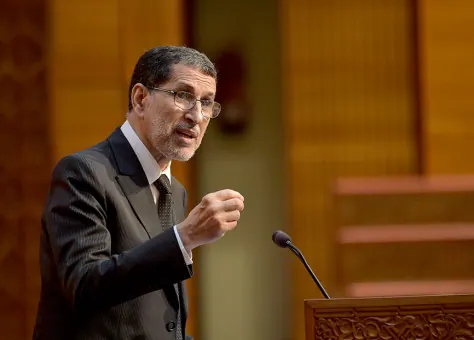
Moroccan former Prime Minister Saad Eddine El Othmani has publicly denied allegations made in a video by a local journalist. The video claimed that a royal advisor contacted El Othmani in 2020, following the signing of a tripartite agreement, and used abusive language towards El Othmani's party, the Movement of Unity and Reform, due to their opposition to normalization with Israel. El Othmani described the claims as baseless and entirely fabricated.
In a statement released on his official Facebook page, El Othmani emphasized that he had never heard a royal advisor use profanity towards him, his party, or anyone else. He highlighted that his relationship with the royal advisors has always been built on mutual respect and a spirit of cooperation. El Othmani urged the public to disregard the video's claims as unfounded.
The controversy arose after the video's wide circulation, which attempted to link the Movement of Unity and Reform's stance on normalization with Israel to an alleged conversation with a royal advisor. El Othmani's swift denial aims to maintain the accuracy of information in the public sphere. This incident showcases the sensitivity of discussions around Morocco's international relations and domestic politics.
El Othmani's statement reflects his effort to clarify and correct misinformation. As a prominent figure in Moroccan politics, his stance on critical issues carries significant weight. The former Prime Minister's relationship with royal advisors and his party's positions on key issues like normalization with Israel are subjects of public interest and scrutiny.
The Movement of Unity and Reform's opposition to normalization with Israel has been a notable aspect of Moroccan politics. The party's stance and the reactions it provokes demonstrate the complexities of navigating international relations while maintaining domestic political cohesion. El Othmani's denial of the video's claims is a part of this broader political context.
This incident highlights the challenges of managing information in the digital age, where videos and social media posts can quickly spread misinformation. Public figures like El Othmani must often address such claims directly to protect their reputations and maintain public trust. The former Prime Minister's proactive approach in this case illustrates the importance of timely and clear communication.
The situation underscores the intricate dynamics of Moroccan politics, where international issues intersect with domestic political strategies and personal relationships within the country's power structures. As Morocco continues to navigate its role in regional and global affairs, the actions and statements of its political leaders remain under close observation.
Key points
- El Othmani denies video claims of insult by royal advisor.
- The controversy involves normalization with Israel and domestic politics.
- The incident highlights challenges of managing information in the digital age.