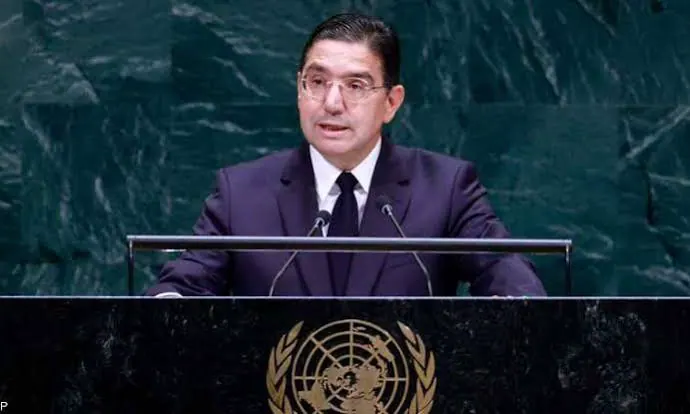
On Friday, September 26, 2026, in New York, Moroccan Foreign Minister Nasser Bourita underscored the importance of supporting Sahel region countries in achieving security, development, and prosperity. During a high-level event on "Security and Development in the Sahel Region," held on the sidelines of the 81st United Nations General Assembly, Bourita highlighted the deep historical ties between Morocco and Sahel countries.
These ties, Bourita noted, are rooted in trans-Saharan trade routes, cultural exchanges, and a shared human and spiritual heritage. He emphasized that these connections represent a living link between peoples and a foundation for building a common future. However, Bourita cautioned against solely focusing on the region's challenges and crises, instead urging a comprehensive approach that leverages its potential.
The Sahel region boasts significant youth populations, natural resources, and promising prospects in agriculture, energy, and mining sectors. Bourita stressed that the primary challenge lies in converting these assets into concrete economic and development opportunities for the region's inhabitants. He cited the King's initiative to facilitate Sahel countries' access to the Atlantic Ocean, aiming to transform their economies and the region as a whole.
Bourita reiterated Morocco's commitment to standing alongside Sahel countries, based on solidarity, mutual respect, and non-interference in internal affairs. He emphasized that Morocco's engagement is not limited to a temporary partnership but is rooted in historical relationships and brotherhood, with a focus on building a shared future.
On a separate note, Armenian Foreign Minister Ararat Mirzoyan expressed his country's support for Morocco's autonomy initiative, considering it a step towards enhancing Morocco's territorial integrity. This stance was conveyed during a meeting between Bourita and Mirzoyan on the sidelines of the UN General Assembly.
The Moroccan Foreign Ministry also reported that Armenia's backing of the autonomy initiative aligns with efforts to strengthen Morocco's territorial unity. This development highlights the growing international support for Morocco's position on the Sahara issue.
Meanwhile, the Moroccan Ministry of Interior announced the final results of the September 23, 2026, legislative elections, which matched the provisional results previously released. The Ministry confirmed that the final tally was compiled after regional and local counting commissions, led by judges, completed their tasks across the country's provinces and regions.
Key points
- Morocco's Foreign Minister Nasser Bourita emphasizes the need to transform the Sahel region's potential into tangible economic and development opportunities.