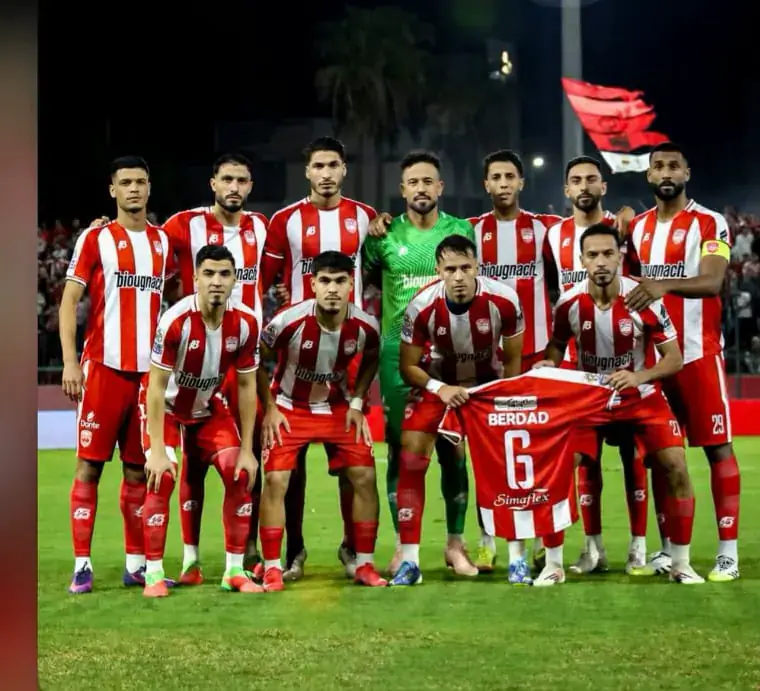
The Mknasawi football club has expressed strong discontent with the refereeing decisions made during their recent match against the Royal Army. In an official statement, the club claimed that several questionable calls were made, significantly impacting the game's outcome. The club's management stated that they are seeking fairness and justice in the league.
According to the club, one of the most contentious moments was when a Royal Army player, Wadani, escaped a second yellow card despite what was described as a rough tackle. Furthermore, the club argued that a clear penalty was not awarded, despite the presence of Video Assistant Referee (VAR) technology. These incidents have added to the club's grievances regarding refereeing in their matches.
The Mknasawi club believes these instances go beyond mere refereeing errors, suggesting a pattern of unfair decisions that have adversely affected their team. This has raised concerns about the integrity of the competition and whether the principle of fair play is being upheld. The club is calling for an evaluation of refereeing performance and necessary actions to prevent such influential errors in the future.
The club's administration emphasized their right to defend their interests and appeal to the relevant authorities. They urged the governing bodies to take responsibility, assess refereeing objectively, and implement measures to avoid repeated mistakes that impact match results. The club remains committed to ensuring that the league maintains its credibility through fair play and equal opportunities.
In their statement, the Mknasawi club highlighted the importance of unity among its members and supporters, reaffirming their commitment to fair play and sportsmanship. The club's leadership expressed hope that their concerns would be addressed, contributing to a more transparent and just competitive environment in Moroccan football.
The controversy surrounding refereeing decisions in Moroccan football has sparked discussions about the need for greater accountability and transparency. The Mknasawi club's public stance reflects a broader desire for fairness and improved officiating in the league. As the season progresses, it remains to be seen how the authorities will respond to these concerns and what measures will be taken to address them.
The issue has also raised questions about the effectiveness of VAR technology in Moroccan football and whether its implementation has been consistent across all matches. The Mknasawi club's experience has highlighted the need for clear and consistent application of refereeing protocols to ensure that all teams are treated equally and that the integrity of the competition is maintained.
Key points
- The Mknasawi club is seeking justice and fairness in the league after a series of questionable refereeing decisions.
- The club's administration has called for an evaluation of refereeing performance and necessary actions to prevent repeated mistakes.
- The controversy has sparked discussions about the need for greater accountability and transparency in Moroccan football.