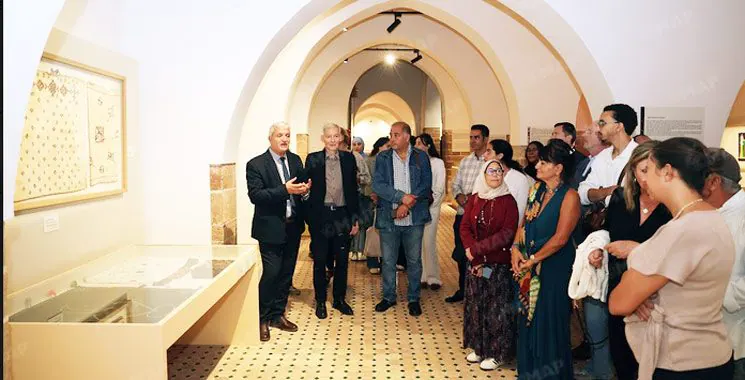
The National Museum of Jewelry in Rabat is hosting an exhibition on Moroccan embroidery, titled "Tarz, Broder au Maroc, hier et aujourd’hui". The exhibition, which runs from October 8, 2026, to January 31, 2027, is a collaboration between the National Foundation of Museums and the Angoulême Museum. It features a collection of textiles, geometric compositions, and plant motifs that demonstrate the diversity of regional schools, techniques, and patterns that characterize Moroccan embroidery.
The exhibition takes visitors on an artistic, historical, and anthropological journey through the world of Moroccan embroidery. The display includes pieces from various regions, including Fès, Tétouan, Rabat, Salé, Meknès, Chefchaouen, Azemmour, the Tafilalt, and the Anti-Atlas. These pieces showcase the mastery of technique, creativity, and aesthetic sensitivity that have been passed down through generations of Moroccan women.
Moroccan embroidery is not only a beautiful art form but also an important part of the country's cultural heritage. The exhibition highlights the various uses of embroidery in everyday life and special occasions, such as clothing, household linens, and ceremonial jewelry. These pieces serve as a marker of Moroccan cultural identity and provide a glimpse into the country's social and family history.
The exhibition also explores the connection between traditional embroidery and contemporary art. Artist Fatima Lévèque has created new works in collaboration with two Moroccan workshops, demonstrating the ongoing vitality of Moroccan embroidery and its ability to inspire new artistic expressions while preserving traditional techniques.
The exhibition is the result of a multidisciplinary scientific research project involving art historians, ethnologists, and designers. It features collections from the Angoulême Museum, supplemented by exceptional loans from national institutions and private collectors. The exhibition has also received support from the International Fund of the French Ministry of Culture, in partnership with the Association Germa-Amis des Musées d’Angoulême.
The exhibition offers a renewed perspective on Moroccan embroidery, highlighting the transmission of traditional skills, collective memory, and openness to contemporary creation. Through this initiative, the National Foundation of Museums and the Angoulême Museum aim to promote a greater understanding and appreciation of Moroccan cultural heritage.
The exhibition "Tarz, Broder au Maroc, hier et aujourd’hui" is a testament to the rich cultural heritage of Morocco and the importance of preserving traditional skills and techniques. It provides a unique opportunity for visitors to experience the beauty and diversity of Moroccan embroidery and its ongoing relevance in contemporary art and culture.
Key points
- The exhibition showcases the diversity of Moroccan embroidery techniques and patterns from various regions.
- The exhibition highlights the importance of embroidery in Moroccan cultural identity and its various uses in everyday life and special occasions.
- The exhibition features new works by artist Fatima Lévèque, created in collaboration with Moroccan workshops, demonstrating the ongoing vitality of Moroccan embroidery.