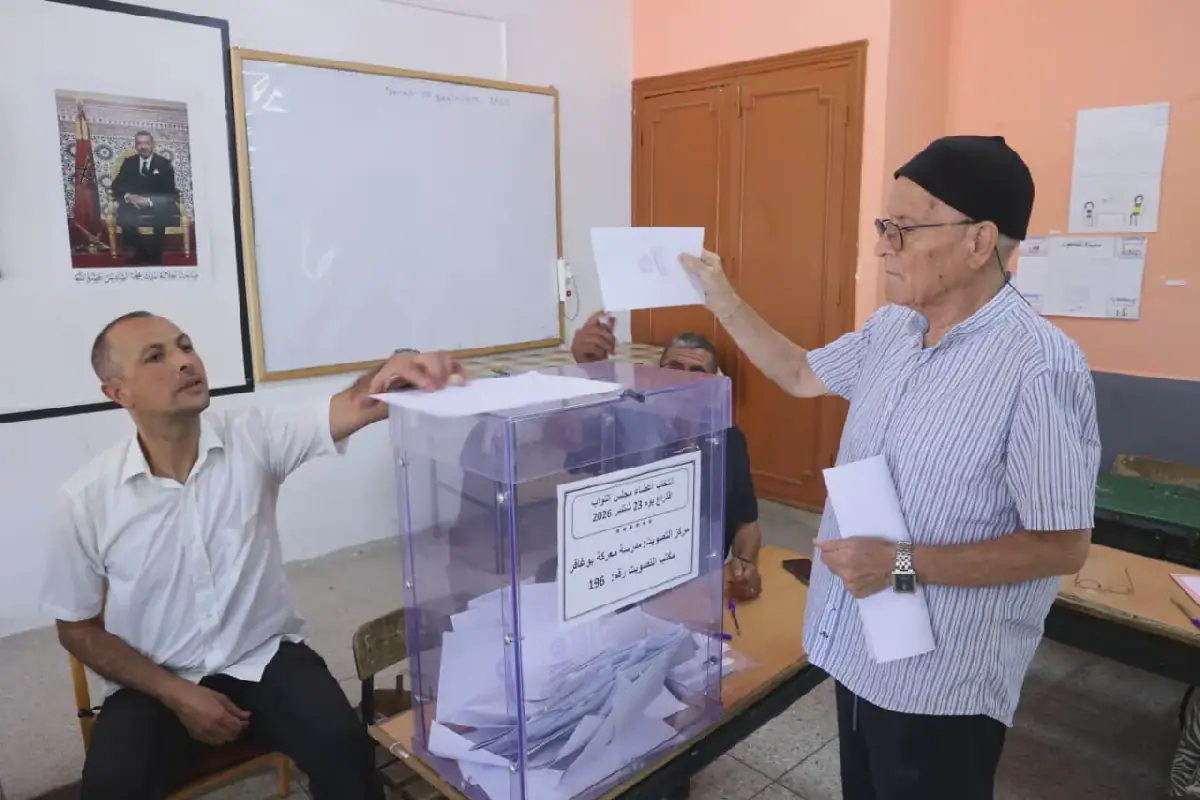
The recent parliamentary elections in Morocco, held on September 23, 2026, have revealed a concerning decline in voter turnout, with participation rates dropping to 38.08%, down from approximately 51% in the 2021 elections. According to Dr. Mohamed Faqihi, a professor of constitutional law and political science at the University of Sidi Mohamed Ben Abdallah in Fez, this decline raises questions about the level of political engagement among Moroccan voters.
Despite a decrease in the number of registered voters by around two million, the turnout rate would have been even lower if the number of registered voters had remained at 17 million. Dr. Faqihi emphasized that the decline in voter turnout is a significant issue that warrants attention. The drop in participation may indicate a disconnection between citizens and the political process.
In contrast to the decline in voter turnout, the Justice and Development Party (PJD) has emerged as a significant beneficiary of the election results. The party's representation in parliament increased substantially, from 13 seats in 2021 to 54 seats in 2026. This resurgence is notable, given the party's significant losses in the 2021 elections, where it dropped from 125 seats in 2016 to just 13.
Dr. Faqihi attributed the PJD's success to its ability to regain its presence in the political landscape, particularly in major cities. He cited the party's performance in Fez as an example of its renewed influence. The party's resurgence has significant implications for Moroccan politics, as it returns to the forefront of public and political discourse.
The Authenticity and Modernity Party (PAM) emerged as the leading party in terms of seat count, which was widely anticipated. According to Dr. Faqihi, the contours of the electoral landscape had become apparent over two weeks before the election. The PAM's success was expected, but its implications for the balance of power in Moroccan politics remain to be seen.
Dr. Faqihi cautioned that the PAM's lead does not necessarily indicate a fundamental shift in the balance of power in Moroccan politics. He emphasized that the interpretation of these results requires a nuanced understanding of the complex relationships between parties, their programs, and their goals. A clear understanding of these dynamics is essential for assessing the impact of the election results.
The outcome of the 2026 elections has produced relative changes in parliamentary representation, but the full implications of these changes remain to be seen. The ability of parties to form a cohesive government, following the appointment of the prime minister by King Mohammed VI, will be crucial in determining the effectiveness of the new administration. The coming weeks and months will provide further insight into the consequences of these election results.
Key points
- The Justice and Development Party has made a significant comeback in Moroccan politics, increasing its parliamentary representation from 13 seats to 54 seats.
- Voter turnout in the 2026 elections declined to 38.08%, down from 51% in the 2021 elections.
- The Authenticity and Modernity Party emerged as the leading party in terms of seat count, but its lead does not necessarily indicate a fundamental shift in the balance of power in Moroccan politics.