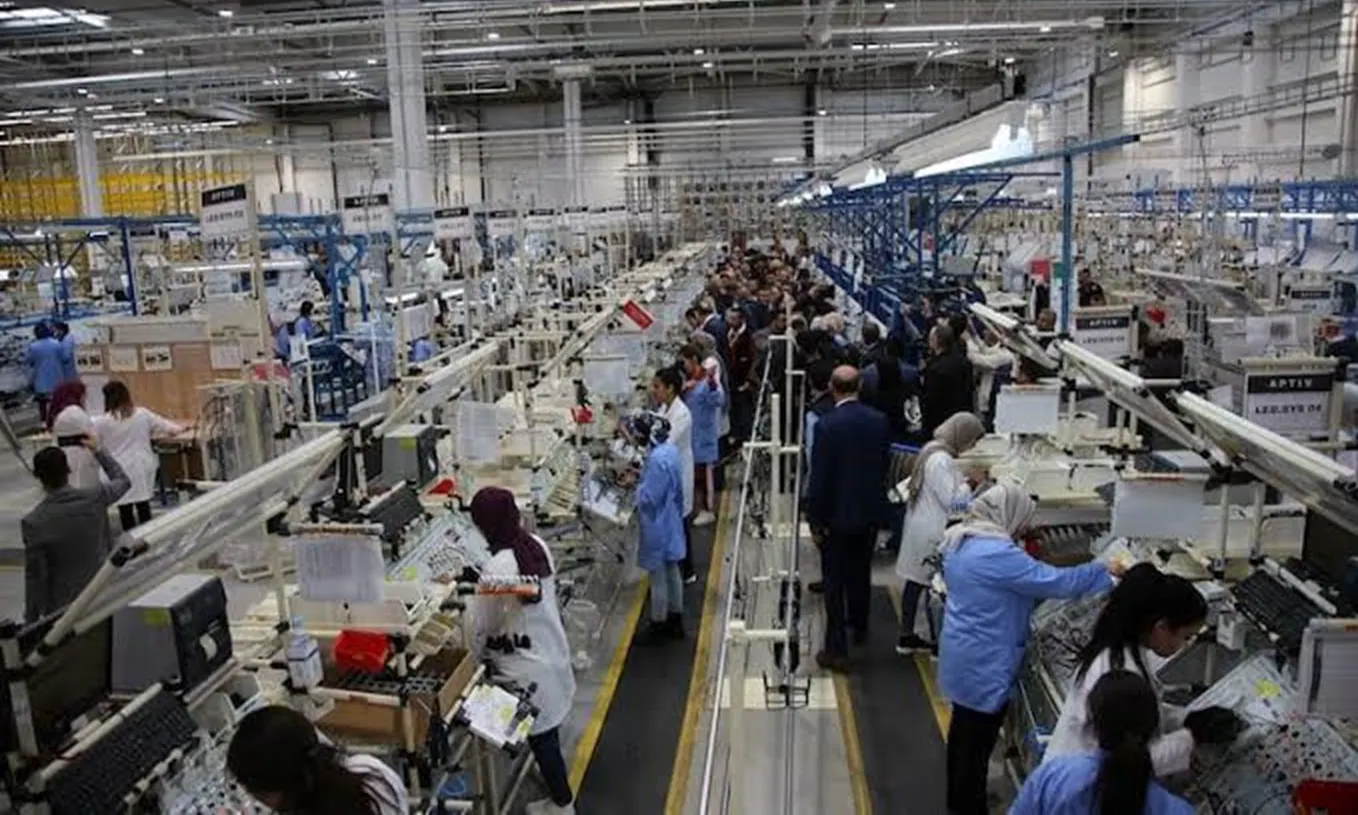
Moroccan economic expert Abd al-Razak al-Hiri has stated that the country's industrial sector is showing positive signs, with a rise in production in the second quarter of 2026. However, he emphasized that the real challenge lies in creating local added value and sustainable jobs. Al-Hiri noted that the production growth is primarily driven by the automotive, electrical equipment, and chemical industries.
Al-Hiri highlighted that Morocco has become a significant industrial and export base, particularly in sectors such as automotive, aviation, phosphates, fertilizers, electrical industries, and chemicals. He attributed this success to the country's strategic location near Europe, its infrastructure, logistics, and ports, as well as the industrial zones developed over the past two decades.
Nevertheless, al-Hiri stressed that the challenge is no longer limited to establishing factories but rather to strengthening industrial sovereignty within value chains. He explained that having factories on Moroccan soil does not necessarily mean that the entire value-added process occurs within the country, as many inputs, such as machinery, components, and technology, are imported.
Al-Hiri called for a shift from a general horizontal industrial policy to a more precise sectoral industrial policy. This policy would identify the weaknesses and technological, financial, and human needs of each value chain, enabling the creation of sustainable jobs and greater local added value.
According to al-Hiri, this transition would allow Morocco to transform from a competitive industrial platform to a more integrated and innovative industrial power, capable of withstanding external shocks. He emphasized that this approach would enable the country to move beyond its current role and become a major player in the industrial sector.
The expert's comments come in light of the quarterly survey on the economic situation, conducted by the High Commission for Planning. The survey covers various sectors, including manufacturing, mining, energy, and construction. Al-Hiri's analysis highlights the need for a more nuanced understanding of the data and the challenges facing Morocco's industrial sector.
The survey's findings have significant implications for Morocco's economic development and policymakers. As the country seeks to strengthen its industrial base and create jobs, al-Hiri's recommendations provide valuable insights into the necessary steps to achieve these goals.
Key points
- Moroccan economic expert Abd al-Razak al-Hiri emphasizes the need for industrial sovereignty and job creation.
- Morocco's industrial sector shows positive signs, but challenges remain in creating local added value and sustainable jobs.
- Al-Hiri calls for a shift from a general horizontal industrial policy to a more precise sectoral industrial policy.