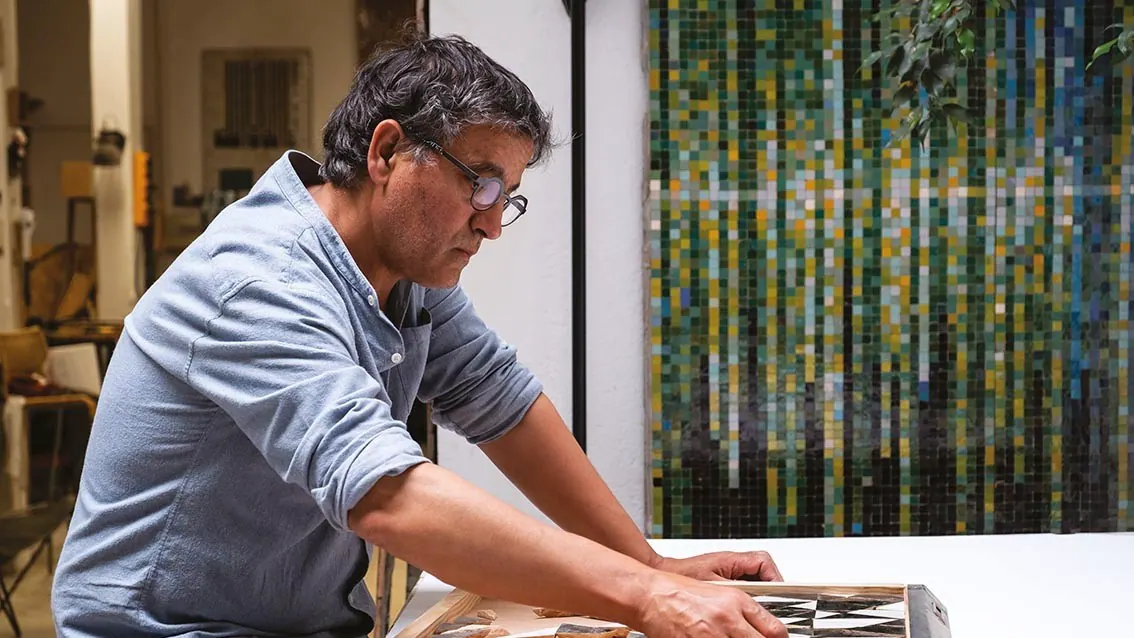
On October 6, a creative dialogue between Colombia and Morocco took place in Casablanca, featuring Samir Mazer, artist and designer, and co-founder of Ateliers Zelij. The event, titled "Beyond Craft," provided a platform for Mazer to share his insights on the zellige craft. With a history spanning centuries, this traditional craft has become a symbol of Moroccan culture and identity. Mazer's discussion highlighted the importance of preserving and promoting this ancient art form.
According to Mazer, the zellige craft faces significant challenges, including a limited source of raw materials. The entire supply of clay for zellige production comes from a single quarry. Furthermore, the craft is threatened by industrial competition from countries such as Spain and Portugal. Despite these challenges, the zellige craft has gained international recognition, serving as an ambassador for Moroccan culture worldwide.
Mazer expressed concerns about the inadequate protection of the zellige craft. He emphasized that Algeria has no significant presence in the zellige market, labeling their involvement as "parasitism." In contrast, Mazer identified European countries as the primary competitors in the industry. This statement underscores the need for effective measures to safeguard Morocco's cultural heritage and traditional crafts.
The "Beyond Craft" event facilitated a meaningful exchange between Colombian and Moroccan artists, designers, and craftspeople. This dialogue aimed to promote cross-cultural understanding and collaboration. By sharing his expertise, Mazer contributed to a deeper appreciation of the zellige craft and its cultural significance.
The zellige craft is an integral part of Moroccan heritage, with a rich history dating back centuries. This traditional craft involves the creation of intricate geometric patterns using small, glazed tiles. The resulting artworks are not only aesthetically pleasing but also reflect the country's cultural diversity and artistic expression.
As a co-founder of Ateliers Zelij, Mazer has played a significant role in promoting the zellige craft. His work has helped to preserve traditional techniques while introducing innovative designs. By collaborating with international artists and designers, Mazer aims to ensure the continued relevance and appreciation of this ancient craft.
The recognition of the zellige craft as a symbol of Moroccan culture is a testament to the country's rich artistic heritage. Efforts to protect and promote this craft are essential for preserving Morocco's cultural identity. As Mazer's discussion highlighted, addressing the challenges facing the zellige craft requires a concerted effort from artists, designers, and policymakers.
Key points
- Samir Mazer emphasizes the need for effective protection of the zellige craft.
- The zellige craft faces industrial competition from European countries.
- The craft is an important symbol of Moroccan culture and identity.