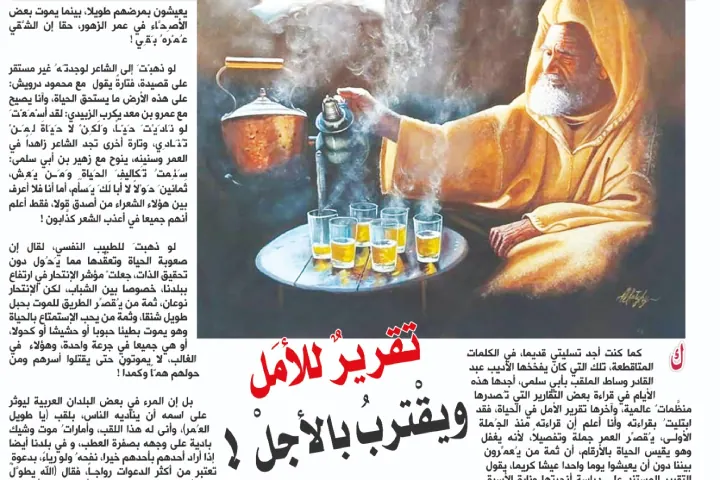
The Moroccan cultural supplement, "Al-Alam", has published a report questioning the significance of increased life expectancy in Morocco. The report, based on a study by the Ministry of Family, Solidarity, Equality, and Social Development, in partnership with the National Observatory for Human Development, states that while the average life expectancy has increased, many citizens continue to face significant challenges in their daily lives.
The report's findings suggest that the quality of life in Morocco remains a concern, with many individuals struggling to make ends meet. Despite the increase in life expectancy, the report argues that this has not necessarily translated to an improvement in the well-being of citizens. The supplement's editor, Mohammed Beshkar, notes that the report's focus on numbers fails to account for the experiences of those who, despite living longer, do not live fulfilling lives.
The report has sparked a lively debate, with many contributors weighing in on the issue. A theologian noted that, according to Islamic teachings, lifespans are predetermined by God, and increases in life expectancy are a blessing. In contrast, a doctor pointed out that the lack of adequate healthcare coverage means that many patients leave hospitals in poor health, effectively reducing their life expectancy.
The supplement also features contributions from poets, who offer varying perspectives on the value of life. Some argue that life is precious and should be cherished, while others suggest that it can be a burden. The poets' reflections highlight the complexity of the issue and the need for a nuanced discussion.
A psychologist notes that the difficulties of life in Morocco, particularly for young people, can lead to feelings of hopelessness and despair. The psychologist argues that the country's high rates of unemployment and social inequality exacerbate these problems, leading some individuals to consider extreme measures.
The report's findings have also sparked a wider conversation about the needs of Moroccan citizens. Many argue that the government should focus on improving living standards, rather than simply increasing life expectancy. They suggest that this could involve addressing issues such as poverty, unemployment, and access to healthcare.
Ultimately, the report highlights the need for a more nuanced understanding of life expectancy in Morocco. While increased lifespans may be a positive trend, they must be accompanied by improvements in the quality of life. The supplement's contributors argue that policymakers must prioritize the needs of citizens, ensuring that they can live fulfilling and meaningful lives.
Key points
- The report questions the significance of increased life expectancy in Morocco, highlighting the need for improved living standards.