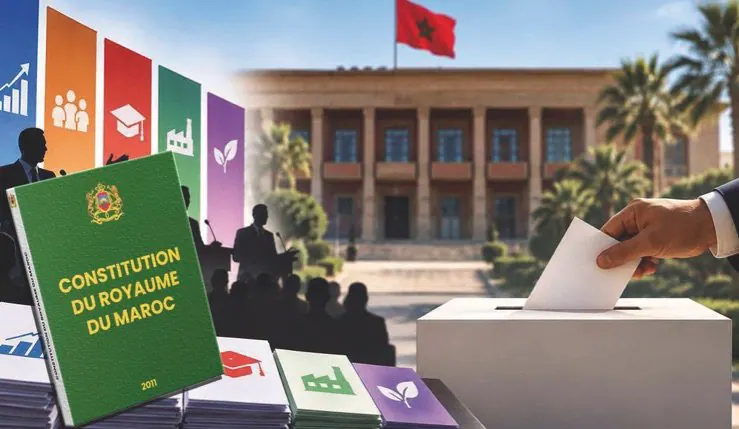
Morocco's 2011 Constitution was adopted to establish a democratic system, with provisions for free and fair elections. Article 2 states that sovereignty belongs to the nation, exercised directly or indirectly through elected representatives. However, the implementation of these provisions has faced significant challenges. Despite progress in infrastructure development and human rights, the country's electoral process has been marred by corruption and clientelism.
The Constitution outlines the role of political parties in promoting democratic participation and exercising power through peaceful means. Article 7 emphasizes the importance of parties in representing citizens and participating in governance. However, the reality is that many parties, including the Parti Authenticité et Modernité (PAM) and the Rassemblement National des Indépendants (RNI), have been criticized for their ties to the government and lack of genuine representation.
The 2021 elections highlighted the gap between the Constitution's provisions and the reality on the ground. Despite the Constitution's emphasis on free and fair elections, the electoral process was marred by corruption and irregularities. Many non-governmental organizations (NGOs) documented cases of electoral corruption, and the country's electoral law provides for sanctions against such practices.
The issue of voting rights for Moroccans living abroad also remains a challenge. While the Constitution guarantees their right to vote, many face difficulties in exercising this right due to the lack of accessible voting mechanisms. The government has been criticized for not providing adequate facilities for overseas voters, despite the presence of diplomatic and consular representations abroad.
The gap between the Constitution's provisions and the reality on the ground has significant implications for Morocco's democratic development. The country's experience with the Instance Equité et Réconciliation (IER) and other human rights initiatives has shown that progress is possible, but sustained efforts are needed to address the systemic challenges facing the electoral process.
To address these challenges, Morocco needs to take concrete steps to strengthen its democratic institutions and ensure the effective implementation of the Constitution's provisions. This includes measures to prevent electoral corruption, promote transparency and accountability, and ensure the representation of citizens' interests.
Ultimately, Morocco's democratic development will depend on its ability to bridge the gap between the Constitution's text and its practice. This will require a sustained commitment to democratic principles and the rule of law, as well as efforts to promote civic engagement and participation in the electoral process.
Key points
- The 2011 Constitution outlines democratic principles, but its implementation has faced significant challenges.
- Electoral corruption and clientelism remain major obstacles to democratic development in Morocco.
- Morocco needs to take concrete steps to strengthen its democratic institutions and ensure the effective implementation of the Constitution's provisions.