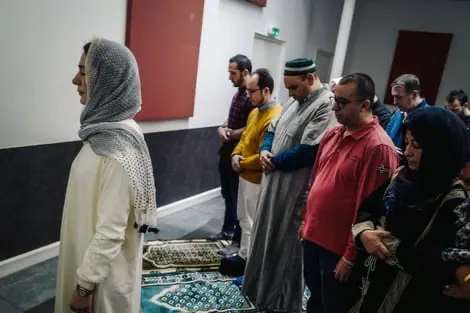
In a recent opinion piece, Moroccan columnist Mohammed Socrates sparked a debate about the role of women in politics and religion. He argued that if there are learned and educated women who have studied Islamic theology under the king, it should be acceptable for a female head of government to pray alongside men in a mosque. This stance emphasizes the importance of gender equality in religious practices and politics.
Socrates highlighted the capabilities of Moroccan women, citing examples of women who have excelled in various fields, including medicine, engineering, and politics. He believes that a woman who can provide religious education at the highest level, build a mosque, and establish a major Islamic university in Morocco should be allowed to pray alongside men in a mosque. This, he argues, is a matter of equality and modernity.
The columnist questioned whether being a Muslim or practicing certain religious rituals is a requirement for holding public office. He pointed out that Morocco's constitution does not specify that politicians must be Muslims, citing examples of Jewish parliamentarians who have been elected and supported by Muslim voters. Additionally, a Jewish Moroccan has served as a royal advisor.
Socrates argued that the debate over whether a woman can pray alongside men in a mosque is a superficial one, reflecting a lack of depth in political discourse. Instead of focusing on such issues, he suggested that the discussion should center on a politician's qualifications, policies, and performance. He emphasized that Moroccan women have demonstrated their capabilities in various fields and should be given equal opportunities.
The columnist criticized what he described as "archaic" debates that have no place in a modern, institutionalized state. He believes that the focus should be on a person's competence, rather than their gender or religious practices. Socrates also highlighted the achievements of Moroccan women in various sectors, arguing that they have proven themselves to be capable and effective.
Socrates' comments come at a time when Morocco is grappling with issues related to gender equality, politics, and religion. His opinion piece has sparked a lively debate, with some people supporting his views and others expressing concerns about the role of women in politics and religion. The discussion reflects the complexities of balancing tradition and modernity in Moroccan society.
Ultimately, Socrates' argument is that a female head of government should be allowed to pray alongside men in a mosque, just as men do. He sees this as a matter of equality and a reflection of the capabilities of Moroccan women. The debate is likely to continue, with implications for the country's future discussions about gender, politics, and religion.
Key points
- Moroccan columnist Mohammed Socrates argues for gender equality in religious practices and politics.
- Socrates believes that a female head of government should be allowed to pray alongside men in a mosque.
- The debate reflects the complexities of balancing tradition and modernity in Moroccan society.