On the second day of the Dakhla Global Summit, Karim Zaher, CEO of Moroccan biotech firm GigaLab, emphasized the importance of local medical manufacturing for health sovereignty. He presented the concept of "fabrication biotechnologique médicale" (FBM) as a means to produce tests and diagnostic devices locally, reducing dependence on imports. Zaher cited Morocco's reliance on imports for 90% of its medical devices, leading to decisions on health being made at the borders rather than within the country.
The COVID-19 crisis, which closed borders and delayed container deliveries, motivated GigaLab to launch local production. Zaher explained that producing locally increases the capacity for diagnosis and treatment. FBM, according to him, relies on four pillars: research and development, training, precision medicine, and cooperation. The goal is to substitute imports, drive innovation, and ensure accessibility to diagnostic services across the country, not just in major cities.
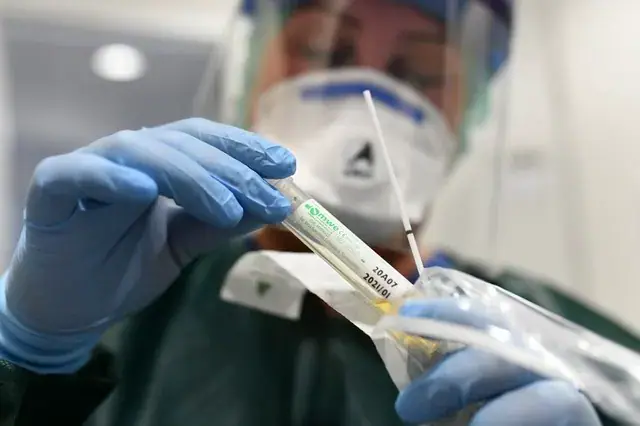
GigaLab, which was a distributor until 2021, has since manufactured COVID-19 tests and, in 2024, a test for detecting mpox. The mpox test was validated with a partner in the Democratic Republic of Congo and purchased by the Moroccan Ministry of Health for deployment at border posts, where it detected ten cases. The company also developed a multiplex test capable of detecting four viruses simultaneously: flu A, flu B, COVID-19, and respiratory syncytial virus (RSV).
According to Zaher, RSV has caused over 2,000 deaths in children under two in Morocco. He mentioned a study on RSV conducted with a professor last year, which was published in a Swiss journal. The Moroccan Ministry of Health has signed a convention to purchase HIV tests produced by GigaLab, and a Moroccan standard for rapid tests has been published in the Official Bulletin.
Zaher called for a law reserving 20-25% of public markets for local producers, emphasizing that without a national market, a product cannot be registered or exported to other African countries. He also highlighted the lengthy homologation process, which can render a test obsolete before it hits the market. Zaher advocated for Morocco to serve as a hub for the continent, with joint production, technology transfer, and shared standards.
The CEO of GigaLab believes that Morocco can become a hub for Africa, with joint production, technology transfer, and common training for engineers and technicians. He stated that what is built in Morocco can become a common African good, emphasizing the need for someone to start in Africa. According to Zaher, when a country starts, it can prosper, and local production can enhance the ability to diagnose and treat diseases.
GigaLab's efforts aim to make diagnostic services more accessible and affordable in Morocco and beyond. The company's push for local medical manufacturing aligns with the goal of achieving health sovereignty and reducing reliance on imports. By promoting FBM and advocating for supportive policies, Zaher and GigaLab are working towards a more self-sufficient healthcare system in Morocco and potentially across Africa.
Key points
- Moroccan biotech firm GigaLab is promoting local production of medical tests and devices to achieve health sovereignty and reduce reliance on imports.