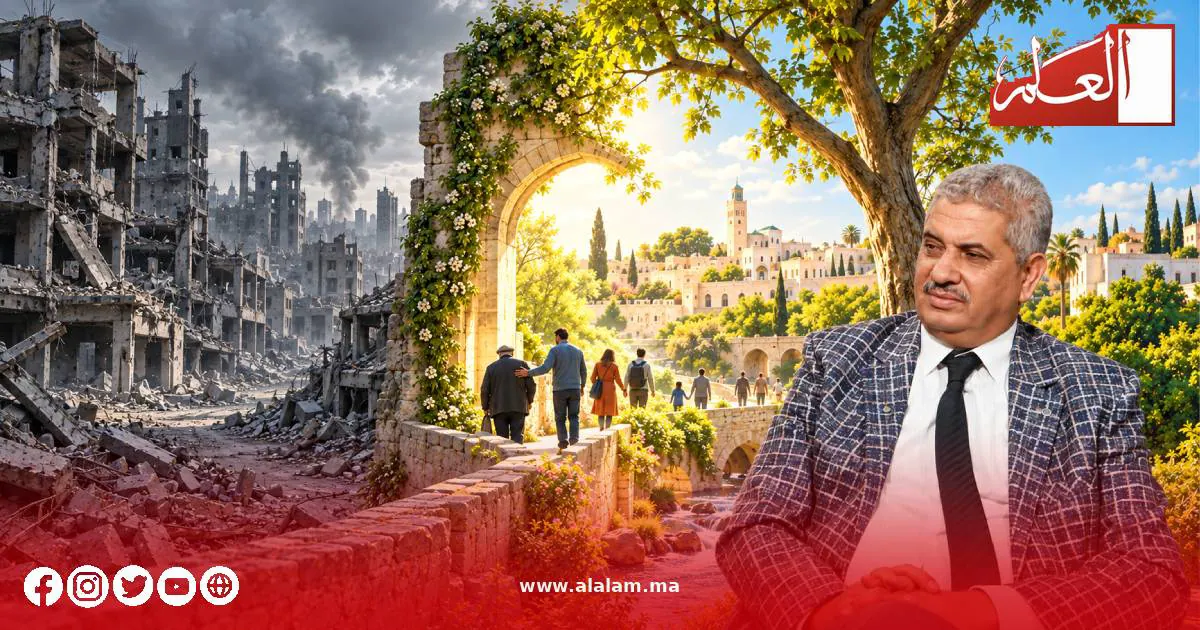
In his latest work, "Damma", Moroccan author Bouchayeb Hamrawi explores the complexities of human nature and the erosion of compassion in a world plagued by conflict, inequality, and social injustice. Through his writing, Hamrawi seeks to expose the contradictions of modern society, where technological advancements and economic growth coexist with widespread human suffering. His work is a thought-provoking critique of the current state of affairs, urging readers to re-examine their values and priorities.
Hamrawi's writing often touches on the themes of war, violence, and their impact on civilians, particularly women and children. He laments the fact that human life has become increasingly devalued, with the media often reducing casualties to mere statistics. This desensitization to human suffering is a pressing concern for Hamrawi, who argues that it is essential to reclaim our shared humanity and recognize the inherent dignity of every individual.
The author's vision for an alternative world is one where compassion, empathy, and kindness are the guiding principles of human interaction. In this world, cities are built without police stations or prisons, as people are able to live in harmony with one another. There is no need for security measures or surveillance, as individuals are trusted to respect one another's rights and freedoms. Hamrawi's vision is not a utopian fantasy, but rather a call to action, encouraging readers to strive for a more just and equitable society.
Hamrawi's reflections on the human condition are deeply personal and introspective. He writes about the three essential fluids that sustain human life: blood, tears, and sweat. These bodily fluids serve as a powerful metaphor for the human experience, representing the complexities of human emotion, the struggles of everyday life, and the resilience of the human spirit. Through his exploration of these themes, Hamrawi invites readers to engage in a more nuanced and empathetic understanding of human nature.
The author's critique of modern society extends to the ways in which we communicate and interact with one another. He argues that our increasing reliance on technology has led to a decline in meaningful human connections, as people become more isolated and disconnected from one another. Hamrawi advocates for a return to more authentic forms of communication, where individuals engage with one another on a deeper level, fostering empathy, understanding, and compassion.
Throughout his work, Hamrawi emphasizes the importance of empathy, solidarity, and collective action. He calls on readers to recognize their shared humanity and to work towards creating a more just and equitable world. This requires a fundamental shift in our values and priorities, as we move away from a culture of competition and individualism towards one of cooperation and mutual support. By working together, Hamrawi argues, we can build a brighter future, one that is grounded in the principles of humanity, dignity, and compassion.
Ultimately, Hamrawi's "Damma" is a powerful call to action, urging readers to re-examine their assumptions about the world and their place within it. His work challenges us to think critically about the consequences of our actions and to consider the impact of our choices on others. As we navigate the complexities of the modern world, Hamrawi's writing serves as a poignant reminder of the need for empathy, compassion, and kindness.
Key points
- The search for humanity in a chaotic world is a central theme in Bouchayeb Hamrawi's latest work, "Damma".
- Hamrawi advocates for a return to more authentic forms of communication and a shift in values towards empathy, solidarity, and collective action.
- The author's vision for an alternative world is one where compassion, empathy, and kindness are the guiding principles of human interaction.