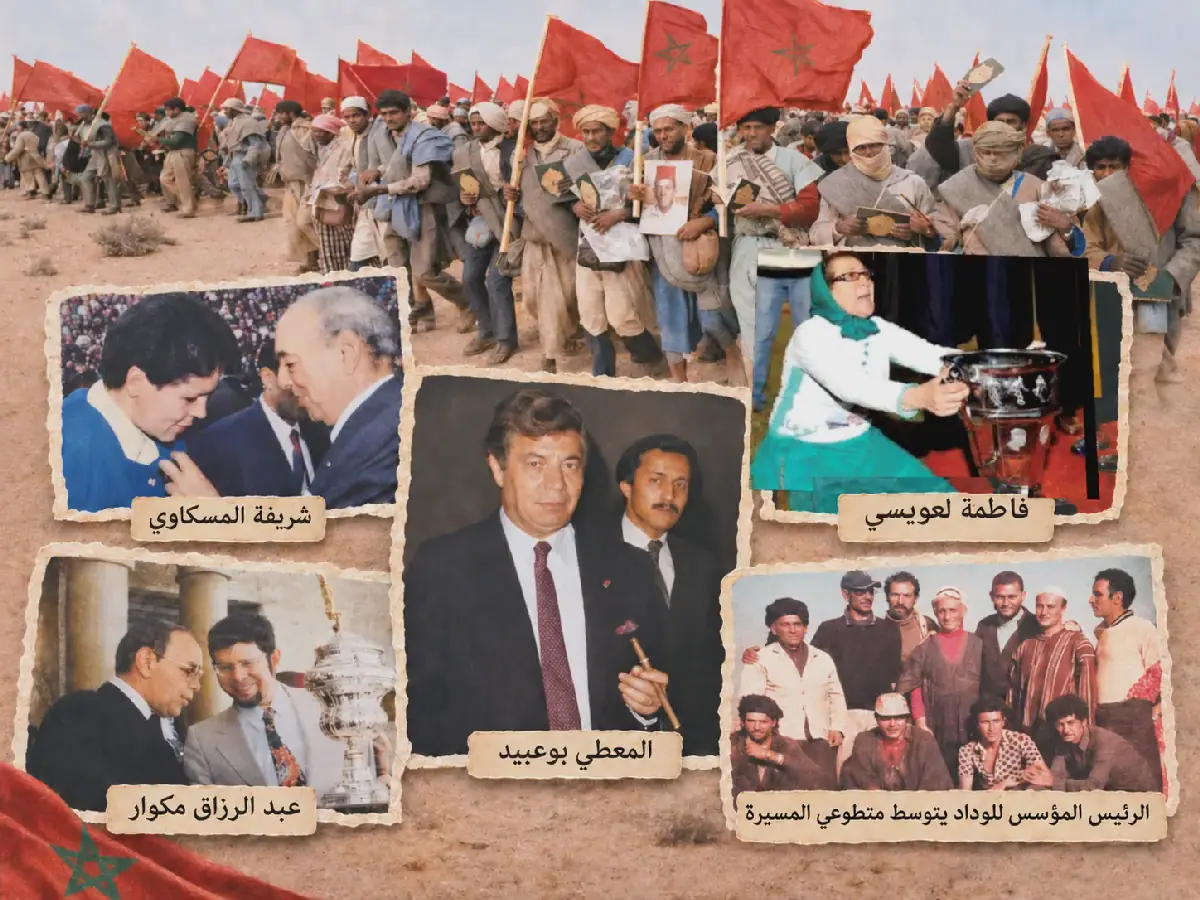
The Green March, a pivotal event in Moroccan history, was not just a peaceful protest but a collective movement that drew in people from all walks of life, including athletes. The event, which began as an idea in the mind of the late King Hassan II, quickly gained momentum and turned into a national movement. Athletes, including prominent figures like Abdel Razak Khairi, were an integral part of this movement, participating in the march and inspiring future generations to engage in national initiatives.
Abdel Razak Khairi, a renowned athlete and then-president of the Widad Athletic Club, received a phone call from the Ministry of Foreign Affairs, instructing him to travel to The Hague, Netherlands, where the International Court of Justice was to decide on the Western Sahara conflict between Morocco and Spain. Khairi's role in this mission was crucial, as he was tasked with influencing the court's decision through his connections. He formed a friendship with the wife of a German judge, Ingrid, who provided him with valuable information about the court's ruling.
On June 16, 1975, Khairi received the court's decision, which acknowledged Morocco's territorial and emotional ties to the Western Sahara region. He immediately informed King Hassan II of the verdict, and upon his return to Morocco, he shared the news with his friends and colleagues. One of them, Abou Bakr Ajdahem, recalled Khairi's visit to a football match in Rabat, where he revealed that Morocco had won the case.
Another notable athlete who participated in the Green March was Mohamed Abderrazak Khairi, also known as "The Lion of the Atlas." His wife, Lebaba, played a significant role in encouraging him to join the march. Despite her influential connections to the royal family, Lebaba chose not to accompany her husband to the march, citing family commitments. However, she did encourage him to participate and even helped him register as a volunteer.
Mohamed Benjelloun, the founder of the Widad Athletic Club, was also an active participant in the Green March. As the president of the club, he rallied his teammates and encouraged them to join the march. Benjelloun's involvement in the march was not surprising, given his history of promoting Moroccan nationalism through sports.
Shrifa Meskaoui, a celebrated athlete in track and field, also participated in the Green March as a supervisor of female volunteers from the El Jadida province. Meskaoui, who dominated various athletic events in the 1970s and 1980s, was an exemplary figure in Moroccan sports. Her involvement in the march was a testament to the significant role that athletes played in promoting national causes.
The participation of athletes like Abdel Razak Khairi, Mohamed Benjelloun, and Shrifa Meskaoui in the Green March highlighted the important role that sports figures played in Moroccan national life. Their involvement not only reflected their commitment to the country's causes but also inspired others to follow in their footsteps.
Key points
- Moroccan athletes played a significant role in the Green March, a peaceful protest that took place in 1975 to reclaim the Western Sahara region from Spanish colonial rule.
Reporting sources
- رياضيون في ركب المسيرة · Alakhbar