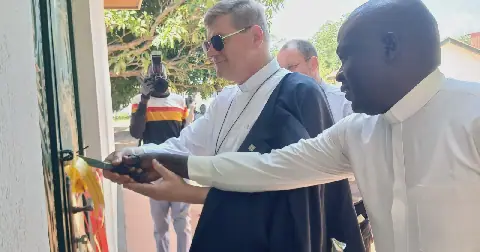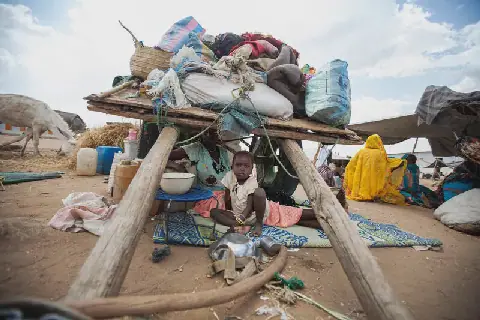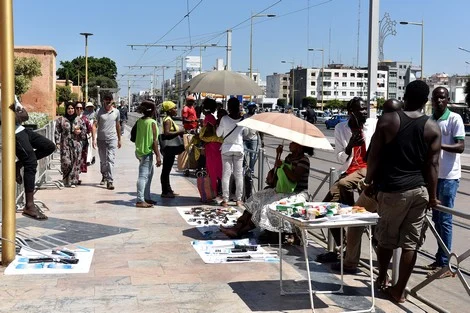
The Moroccan Association for the Assistance of Migrants, in partnership with the Heinrich Böll Foundation and the Euro-Mediterranean Foundation for Human Rights Defenders, has officially launched a program to teach the Moroccan dialect to migrants and African students from sub-Saharan countries. The program, which falls under the axis of "Teaching the Moroccan Local Dialect," aims to help migrants communicate with their environment and facilitate their daily lives. The program's activities began at the "Al-'Aysh Amal" association in Oujda.
The program's objective is to enable migrants to communicate effectively with their surroundings, particularly in markets, transportation, and educational institutions. The program will be supervised by a specialized educational team and will not only focus on learning words and communication but also on introducing values of tolerance, cultural diversity, coexistence, and combating stereotypes and discrimination. The organizers aim to make the local dialect a means of communication and integration for migrants living in Oujda and the eastern regions of Morocco.
The program is part of the "Support and Accompaniment" program, which seeks to provide support to migrants and promote their integration into Moroccan society. The Moroccan Association for the Assistance of Migrants has been working to provide assistance to migrants and promote their rights in Morocco. The association's efforts have been recognized by various stakeholders, including human rights organizations and government agencies.
The launch of the program was attended by various stakeholders, including representatives from the Heinrich Böll Foundation and the Euro-Mediterranean Foundation for Human Rights Defenders. The partners have expressed their commitment to supporting the program and promoting the integration of migrants into Moroccan society. The program is expected to have a positive impact on the lives of migrants and promote social cohesion in the region.
The program will run for the 2026-2027 academic year and will provide migrants with the opportunity to learn the local dialect and improve their communication skills. The program's curriculum will include modules on tolerance, cultural diversity, and coexistence, which will help promote social cohesion and combat stereotypes and discrimination. The program's impact is expected to be significant, with many migrants expressing their enthusiasm for the initiative.
The Moroccan Association for the Assistance of Migrants has been working to promote the rights of migrants and provide them with support and assistance. The association's efforts have been recognized by various stakeholders, including human rights organizations and government agencies. The launch of the program to teach the local dialect is part of the association's efforts to promote the integration of migrants into Moroccan society.
The program's success will depend on various factors, including the level of support from stakeholders and the participation of migrants. However, with the support of partners and the commitment of the Moroccan Association for the Assistance of Migrants, the program is expected to have a positive impact on the lives of migrants and promote social cohesion in the region. The program will provide migrants with the opportunity to learn the local dialect and improve their communication skills, which will help them integrate into Moroccan society.
Key points
- The program aims to teach the local dialect to migrants and African students from sub-Saharan countries.
- The program is part of the "Support and Accompaniment" program, which seeks to provide support to migrants and promote their integration into Moroccan society.
- The program will run for the 2026-2027 academic year and will provide migrants with the opportunity to learn the local dialect and improve their communication skills.