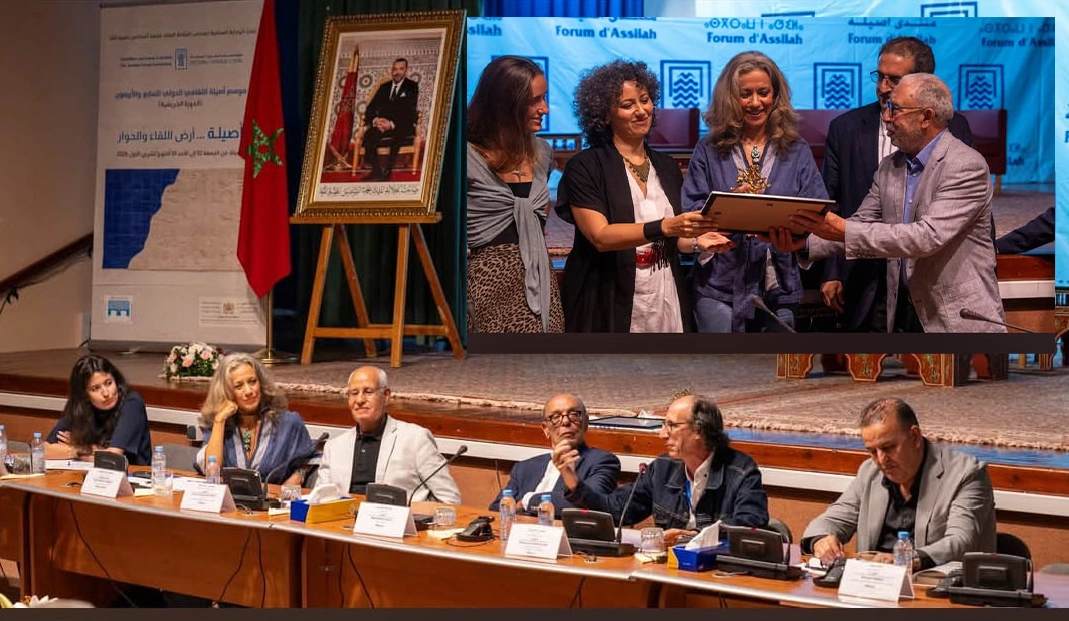
The second session of the tribute to Toni Marini took place on October 6 as part of the 47th Asilah Cultural Season. The event brought together artists, academics, and critics who shared their experiences and insights about Marini's life and work. Her daughter, Nora Marini Meliji, read a message from her mother, expressing her deep connection to Morocco and Asilah, saying "I am a daughter of this country."
Ahmed Majidi, a professor and curator, described Marini as a "historical providence" for Moroccan art, highlighting her significant contributions as an art historian, critic, and human being. He emphasized that her work helped push the boundaries of Moroccan art, making it more contemporary and connected to the country's cultural heritage. Majidi also noted that Marini's book "Kitaabat 'an al-Fann" is a key reference for understanding the evolution of Moroccan art.
Suleima al-Isawi, a curator at the Mohammed VI Museum of Modern and Contemporary Art, analyzed Marini's literary work, highlighting the intersection of visual art and writing. She noted that Marini's texts often blend historical documentation with imaginative storytelling, creating a unique narrative voice. Al-Isawi also pointed out the influence of Andalusian and Islamic culture on Marini's work.
Abdullah al-Hariri, a painter and close friend of Marini's, shared personal anecdotes about their 50-year friendship. He recalled meeting Marini at the École des Beaux-Arts in Casablanca and how she became a mentor and friend. Al-Hariri described Marini as a source of inspiration and guidance, saying that her legacy continues to influence Moroccan art and culture.
Maja Marini Meliji, a writer and producer, paid tribute to her mother's intellectual and humanitarian contributions. She highlighted Marini's role in founding the Asilah Cultural Season and her collaborations with Moroccan artists and intellectuals. Meliji also noted that her mother's family background, including her Italian heritage, played a significant role in shaping her artistic and cultural identity.
Binyamin Amirouch, a painter and art critic, discussed Marini's impact on Moroccan art and culture. He noted that she was one of the first to analyze and promote Moroccan art, helping to create a new understanding of its significance and value. Amirouch also emphasized Marini's commitment to exploring the intersection of art and identity, saying that her work continues to inspire new generations of artists and intellectuals.
The tribute to Toni Marini concluded with a sense of appreciation for her lasting impact on Moroccan art and culture. Her contributions as an artist, writer, and educator have left a lasting legacy, inspiring future generations to explore and celebrate Moroccan creativity and identity.
Key points
- Toni Marini's work helped push the boundaries of Moroccan art, making it more contemporary and connected to the country's cultural heritage.
- Marini's book "Kitaabat 'an al-Fann" is a key reference for understanding the evolution of Moroccan art.
- Marini's commitment to exploring the intersection of art and identity continues to inspire new generations of artists and intellectuals.