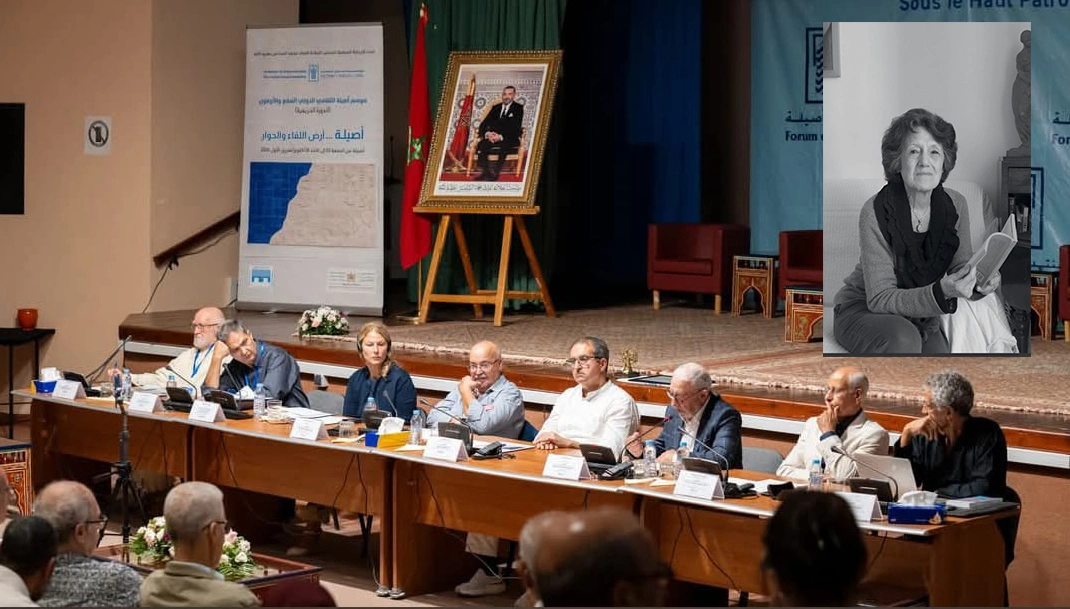
The city of Asilah recently hosted a symposium to celebrate the life and work of Toni Marini, an Italian art critic and translator who made significant contributions to Morocco's art scene. The event, which was part of the 47th Asilah Cultural Season, brought together artists, critics, and intellectuals to reflect on Marini's impact on Moroccan art. Marini, who arrived in Morocco in the 1960s, was instrumental in promoting the country's artists and shaping the national art scene.
Marini's work was marked by her commitment to promoting Moroccan art and culture. She was a vocal supporter of the country's artists, and her writings helped to shed light on the local art scene. According to Sharif Majeedine, a critic and academic, Marini's work was characterized by her ability to balance her Western perspective with a deep understanding of Moroccan culture. Her approach, he noted, was not based on a paternalistic view of Western superiority, but rather on a desire to engage with and understand the local art scene.
The symposium heard from several speakers, including Hatem Al-Batoui, president of the Asilah Forum, who praised Marini's contributions to Moroccan art. Al-Batoui noted that Marini's writings and critical approach represented a model for critical thinking and cultural engagement. He also highlighted her role in promoting the work of Moroccan artists, particularly women, and her commitment to fostering a more inclusive and diverse art scene.
Mohamed Ashaari, a poet and novelist, delivered a keynote address on Marini's writings and their significance in the context of Moroccan cultural history. Ashaari noted that Marini's work provided a unique window into the country's art scene in the 1960s and 1970s, a period of significant cultural and social change. He also highlighted her role in promoting a more nuanced understanding of Moroccan art and culture, and her commitment to fostering dialogue and exchange between different cultural traditions.
Another speaker, Mohamed Noor Eddine Afaya, discussed Marini's writings on art and their relevance to contemporary debates about culture and identity. Afaya noted that Marini's work represented a unique blend of personal and intellectual reflection, and that her commitment to critical thinking and cultural engagement remained an inspiration to artists and critics today.
Claudia Esposito, a critic and professor at the University of Massachusetts, also spoke about Marini's legacy. She noted that Marini's approach to art criticism was characterized by her commitment to collaboration and dialogue, and that her writings represented a model for engaged and critical thinking. Esposito also highlighted Marini's role in promoting a more nuanced understanding of Moroccan culture and her commitment to fostering exchange and dialogue between different cultural traditions.
The symposium concluded with a sense of appreciation for Marini's contributions to Moroccan art and culture. Her legacy continues to inspire artists, critics, and intellectuals, and her work remains an important reference point for those interested in understanding the country's rich cultural heritage. As the art scene in Morocco continues to evolve, Marini's commitment to critical thinking, cultural engagement, and dialogue remains a powerful inspiration.
Key points
- Toni Marini's work played a significant role in shaping Morocco's art scene in the 1960s and 1970s.
- Marini's approach to art criticism was characterized by her commitment to collaboration and dialogue.
- Her legacy continues to inspire artists, critics, and intellectuals in Morocco today.