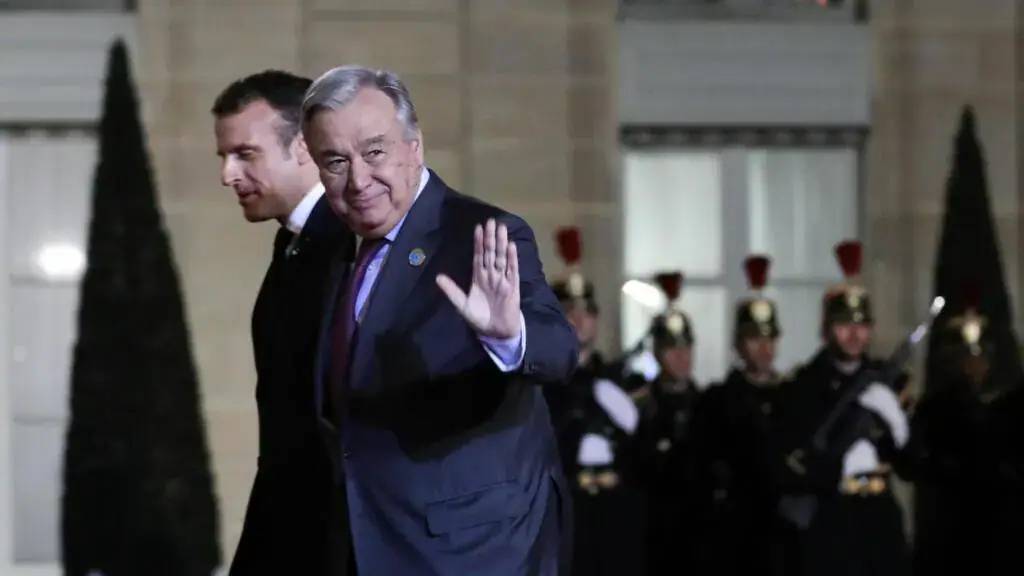
The United Nations General Assembly has heard renewed calls for reform, particularly of the Security Council, from prominent leaders. French President Emmanuel Macron and UN Secretary-General Antonio Guterres both emphasized the need for changes to the international institution. Their speeches come as the world grapples with rising global tensions and challenges to the existing international order. The push for reform includes expanding the Security Council to better reflect contemporary geopolitical realities.
Morocco has expressed interest in playing a more significant role at the UN. The country has announced its candidacy for a non-permanent seat on the Security Council for the 2028-2029 term. This move is part of Morocco's broader strategy to enhance its international presence and influence. Morocco's Foreign Minister, Nasser Bourita, has been actively engaging with UN officials, including a recent meeting with Secretary-General Guterres in New York.
The call for UN reform is not new, but it has gained momentum in recent years. Critics argue that the current structure of the Security Council, with its five permanent members and rotating non-permanent members, no longer accurately represents the global community. The council's composition has remained largely unchanged since its inception, despite shifts in global power dynamics. Macron and Guterres have both suggested that reforming the council would make it more effective and representative.
Morocco's bid for a Security Council seat is seen as a strategic move to bolster its international standing. The country's candidacy is likely to be viewed favorably by many nations, given its active role in various international forums and its contributions to peacekeeping efforts. Morocco has been a member of the UN since 1956 and has participated in several UN peacekeeping missions, including in the Western Sahara.
The issue of UN reform is complex and contentious. Any changes to the Security Council would require approval from a two-thirds majority of the General Assembly members, as well as ratification by the council's five permanent members. This process has stalled in the past due to disagreements among member states. However, with growing support for reform from influential leaders like Macron and Guterres, there is renewed optimism that progress can be made.
The UN General Assembly continues to discuss various issues related to reform and strengthening the organization. These discussions are taking place against a backdrop of global challenges, including climate change, pandemics, and rising nationalism. The outcome of these discussions will be crucial in determining the future effectiveness and relevance of the UN.
As the international community looks to the future of the UN, Morocco's candidacy for a Security Council seat and the push for reform are significant developments. The success of these initiatives will depend on the ability of nations to work together and find common ground on issues that are critical to global stability and cooperation.
Key points
- Morocco has announced its candidacy for a non-permanent seat on the UN Security Council for the 2028-2029 term.
- French President Emmanuel Macron and UN Secretary-General Antonio Guterres have called for reform of the UN Security Council.
- The UN General Assembly continues to discuss various issues related to reform and strengthening the organization.