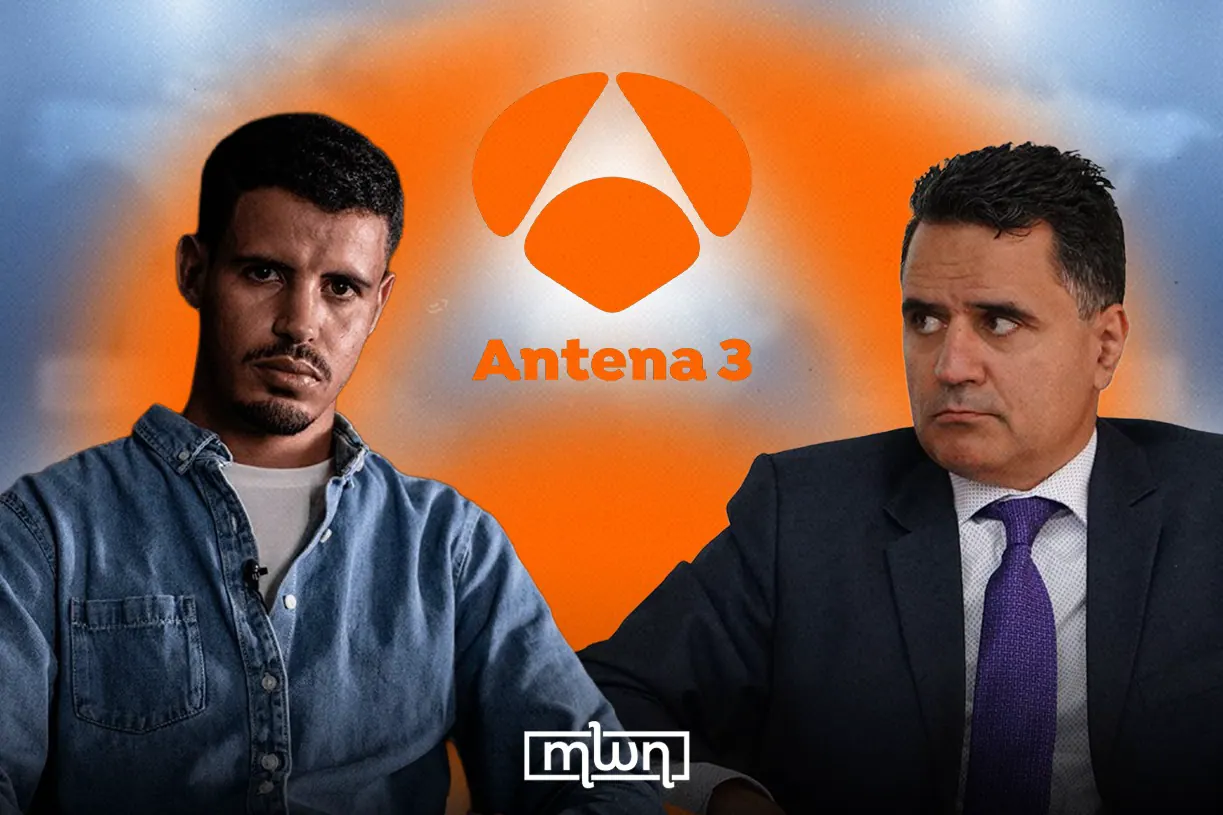
A recent debate on Spanish broadcaster Antena 3 has highlighted how quickly political disagreement can descend into personal attacks. Moroccan political analyst Samir Bennis was invited to discuss the Ceuta crisis, where he defended his positions with arguments he has long put forward. He challenged the existence of solid evidence establishing Morocco's direct responsibility for the migration events and called for verifiable evidence. The debate was heated, but Bennis's arguments were met with an unsubstantiated accusation by Taleb Alisalem, a Sahrawi activist and commentator.
Alisalem claimed on social media that Bennis told him, as he was leaving the studio, "We are going to kill you, son of a…" Bennis categorically rejected the accusation, describing it as false and defamatory. The accusation presupposes specific facts, an established context, and evidence that can verify them, but nothing in the publicly available information establishes the reality of the remarks attributed to Bennis. This incident raises concerns about the media's role in verifying information before reporting it as truth.
The debate on Antena 3 was part of a broader discussion on the Ceuta crisis, with Alisalem accusing Morocco of using immigration as an instrument of political pressure and "blackmail." Bennis asked Alisalem to present direct and verifiable evidence of Moroccan responsibility, but the discussion quickly turned into a personal attack. When debate leaves the terrain of facts and becomes a matter of honor, alleged threats, and personal accusations, the public is no longer invited to understand a complex issue, but to identify a culprit.
The incident is not isolated to the Antena 3 studio, but part of a broader media climate marked by a tendency toward dramatization, personalization, and humiliation. The treatment of Morocco by the newspaper El Español provides another example. The daily outlet reported information accusing Moroccan elements of organizing or facilitating the mass arrivals in Ceuta, despite Spanish authorities challenging the existence of evidence establishing the direct involvement of the Moroccan state.
El Español's reporting on the issue has been criticized for presenting a hypothesis as a certainty without confirmation from competent institutions. This approach has led to loaded language, references to a supposed "invasion," and a presentation designed to provoke fear and anger. When information no longer sheds light on the debate but artificially hardens it, journalism gives way to the construction of a narrative.
The same logic appears in El Español's treatment of recent images of King Mohammed VI. The newspaper published a photograph of the monarch showing him in a particularly unfavorable appearance, accompanying the image with alarmist coverage of his physical condition and alleged difficulties in moving. While it is legitimate to report on the health of a public figure when it is a matter of public interest, the approach used by El Español has been criticized for crossing the line into humiliation.
The incident highlights the need for a more nuanced approach to journalism and public debate. Freedom of the press is not the freedom to say anything about anyone, and freedom of expression protects criticism, but does not turn insult into an argument or transform an unsubstantiated accusation into media truth. Bennis's case serves as a reminder that accusations must be supported by specific evidence and that repetition does not constitute proof.
Key points
- Moroccan analyst Samir Bennis faced an unsubstantiated accusation during a televised debate on Spanish broadcaster Antena 3.
- The incident highlights concerns about the degradation of debate and journalism in the Spanish media.
- The treatment of Morocco by El Español has been criticized for presenting unverified information and using loaded language.