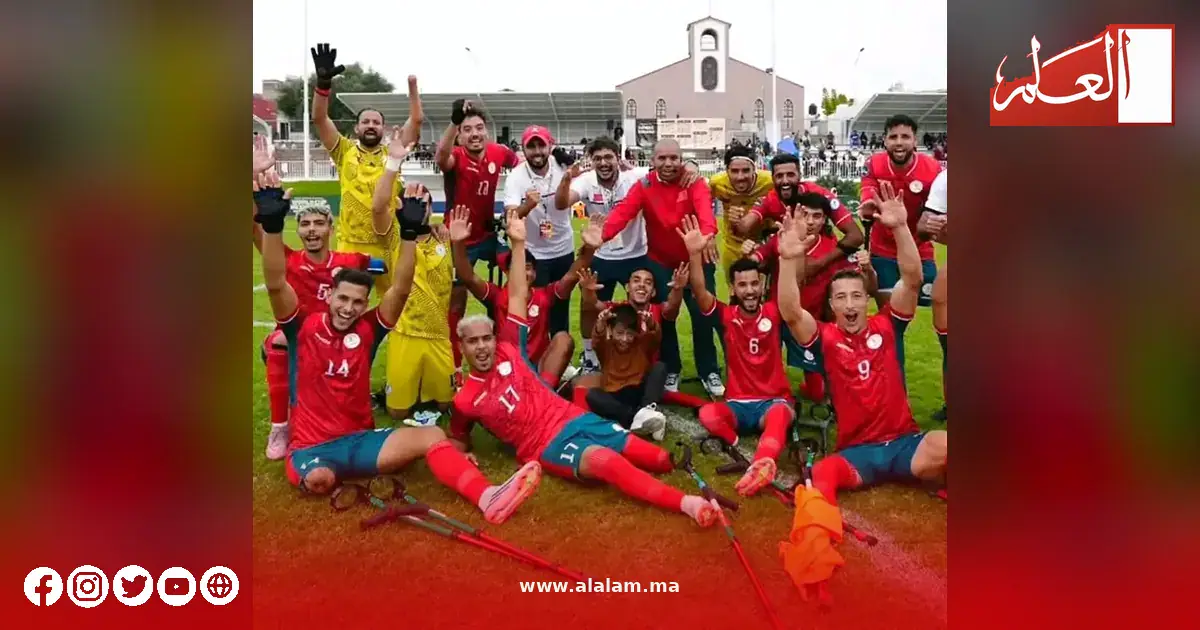
The Moroccan amputee football team has made history by reaching the final of the 2026 World Cup in Mexico. The team, led by coach Othman Najmi, has won six consecutive matches, defeating Brazil, Angola, and Italy along the way. Their journey to the final has captivated the nation, with many hailing the team's determination and resilience in the face of adversity.
The team's success is all the more remarkable given the challenges its players have overcome. All team members are amputees, having lost limbs in accidents or due to other circumstances. Despite these physical challenges, they have demonstrated exceptional skill, strategy, and teamwork. Their achievements have not only earned them a place in the World Cup final but have also inspired countless Moroccans and fans worldwide.
The team's journey to the World Cup began with a foundation laid by a group of young people who refused to accept marginalization from sports. Local teams emerged in several cities, eventually leading to the organization of the first national championship in 2020. The Moroccan Royal Federation for Sports for People with Disabilities oversaw the championship, which featured six teams. The national team was established on October 28, 2021, marking a new chapter in the sport.
Amputee football has a global history dating back to the 1980s. The sport is played with seven players per team, including a goalkeeper, and uses modified rules to accommodate the players' needs. The game requires speed, skill, physical fitness, tactical intelligence, and balance. Morocco's team has rapidly become a force to be reckoned with, joining powerhouses like Turkey, Angola, and Ghana in the sport.
The team's captain, Mohcine Chagag, has expressed his and his teammates' determination to win the World Cup. In a press conference before the match against Brazil, Chagag stated, "We're ready to give everything we have to bring the trophy back to Morocco. We're even ready to leave a limb in Mexico if it means winning." His words reflect the team's commitment to their country and their desire to make their people proud.
Despite their inspiring achievements, the team faces challenges off the field. The players have reportedly faced marginalization and limited financial support. The team's delegation head, Adel Badr Eddine Slilibi, has spoken about the disparities in financial incentives and support compared to athletes in other sports. These concerns raise questions about the level of recognition and support provided to the team.
As the Moroccan amputee football team prepares to face Ghana in the World Cup final, they carry the hopes and dreams of their nation. Their story serves as a testament to the power of resilience, teamwork, and determination. Regardless of the outcome, the team has already won the hearts of many, and their legacy will undoubtedly inspire future generations of athletes and fans alike.
Key points
- Moroccan amputee football team reaches World Cup final, defeating top teams along the way
- Team's success inspires nation, despite facing challenges off the field
- Team captain Mohcine Chagag expresses determination to win, citing willingness to make sacrifices for Morocco