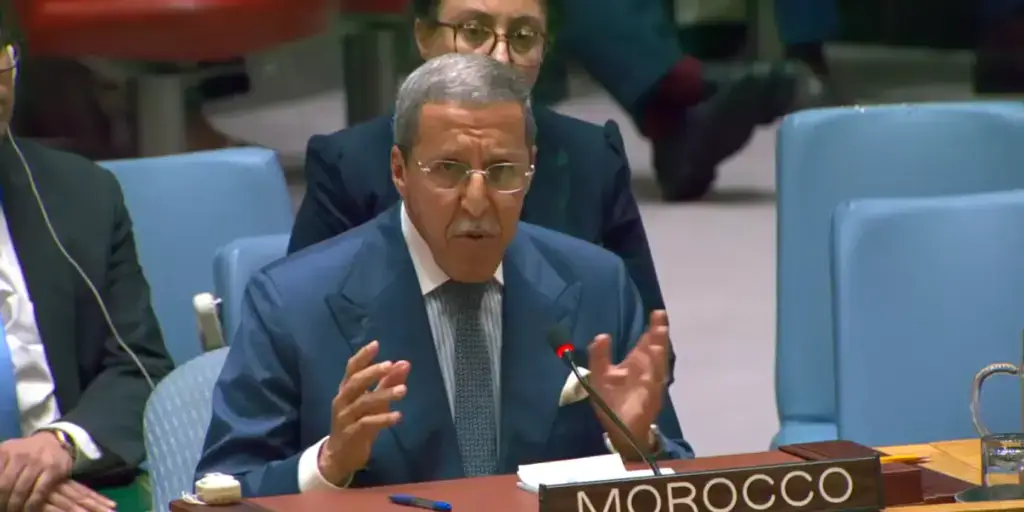
Moroccan Ambassador to the United Nations, Omar Hilal, expressed gratitude to Algeria on October 30, 2026, for acknowledging its role in the Western Sahara conflict. Hilal made these comments during a discussion on a draft resolution regarding Western Sahara in the UN Security Council. Algeria's ambassador participated in the discussion and presented a statement on the situation, which Hilal saw as an admission of Algeria's involvement in the conflict.
Hilal questioned Algeria's right to intervene in the discussion, given its previous stance that it was not a party to the conflict. He highlighted the inconsistency in Algeria's position, as the country's participation in the discussion and defense of its positions on the conflict contradict its long-standing claim of being merely an observer. For years, the UN Security Council has made decisions on the issue without direct participation from the parties involved, until Algeria began to take part in the discussions.
During the discussion, Hilal raised concerns about the lack of registration of detainees in Tindouf camps with the UN High Commissioner for Refugees (UNHCR). He stated that the UNHCR has been requesting registration and identification for nearly 50 years, but the host country, Algeria, has refused. Hilal emphasized that registration is not just a statistical exercise to determine the number of individuals receiving humanitarian assistance but a crucial mechanism to ensure international protection and determine the legal status of the individuals concerned.
Hilal criticized Algeria for failing to fulfill its responsibilities towards the detainees in Tindouf camps. He accused the Polisario Front of recruiting and arming children, emphasizing that defending the rights of refugees requires guaranteeing their fundamental freedoms, including freedom of movement and voluntary return to their original areas. Hilal also touched on the issue of the return of camp residents to Western Sahara, stating that Morocco is willing to facilitate this process with the assistance of the UNHCR.
Hilal accused Algeria of obstructing the freedom of movement and return of camp residents, which he claimed contradicts international principles on refugee protection and voluntary return. He reiterated Morocco's commitment to finding a solution to the conflict and highlighted the importance of Algeria's recognition of its role in the conflict. The discussion at the UN Security Council reflects the ongoing tensions between Morocco and Algeria over the Western Sahara issue.
The Western Sahara conflict has been a longstanding issue in the region, with Morocco and the Polisario Front having competing claims over the territory. The UN has been involved in efforts to resolve the conflict, including the organization of a referendum on the future of Western Sahara. However, a lasting solution has yet to be found, and the issue remains a source of tension between Morocco and Algeria.
The exchange between Hilal and the Algerian ambassador at the UN Security Council highlights the complexities of the Western Sahara conflict and the challenges of finding a resolution. The involvement of Algeria in the discussion has been seen as a significant development, as it acknowledges the country's role in the conflict. The situation remains a key concern for the international community, with efforts to find a peaceful and lasting solution ongoing.
Key points
- Morocco's UN ambassador Omar Hilal criticizes Algeria's participation in discussing Western Sahara, saying it proves Algeria's involvement in the conflict.
- Hilal raises concerns about the lack of registration of detainees in Tindouf camps with the UN High Commissioner for Refugees (UNHCR).
- The Western Sahara conflict remains a source of tension between Morocco and Algeria, with a lasting solution yet to be found.